
Across Centuries and Stanzas: The Shared Soul of Poetry
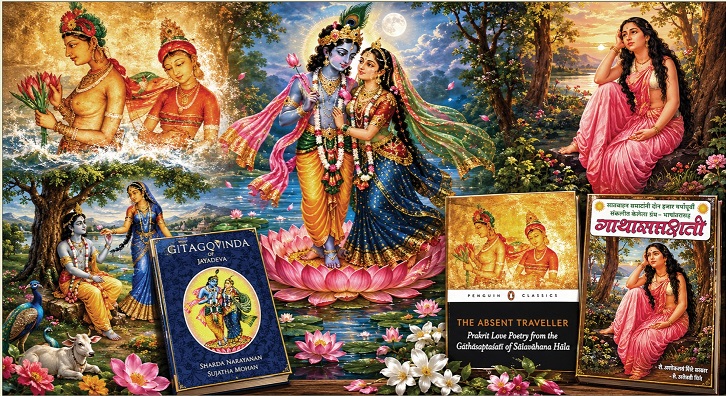
Poetry, Indian literature motifs, Sangam literature, Sanskrit poetry, Prakrit poetry, Gathasaptasati, Hala Satavahana, Kalidasa Meghaduta, Jayadeva Gita Govinda, Indian classical poetry, bee motif in poetry, nayika bheda, abhisarika nayika, Indian aesthetics, shringara rasa, dhvani theory, Hindi doha, Bihari Lal poetry, Tamil Sangam poetry, Bhakti poetry, Indian literary traditions, Sanskrit and Tamil literature, classical Indian literature, Indian poetic motifs, ancient Indian poetry, Prakrit literature, Sanskrit classics, Subramania Bharati, Indian cultural unity, Hindustani classical music lyrics, Girija Devi, Indian linguistic heritage, Aryan Dravidian debate, Vedic and non Vedic traditions, Indian philosophy and literature, Indian civilization studies, traditional Indian music, classical Indian aesthetics, rasa theory, Indian love poetry, comparative Indian literature, medieval Indian poetry, Sanskrit drama, Indian literary history, Indian languages and culture, poetic symbolism in India, literary continuity in India, Indian heritage and literature, cultural unity in diversity, Indian poetic imagery, classical music compositions, Sanskrit Prakrit connections, Tamil and Sanskrit traditions, Indian literary criticism, ancient to modern Indian poetry, Indian art and culture, traditional Indian motifs, Indian devotional poetry, romantic imagery in Indian literature

Lucknow: There are several motifs that are common to literature of all languages in India, through all the epochs, that are used to signify the same sentiments, from Sangam age in Tamil literature to modern Tamil poetry, from ancient Prakrit poetry to Sanskrit classical poetry. One such motif is the bee that is often addressed by the pining nāyikā (or sometimes the nāyaka) to express one’s longing, almost as if in the hope that the bee, which is free to soar to any place, would convey the message to the…

Read More

A Brief History of Prakrit and Sanskrit

Prakrit languages, ancient India, Pali, Buddhist literature, Magadhi, Avantija, Pracya, Sauraseni, Ardhamagadhi, Bahlik, Maharashtri, Apabhramsha, Sanskrit, vernacular languages, Bharata, Natyashastra, phonetics, grammar simplification, dual number, Atmanepadi, Karakachihnas, local vocabulary, linguistic evolution, Middle Indo-Aryan languages, Hindi evolution, Sauraseni Prakrit, Buddhist sources, Indian linguistics, spoken language, regional dialects, phonetic changes, vibhrashta, Sanskrit grammar, Prakrit literature, ancient linguistics, Indian drama, performing arts, linguistic diversity, language transformation, inflectional forms, dhaturupas, shabdarupas, Nāṭyaśāstra, George Cardona, classical India, Indo-Aryan philology, historical linguistics, Indian cultural history, Sanskrit and Prakrit, local pronunciation, literary traditions, ancient Indian theatre, language variation, medieval India, Prakrit grammar, spoken dialects, Sanskrit refinement, Siddhanta Knowledge Foundation

Lucknow: Prakrit refers to a bunch of languages that belonged to different epochs in different regions of ancient India, as it represents the changing aspect of the spoken language. So they are studied in three main time periods i) The Ancient Period 2500 BCE to 500 CE – The Prakrit language used in this period is mostly termed Pali, based on the literature available from these times, which are mostly Buddhist sources. Some of the key features are that the dual number (dvivacana) is left out, ṣa and śa sounds…

Read More