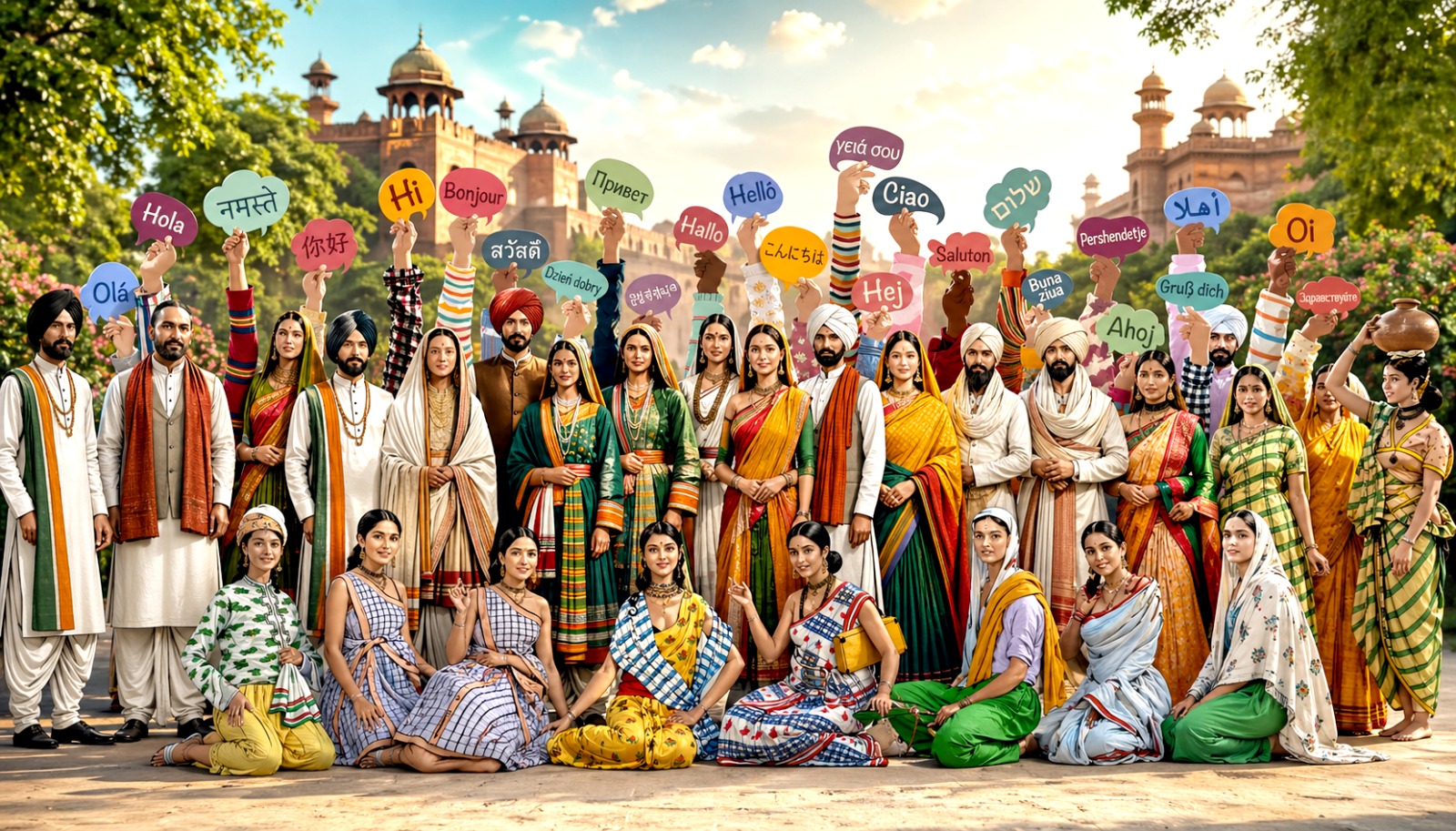
Connection of Sanskrit with Regional Literature
Sanskrit

We have seen the close connection between Sanskrit and the precursor to the vernaculars all over India such as Marathi, Bengali, Telugu and others, over the centuries. Each region had its own distinct language, just as it had its own dress, cuisine and way of life guided by the geographical topography and seasonal changes. Yet there is a common thread in the outlook and culture that runs through from the Himalayas to the Southern tip – “aa setu-himalaya” As they say, referring to the setu of Sri Rama at Rameswaram.…

Read More

A Brief History of Prakrit and Sanskrit

Prakrit languages, ancient India, Pali, Buddhist literature, Magadhi, Avantija, Pracya, Sauraseni, Ardhamagadhi, Bahlik, Maharashtri, Apabhramsha, Sanskrit, vernacular languages, Bharata, Natyashastra, phonetics, grammar simplification, dual number, Atmanepadi, Karakachihnas, local vocabulary, linguistic evolution, Middle Indo-Aryan languages, Hindi evolution, Sauraseni Prakrit, Buddhist sources, Indian linguistics, spoken language, regional dialects, phonetic changes, vibhrashta, Sanskrit grammar, Prakrit literature, ancient linguistics, Indian drama, performing arts, linguistic diversity, language transformation, inflectional forms, dhaturupas, shabdarupas, Nāṭyaśāstra, George Cardona, classical India, Indo-Aryan philology, historical linguistics, Indian cultural history, Sanskrit and Prakrit, local pronunciation, literary traditions, ancient Indian theatre, language variation, medieval India, Prakrit grammar, spoken dialects, Sanskrit refinement, Siddhanta Knowledge Foundation

Lucknow: Prakrit refers to a bunch of languages that belonged to different epochs in different regions of ancient India, as it represents the changing aspect of the spoken language. So they are studied in three main time periods i) The Ancient Period 2500 BCE to 500 CE – The Prakrit language used in this period is mostly termed Pali, based on the literature available from these times, which are mostly Buddhist sources. Some of the key features are that the dual number (dvivacana) is left out, ṣa and śa sounds…

Read More

Sanskrit or Prakrit: Which Came Earlier? 

Sanskrit, Prakrit, language evolution, linguistics, phonetic change, dialects, sub-dialects, standard language, Vedic Sanskrit, classical Sanskrit, Panini grammar, Chandas, Bhasha, phonology, pronunciation shift, economy of effort, word simplification, linguistic variation, regional languages, Indian linguistics, etymology, sound change, language development, historical linguistics, Indo-Aryan languages, colloquial speech, formal language, linguistic structure, grammar rules, language transformation

A language that is well-established is said to have three important aspects by linguistic experts: ➤ i) Sub-Dialect – This is a highly localized form of the spoken language that may have a small area or district over which it is used. Especially in earlier times before the advent of technology and mass communication, local dialects could be clearly seen. ➤ ii) Dialects – These have a wider geographical presence than sub-dialects and may even show literary activity. There is some distinction of vocabulary and grammatical structure and over time,…

Read More