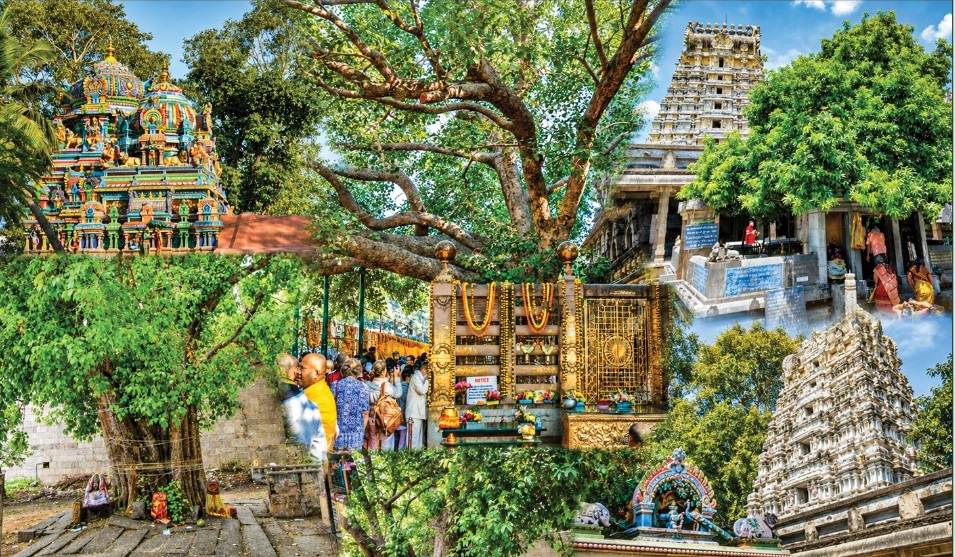
Temple Trees – the Sthala Vriksha

Temple Trees, Sthala Vriksha, Sacred Groves, Hindu Temples, Indian Heritage, Temple Ecology, Sacred Trees, Temple Traditions, Ancient Worship, Cultural Heritage, Temple Architecture, Spiritual Ecology, Bilva Tree, Banyan Tree, Peepal Tree, Neem Tree, Kadamba Forest, Chidambaram, Madurai Temples, Kanchipuram Temples, Srirangam, Devotional Practices, Temple Rituals, Nature Worship, Environmental Conservation, Religious Traditions, Indian Culture, Temple History, Sacred Landscapes, Temple Gardens, Biodiversity, Traditional Knowledge, Puranas, Itihasas, Temple Festivals, Heritage Conservation, Vedic Traditions, Temple Water Tanks, Cultural Ecology, Spiritual Practices, Devotional Music, Temple Art, Ancient India, Ecological Wisdom, Tree Worship, Sacred Geography, Siddhanta Knowledge Foundation, Hindu Spirituality, Temple Heritage, Living Traditions.

Lucknow: To fully understand the concept of a temple tree, we must understand the connection between forests, trees and worship in early times and how the concept of sacred groves has developed over the centuries. We know that in very early times in India, deities were first worshipped in the open, sometimes with stone or wood images. Hero stones were also quite popular in the worship of the common people. There is much evidence for the fact that many temples came up in locations long considered sacred with specific deities…

Read More

A Brief History of Prakrit and Sanskrit

Prakrit languages, ancient India, Pali, Buddhist literature, Magadhi, Avantija, Pracya, Sauraseni, Ardhamagadhi, Bahlik, Maharashtri, Apabhramsha, Sanskrit, vernacular languages, Bharata, Natyashastra, phonetics, grammar simplification, dual number, Atmanepadi, Karakachihnas, local vocabulary, linguistic evolution, Middle Indo-Aryan languages, Hindi evolution, Sauraseni Prakrit, Buddhist sources, Indian linguistics, spoken language, regional dialects, phonetic changes, vibhrashta, Sanskrit grammar, Prakrit literature, ancient linguistics, Indian drama, performing arts, linguistic diversity, language transformation, inflectional forms, dhaturupas, shabdarupas, Nāṭyaśāstra, George Cardona, classical India, Indo-Aryan philology, historical linguistics, Indian cultural history, Sanskrit and Prakrit, local pronunciation, literary traditions, ancient Indian theatre, language variation, medieval India, Prakrit grammar, spoken dialects, Sanskrit refinement, Siddhanta Knowledge Foundation

Lucknow: Prakrit refers to a bunch of languages that belonged to different epochs in different regions of ancient India, as it represents the changing aspect of the spoken language. So they are studied in three main time periods i) The Ancient Period 2500 BCE to 500 CE – The Prakrit language used in this period is mostly termed Pali, based on the literature available from these times, which are mostly Buddhist sources. Some of the key features are that the dual number (dvivacana) is left out, ṣa and śa sounds…

Read More