New Delhi: Few cities in the world encapsulate the sweep of history as magnificently as Delhi. India’s capital is a living museum where ancient legends, medieval dynasties, Mughal grandeur, colonial architecture and modern urban life coexist in remarkable harmony. Believed to have evolved from the legendary city of Indraprastha mentioned in the Mahabharata, Delhi has witnessed the rise and fall of empires for over two millennia, leaving behind an extraordinary legacy of monuments, bustling markets, vibrant culture and diverse cuisine.
Today, Delhi is not only the political heart of India but also one of the country’s most rewarding travel destinations. From UNESCO World Heritage Sites and magnificent forts to lively bazaars and world-famous street food, every corner of the city tells a story waiting to be discovered.

The Best Time to Explore
The ideal season to visit Delhi is between October and March, when cool mornings and pleasant afternoons make sightseeing comfortable. Winter also brings cultural festivals, outdoor events and colourful markets. While the monsoon months add lush greenery to the city’s gardens and parks, occasional heavy showers can affect travel plans. Summers, stretching from April to June, are marked by intense heat, often exceeding 40°C.
A City Connected to the World
Delhi welcomes millions of visitors through Indira Gandhi International Airport, one of South Asia’s busiest aviation hubs. Within the city, the award-winning Delhi Metro provides one of India’s most efficient public transport systems, connecting major attractions quickly and affordably. App-based taxis, auto-rickshaws and walking tours complement the experience, particularly in historic districts where narrow lanes reveal unexpected treasures.
Old Delhi: The Mughal Capital
The journey into Delhi’s past begins in Shahjahanabad, the walled city established by Mughal Emperor Shah Jahan in 1648.
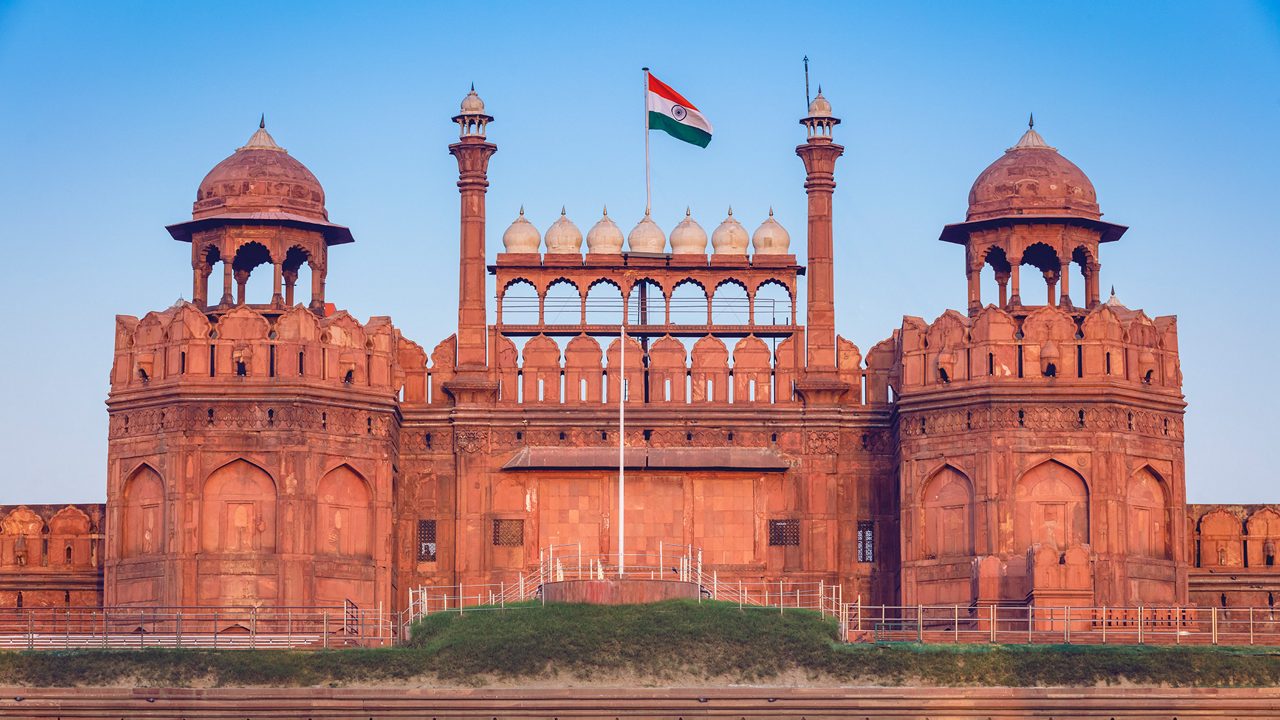
Dominating the skyline is the majestic Red Fort, a UNESCO World Heritage Site whose imposing red sandstone walls once enclosed the opulent residence of Mughal emperors. The fort’s palaces, audience halls and museums offer fascinating insights into imperial India and the nation’s struggle for independence.
Just across the road stands Jama Masjid, India’s largest mosque, capable of accommodating nearly 25,000 worshippers. Visitors climbing its towering minarets are rewarded with sweeping views of Old Delhi’s maze of rooftops, markets and historic monuments.
No exploration of Old Delhi is complete without wandering through Chandni Chowk, one of Asia’s oldest markets. Narrow streets bustle with spice traders, jewellers, textile merchants and generations-old eateries. A cycle-rickshaw ride through the crowded lanes offers a memorable glimpse into the city’s vibrant daily life.
Food lovers are equally spoilt for choice. Legendary establishments continue to serve authentic Mughlai delicacies alongside iconic street foods, including stuffed parathas, kebabs, kormas, jalebis and an endless variety of chaats that define Delhi’s culinary identity.
Mughal Elegance and Colonial Grandeur
Another UNESCO World Heritage Site, Humayun’s Tomb, represents one of the earliest masterpieces of Mughal architecture. Built in 1570, its symmetrical Persian-style gardens and magnificent double-domed structure inspired the design of the Taj Mahal.
Adjacent to the monument, Sunder Nursery blends restored heritage structures with beautifully landscaped gardens, providing a tranquil escape within the bustling metropolis.
Nearby, Lodhi Garden showcases elegant tombs from the Sayyid and Lodhi dynasties amid expansive lawns, flowering trees and walking trails, making it one of Delhi’s most cherished public parks.
As evening falls, India Gate and Kartavya Path become lively gathering places where illuminated monuments, fountains and open spaces create a distinctly modern atmosphere while honouring India’s military heritage.


Echoes of the Delhi Sultanate
South Delhi preserves some of the city’s oldest surviving monuments. The towering Qutub Minar, another UNESCO World Heritage Site, rises 72.5 metres above the ruins of the first Islamic capital established in the late 12th century. Within the complex stands the famous Iron Pillar, an extraordinary metallurgical achievement dating back to the 4th century that has resisted corrosion for over 1,600 years.
The nearby Mehrauli Archaeological Park extends the historical journey through forgotten tombs, mosques, stepwells and centuries-old ruins that illustrate Delhi’s continuous evolution.
A short distance away, Hauz Khas seamlessly combines medieval heritage with contemporary culture. The restored reservoir, madrasa and royal tombs overlook a vibrant district of cafés, boutiques and art galleries, making it one of the capital’s most popular neighbourhoods.
Visitors may also explore the serene Lotus Temple, celebrated for its striking flower-inspired architecture, or the magnificent Akshardham Temple, renowned for its intricate carvings, exhibitions and spectacular evening fountain display.
Markets That Tell a Story
Delhi’s markets reflect its extraordinary cultural diversity. Connaught Place, with its elegant colonial architecture, remains the city’s commercial hub, while Dilli Haat offers handicrafts, textiles and regional cuisines from across India in an open-air setting.
For those seeking hidden gems, Agrasen ki Baoli, an ancient stepwell nestled amid modern skyscrapers, and the aromatic Khari Baoli Spice Market, Asia’s largest wholesale spice market, provide fascinating glimpses into Delhi’s enduring traditions.
A Culinary Capital
Delhi’s food culture mirrors the city’s multicultural heritage. Traditional Mughlai cuisine, Punjabi specialities, North Indian classics and regional flavours from every corner of India come together in a remarkable gastronomic landscape.
Signature dishes include buttery chole bhature, rich biryanis, succulent kebabs, creamy rabri, refreshing kulfi, crispy jalebis and countless varieties of chaat. Whether dining in centuries-old establishments or sampling street food, visitors encounter flavours that have evolved over generations.
Travel Essentials
Delhi caters to every budget, with economical metro travel, affordable street food and accommodation ranging from backpacker hostels to luxury hotels. Visitors should dress modestly while visiting religious sites, remove footwear where required and carry bottled water during sightseeing. Booking monument tickets online can significantly reduce waiting times, particularly during peak tourist seasons.
A Journey Through Time
A three- or four-day itinerary comfortably covers Delhi’s iconic monuments, historic neighbourhoods, museums, gardens and markets while leaving room to experience its celebrated cuisine and vibrant cultural life.
Delhi is far more than a collection of historic landmarks. It is a city where every dynasty has left its imprint, where ancient legends continue to inspire modern life and where every street reveals another layer of India’s remarkable past. From the grandeur of Mughal architecture to the bustle of centuries-old bazaars and the elegance of colonial boulevards, Delhi offers travellers an unforgettable journey through the heart of Indian civilisation—a destination where history is not merely preserved but continues to thrive.











 https://www.youtube.com/watch?si=RtToJsBhYBatUrym&v=mOuYNSdhjHA&feature=youtu.be