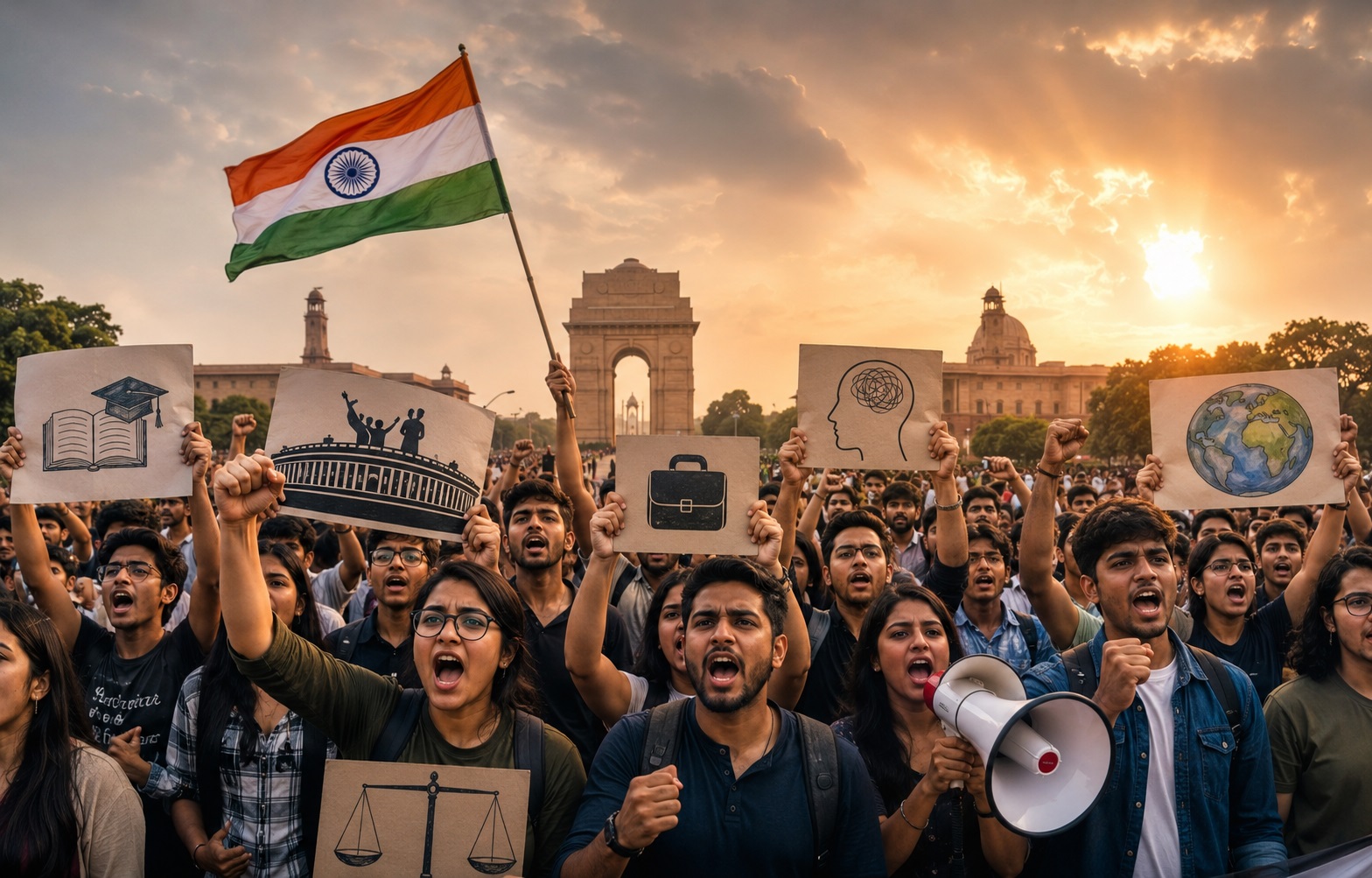
Lucknow: India won its independence on August 15, 1947. That’s not up for debate. But scroll through social media today and you’ll see a phrase getting thrown around a little too loosely: a “new war for independence.” It sounds dramatic, and it makes for a catchy headline, but it misreads what’s actually happening on the streets of Delhi and dozens of other Indian cities. What’s unfolding isn’t a rebellion against the state — it’s a generation of young Indians demanding that the state they already own start delivering on its promises.
This isn’t new, either. Go back to 2011, when Anna Hazare’s India Against Corruption movement pulled enormous crowds into Ramlila Maidan, all pushing for a strong, independent Lokpal to fight corruption. That moment — hunger strikes, viral hashtags before “viral” was even the right word, ordinary citizens showing up in numbers nobody expected — eventually helped push the Lokpal Act into law. It set a template: peaceful, sustained public pressure, aimed not at overthrowing anything but at making democracy work the way it’s supposed to.

Fast forward to 2026, and you get the Cockroach Janta Party protests — a name born from outrage after a judge compared unemployed youth to cockroaches, and fueled further by yet another round of leaks in exams like NEET. Students sat in at Jantar Mantar, tried marching on Parliament, and lit up solidarity protests across the country. It got results, too — the Union Education Minister resigned. But the deeper issue never went away: a generation raised to believe a degree guarantees a future, discovering that the exam system meant to sort them fairly is instead riddled with leaks and irregularities.
Strip away the noise and the demands are pretty consistent. Young people want real jobs — not endless gig work or short-term contracts that lead nowhere, but stable employment that actually matches what they studied for. They want an education system that prepares them for the real world instead of training them to survive one high-stakes exam. They want institutions and ministers who answer for their failures, echoing the same anti-corruption spirit that defined 2011. And layered on top of all that: mental health support, climate anxiety, gender equity, and a shot at the “new economy” jobs everyone keeps promising are coming.

None of this is about seceding or rejecting the Republic. If anything, it’s the opposite — it’s a deep, sometimes frustrated loyalty to the idea of India, paired with impatience that the reality hasn’t caught up to the promise. Slogans invoking “Jai Samvidhan” — hail the Constitution — say it plainly: these are citizens calling on their own Constitution to be honored, not enemies trying to tear it down.
India has one of the youngest populations on earth, and that window won’t stay open forever. Whether this wave of protest turns into real reform in education, jobs, and governance — or just fades into another news cycle — may end up shaping what independent India actually looks like for the next several decades.












 https://www.youtube.com/watch?si=RtToJsBhYBatUrym&v=mOuYNSdhjHA&feature=youtu.be