A Brief History of Prakrit and Sanskrit

Prakrit languages, ancient India, Pali, Buddhist literature, Magadhi, Avantija, Pracya, Sauraseni, Ardhamagadhi, Bahlik, Maharashtri, Apabhramsha, Sanskrit, vernacular languages, Bharata, Natyashastra, phonetics, grammar simplification, dual number, Atmanepadi, Karakachihnas, local vocabulary, linguistic evolution, Middle Indo-Aryan languages, Hindi evolution, Sauraseni Prakrit, Buddhist sources, Indian linguistics, spoken language, regional dialects, phonetic changes, vibhrashta, Sanskrit grammar, Prakrit literature, ancient linguistics, Indian drama, performing arts, linguistic diversity, language transformation, inflectional forms, dhaturupas, shabdarupas, Nāṭyaśāstra, George Cardona, classical India, Indo-Aryan philology, historical linguistics, Indian cultural history, Sanskrit and Prakrit, local pronunciation, literary traditions, ancient Indian theatre, language variation, medieval India, Prakrit grammar, spoken dialects, Sanskrit refinement, Siddhanta Knowledge Foundation

Lucknow: Prakrit refers to a bunch of languages that belonged to different epochs in different regions of ancient India, as it represents the changing aspect of the spoken language. So they are studied in three main time periods i) The Ancient Period 2500 BCE to 500 CE – The Prakrit language used in this period is mostly termed Pali, based on the literature available from these times, which are mostly Buddhist sources. Some of the key features are that the dual number (dvivacana) is left out, ṣa and śa sounds…

Read More

Environmental Sustainability through the IKS prism

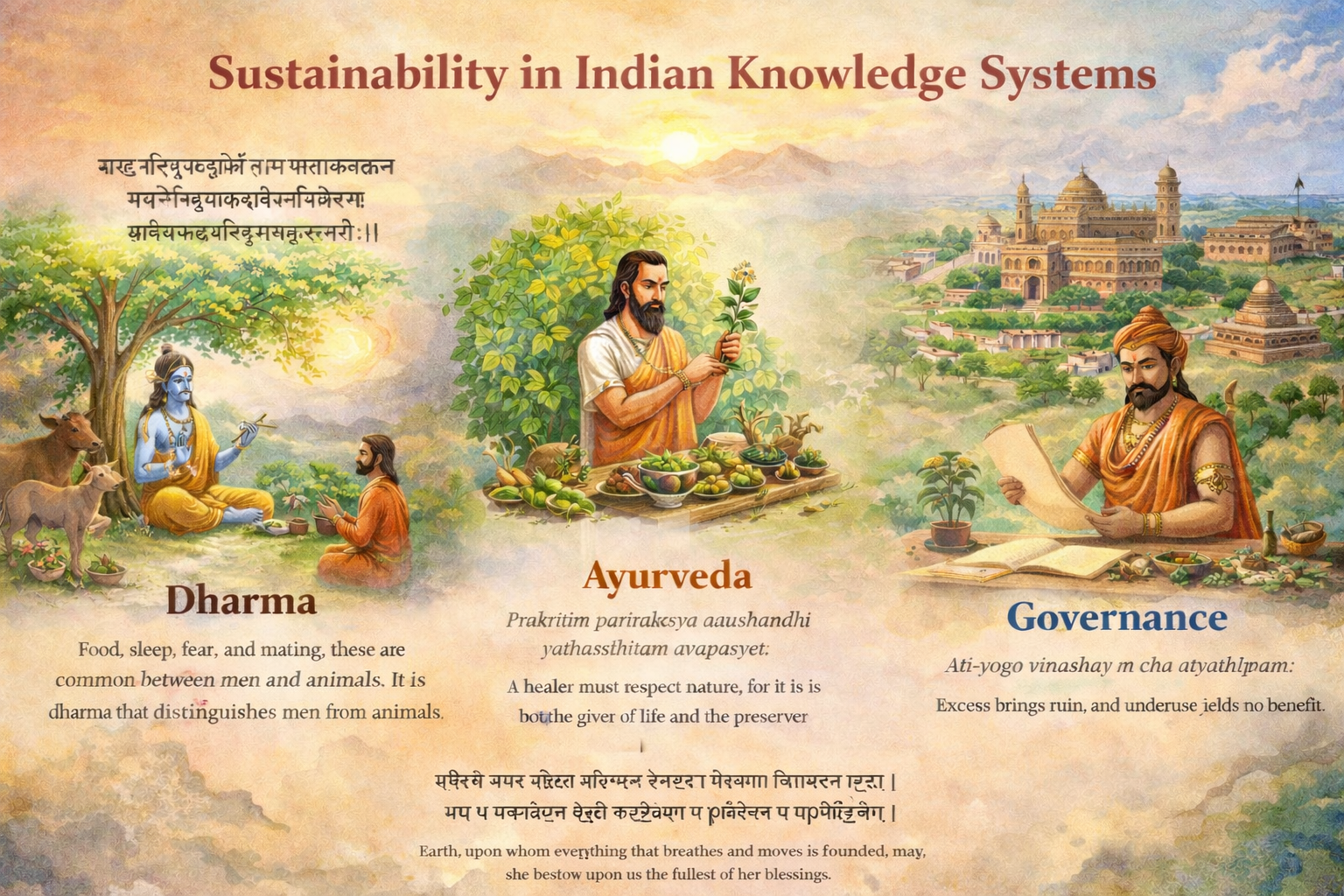
Lucknow: A unique feature of Indian philosophy is the concept of dharma—the ethical and moral law that guides human behaviour. Unlike animals, which are driven by instinct, humans are expected to follow dharma. This distinction between humans and animals is highlighted in the Hitopadeśa: आहारनिद्राभयमैथुनञ्चसामान्यमेतत्पशुभिर्नराणाम् | धर्मोहितेषाम्अधिकोविशेषःधर्मेणहीनापशुभिस्समानाः ||  ‘Food, sleep, fear, and mating, these are common between men and animals. It is dharma, the performance of one’s duties, which specially distinguishes men from animals. Those who are bereft of dharma are no different from animals.’ Thus, philosophical inquiry in India is…

Read More