Geneva: Three days of sharp exchanges between the leaders of the United States, Iran and Israel put the ongoing conflict between them at the centre of the 81st UN General Assembly session in New York, with delegations from dozens of countries walking out during Israeli Prime Minister Benjamin Netanyahu’s address.
Trump: “a big decision” on Iran

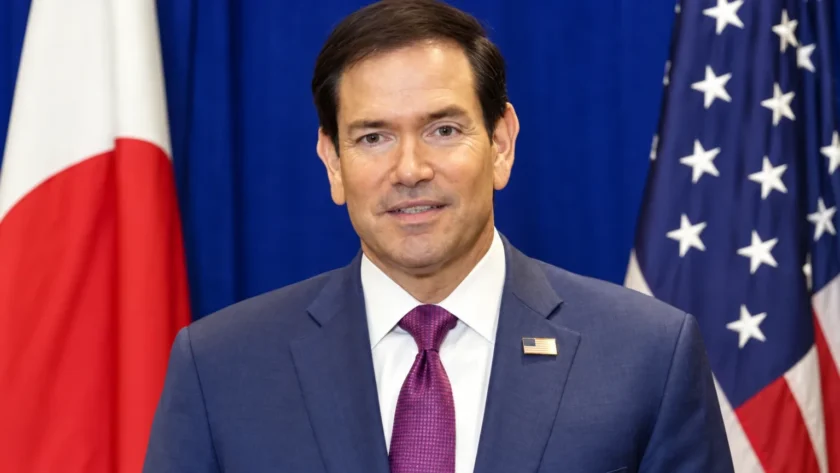
US President Donald Trump opened the tension on September 22, the first day of the session. He said he faced “a big decision”: either strike a deal that gives Iran a chance to rebuild and become a better country, or dismantle the Islamic Republic altogether. In his usual style, he asked whether he should push Iran into “hell” without giving it a chance to survive.
Trump said Washington would never let Iran acquire a nuclear weapon and called it one of his top priorities. He defended US military action against Iran, called the country the world’s “number one sponsor of terrorism,” and accused its government of spreading chaos across the Middle East and beyond for 51 years. He also urged other countries to keep up economic pressure on Tehran and help isolate it.
Pezeshkian: “We are victims of terror, not terrorists”
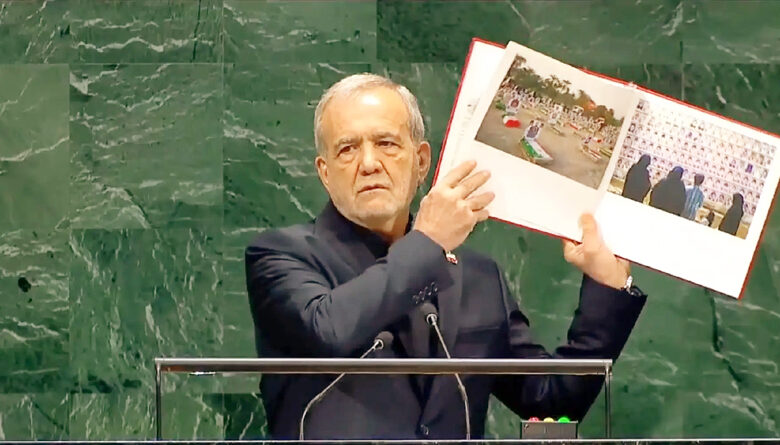
Iranian President Masoud Pezeshkian addressed the Assembly the next day, September 23. The US delegation walked out during his speech, while Israel had already decided to boycott it.
“We are not terrorists, we are victims of terror,” Pezeshkian said. He held up photographs of the late Supreme Leader Ayatollah Ali Khamenei and of children killed at a school in Minab. Turning Trump’s accusation around, he said those who are themselves terrorists were now using the word against Iran. He said Khamenei was killed in a joint US-Israeli strike with no legal basis or justification, and claimed Iran has not attacked another country first in 200 years. “We have only defended ourselves,” he said.
On US threats, he said Iran does not want war but will not bow to pressure. “We have never knelt and we never will bow our heads,” he said, adding that Iran does not need anyone’s permission to defend itself and has never targeted civilians.

On the nuclear question, Pezeshkian said Iran does not want a bomb but will not give up its right to peaceful nuclear technology, which he said is needed for medical treatment, agriculture and industry. He criticised what he called Western double standards, pointing out that Israel has nuclear weapons and is not party to the Non-Proliferation Treaty, yet international bodies impose sanctions only on Iran. Peace, he said, is not possible without resolving the Palestinian question.
He also condemned Israel’s actions in Gaza, saying civilians were being killed there while sanctions were imposed on Tehran. Referring to recent protests inside Iran, he described them not as opposition to the government but as public solidarity with the country and its security. He said the door to talks remains open, but any negotiations must be on equal terms and free of military or economic pressure.
Netanyahu faces mass walkout
On September 24, as Netanyahu began speaking, delegations from 77 countries left the hall. They included 18 Arab states, 14 from Asia, 20 from Africa, 17 from Latin America and the Caribbean, six from Europe and two from the Pacific.
Netanyahu waited about three minutes in silence, then addressed those who had left directly. “Before I begin my speech, I want to make a short announcement,” he said. “If there is anyone else in this hall who is a ‘moral coward’ and hasn’t left yet, please leave now.” He then defended all Israeli military operations, including those in Gaza and against Iran.
Outside UN headquarters, thousands of people rallied against Netanyahu during his speech, with protesters calling him a killer and an enemy of humanity. New York police arrested dozens of demonstrators.