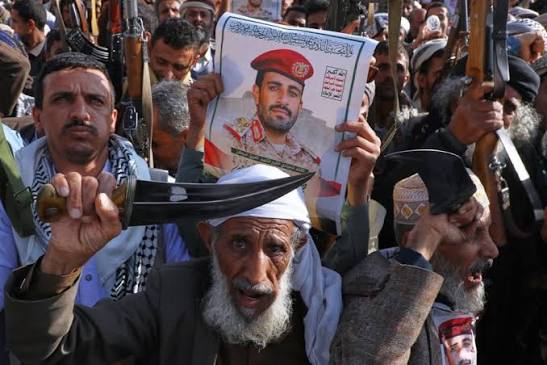
New Delhi: The renewed confrontation between Saudi Arabia and Yemen’s Houthi movement has evolved beyond a bilateral military conflict, with growing implications for oil supplies, maritime trade, inflation and India’s energy security.
Saudi Arabia remains one of the world’s largest oil producers and exporters, while the Houthis have expanded their ability to threaten infrastructure and shipping routes around the Red Sea and Bab el-Mandeb. The simultaneous disruption of key routes in the wider region has increased concerns about the vulnerability of global energy supplies.

Saudi oil production fell to about 6.2 million barrels per day in August 2026, according to recent reporting, down sharply from July and marking the lowest monthly level recorded this year. Crude exports also declined significantly as attacks and maritime restrictions affected access to western Saudi ports, particularly Yanbu.
The security situation became particularly sensitive on September 15, when Saudi authorities said their air defences intercepted a Houthi drone near Makkah before it entered the city’s restricted airspace. The Houthis have rejected the claim that Makkah was deliberately targeted. India subsequently expressed deep concern over the incident and condemned attacks on Saudi territory and actions endangering civilians and infrastructure.
The confrontation highlights the challenge posed by asymmetric warfare. Saudi Arabia possesses advanced aircraft, air-defence systems and substantial financial resources, but the Houthis can employ relatively inexpensive drones and missiles, mobile launch systems and dispersed networks. This creates an economic and operational dilemma in which defending high-value infrastructure against lower-cost weapons can be expensive.
The Houthis have also strengthened their position around parts of Yemen’s Red Sea coastline and the Bab el-Mandeb area. Recent reporting indicates that the group has sought to restrict shipping linked to Saudi Arabia while maintaining its broader military pressure on Riyadh.
One of the most important economic pressure points is Saudi Arabia’s East-West oil pipeline. The 1,200-kilometre system connects the kingdom’s eastern oilfields with the Red Sea port of Yanbu, providing an alternative route that can reduce dependence on the Strait of Hormuz. The pipeline has a capacity of up to 7 million barrels per day, although the amount actually flowing after any restart can differ substantially from its maximum capacity.
The disruption has already influenced oil markets. Brent crude moved above $100 a barrel during the recent escalation before easing as expectations grew that Saudi supply routes could be restored and exports redirected through alternative terminals. Market conditions, however, remain sensitive to developments around both the Red Sea and the Gulf.
For India, prolonged disruption could have wider economic consequences. Higher crude prices generally increase the import cost of energy for a country that relies heavily on overseas supplies. If elevated prices persist, the effects can extend to the rupee, the import bill, transportation costs, freight rates and inflation. The impact on domestic petrol and diesel prices, however, is not automatic because retail prices also depend on taxation, exchange rates, refining and marketing costs and government policy.

The United States faces a difficult strategic calculation. Washington has maintained its security relationship with Riyadh, but reports indicate that President Donald Trump has not committed to direct US military action against the Houthis in support of Saudi Arabia. Instead, American assistance has included intelligence and other forms of support. The approach reflects concerns that opening another direct military front could further widen the regional conflict.
At the same time, Washington has approved a potential $24.3 billion sale of 48 F-35 fighter aircraft and associated equipment to Saudi Arabia. The proposed package includes 49 engines and other support, training and logistics. The notification still has to pass through the US congressional process, and any actual deliveries would take time. It therefore represents a long-term defence modernisation decision rather than an immediate response to the current Houthi threat.
China has also emerged as an important diplomatic actor. Reuters reported that Beijing privately urged Iran to use its influence to restrain the Houthis after a Saudi request for Chinese assistance. China has significant economic interests in Middle Eastern energy supplies and maritime trade, while Beijing also helped broker the Saudi-Iran diplomatic rapprochement in 2023. Its role in the present crisis is therefore primarily diplomatic and economic rather than a direct military one.
The Bab el-Mandeb Strait is central to the wider problem. The narrow waterway connects the Red Sea with the Gulf of Aden and the wider Indian Ocean, while the Red Sea route leads towards the Suez Canal, a crucial link between Asian and European markets. Prolonged insecurity can force commercial vessels to take longer routes around the Cape of Good Hope, increasing sailing times, fuel consumption, insurance expenses and freight costs.
The consequences could therefore extend well beyond Saudi Arabia and Yemen. Energy prices, shipping costs and supply chains are closely interconnected, meaning that a prolonged disruption in major maritime corridors could increase pressure on economies far from the conflict zone.
For India, the situation has an additional strategic dimension because the country depends heavily on secure sea lanes for energy imports and international commerce. New Delhi has condemned attacks on Saudi economic infrastructure and stressed the importance of freedom of navigation through Bab el-Mandeb.
The Saudi-Houthi confrontation should consequently be viewed as part of a wider regional security crisis involving oil production, maritime chokepoints, missile and drone warfare, US policy, Iranian influence and competing diplomatic efforts. The immediate outlook will depend on the restoration of Saudi export capacity, the level of Houthi activity around the Red Sea, developments involving Iran and the extent to which Washington and other regional powers become directly involved.
If disruptions persist simultaneously around Bab el-Mandeb and the Strait of Hormuz, the consequences could move beyond higher crude prices to affect global shipping, inflation, trade flows and energy security.