New Delhi: The United States Army has deployed its Mobile-Low, Slow, Small Unmanned Aircraft Integrated Defeat System (M-LIDS) to India for the first time, bringing an advanced layered counter-drone capability to the 22nd edition of Exercise Yudh Abhyas.
The bilateral military exercise is being conducted at the Mahajan Field Firing Range in Rajasthan, where Indian and US forces are training together on a range of battlefield scenarios involving unmanned aerial systems, precision fires and integrated air defence.

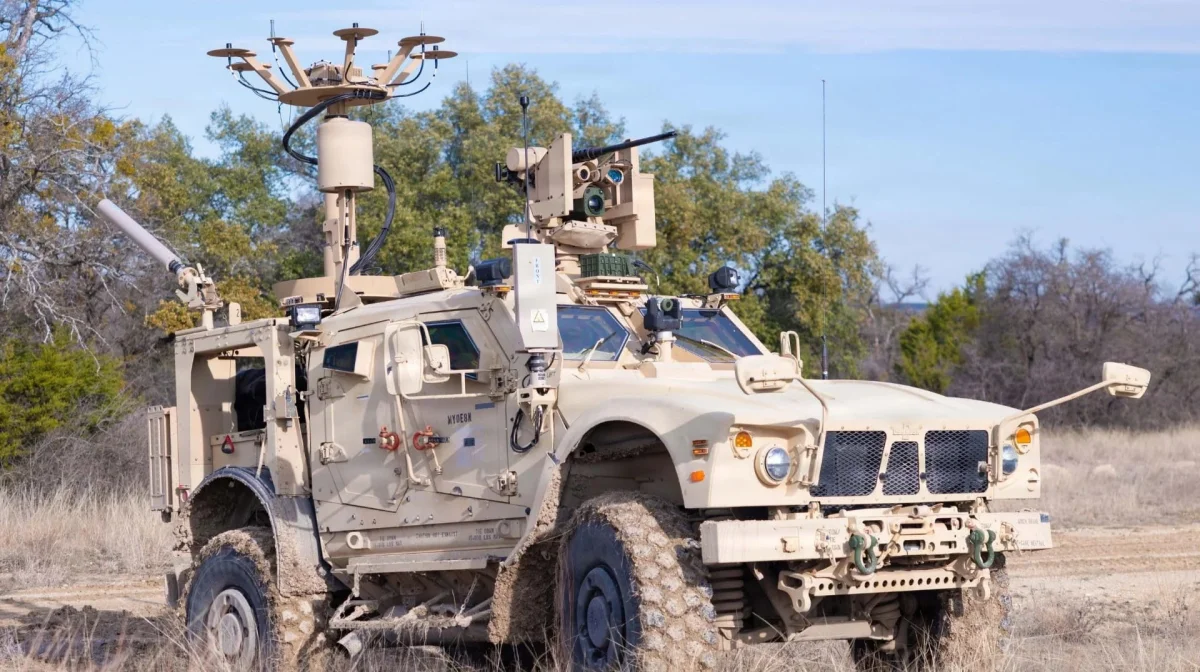
M-LIDS is designed to counter small and low-flying drones through a combination of detection, electronic warfare and physical interception. Rather than depending on a single method, the system combines multiple sensors and weapons to identify and engage aerial threats at different ranges.
The highly mobile architecture uses two Oshkosh M-ATV platforms. One vehicle carries the Ku-band Radio Frequency System (KuRFS) radar, supported by electro-optical and infrared sensors and direction-finding equipment. These systems are designed to detect and track potential drone threats and provide targeting information.
The layered system also includes Coyote Block 2 interceptors for engaging selected aerial targets at greater distances. For threats approaching the defended area, another vehicle is equipped with a remotely operated weapon platform featuring an XM914 30mm automatic cannon.
Electronic warfare provides an additional layer, allowing operators to attempt to disrupt a hostile drone’s communication or control links without immediately resorting to kinetic engagement.
The different components are coordinated through the Forward Area Air Defense Command and Control (FAAD C2) architecture, which connects sensors and weapons to support faster responses to emerging aerial threats.

The deployment forms part of the broader US Army Operation Pathways engagement framework and includes participation by elements of the 3rd Multi-Domain Task Force. During Yudh Abhyas, the emphasis extends beyond individual weapon systems to the coordination of sensors, command networks and firepower across a joint tactical environment.
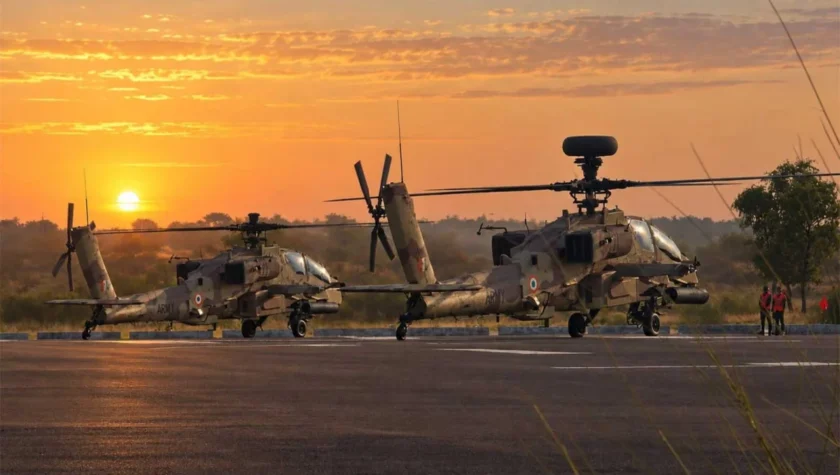
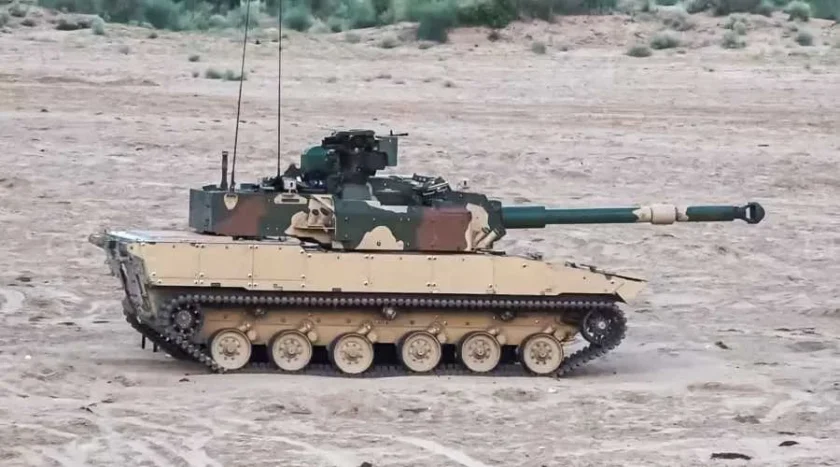
The exercise also features long-range and conventional firepower. US M777 lightweight howitzers are operating alongside India’s Pinaka multiple rocket launcher systems, Dhanush artillery guns and L70 air-defence guns. Indian AH-64E Apache attack helicopters are also participating in the exercise.
The M-LIDS deployment does not by itself indicate that India is preparing to acquire the system. Its presence instead provides an opportunity for Indian personnel to observe and train alongside a sophisticated counter-UAS architecture in a realistic field environment.
As drones, loitering munitions and other unmanned systems become increasingly important in modern warfare, the exercise is providing both militaries with an opportunity to practise detecting aerial threats, coordinating responses, exchanging battlefield information and protecting critical positions.
The inclusion of M-LIDS adds a significant counter-drone dimension to Yudh Abhyas 2026, highlighting the growing importance of layered and networked systems in contemporary military operations.