By Manoj Srivastava
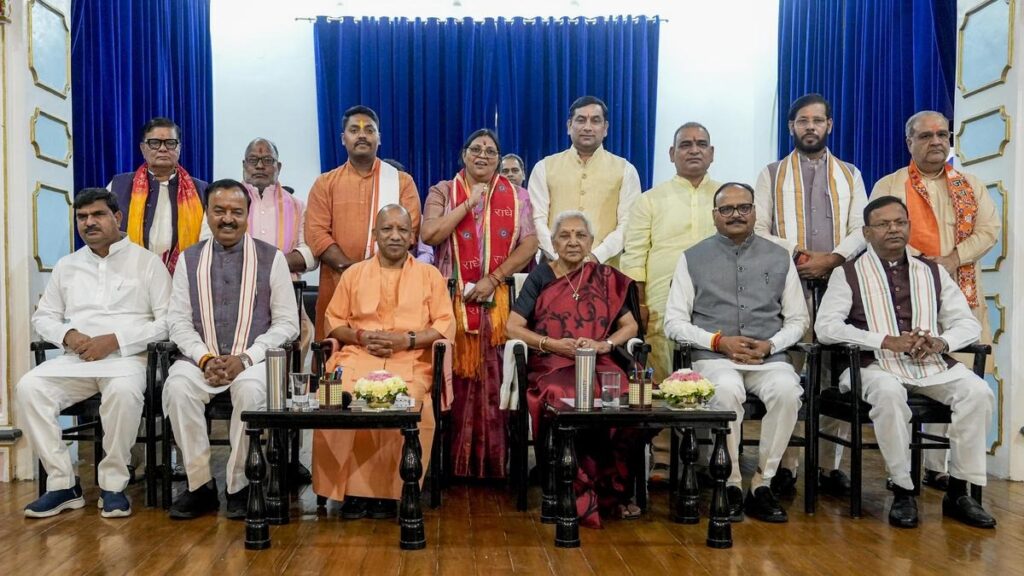
The long-awaited allocation of portfolios in the Uttar Pradesh cabinet expansion has triggered intense political discussions, with Chief Minister Yogi Adityanath sending a clear message that his authority within the government remains firmly intact. Political observers believe the final distribution of departments underlined that despite speculation and lobbying, the Chief Minister retained decisive control over key decisions.

For days, political circles were abuzz with reports suggesting possible changes in major departments such as Home, PWD, Energy and Information. However, the final allocations largely reflected Yogi Adityanath’s own political calculations. The delay in portfolio distribution had further fuelled speculation within the BJP and among supporters of newly inducted ministers.
Former BJP state president Chaudhary Bhupendra Singh, who was expected by many to receive a high-profile department like PWD, was instead entrusted with the MSME portfolio. The move is being viewed as part of the BJP’s strategy to strengthen its outreach among Jat voters ahead of the 2027 Assembly elections. However, some political observers argue that assigning agriculture or sugarcane-related departments could have created a stronger emotional connect with western Uttar Pradesh’s agrarian communities.
Another notable development was the reduction in responsibilities of Dr. Dayashankar Mishra “Dayalu”, who had joined the BJP from Congress and represented Prime Minister Narendra Modi’s parliamentary constituency, Varanasi. The Food Safety and Drug Administration department was reassigned to Minister of State (Independent Charge) Ajit Singh Pal, a move being interpreted as an effort to strengthen the BJP’s hold among the influential Pal community across central Uttar Pradesh.
The elevation of Somendra Tomar from Minister of State to Independent Charge minister was also seen as politically significant. While it enhances his administrative authority, analysts believe the BJP may still need stronger faces to consolidate Gurjar support in western Uttar Pradesh.

Krishna Paswan’s induction as Minister of State has been viewed positively within party circles. A four-time MLA from the Pasi community, her rise reflects the BJP’s continued emphasis on Dalit representation and grassroots leadership.
Similarly, Advocate Kailash Rajput, a four-time MLA from Tirwa in Kannauj, has been given ministerial responsibility, signalling the BJP’s intent to challenge the Samajwadi Party’s traditional dominance in the region through caste and regional recalibration.
The appointment of Surendra Singh Diler from Aligarh’s Khair constituency is being seen as a strategic move to strengthen the BJP’s outreach among Dalit voters in western Uttar Pradesh. Coming from a long-standing BJP family and holding a PhD from Lucknow University, Diler’s inclusion is expected to help the party counter emerging Dalit political narratives in the region.
Hansraj Vishwakarma’s induction has also drawn attention. A former district BJP president from Varanasi and a leader from the Vishwakarma community, his appointment further strengthens representation from Prime Minister Narendra Modi’s parliamentary constituency in the Uttar Pradesh government. He has been linked with the MSME department, a sector expected to play a key role in employment and backward-class outreach.
Political analysts believe the cabinet expansion and portfolio allocation clearly indicate that Chief Minister Yogi Adityanath is shaping both governance and caste equations carefully ahead of the 2027 Assembly elections, while simultaneously reinforcing his leadership within the BJP organisation and government structure.











 https://www.youtube.com/watch?si=RtToJsBhYBatUrym&v=mOuYNSdhjHA&feature=youtu.be