Amritsar: In the northwestern state of Punjab lies Amritsar, a city that carries the soul of Sikh spirituality and the emotional weight of India’s history. Known around the world for the magnificent Golden Temple, Amritsar is far more than a pilgrimage destination. It is a place where devotion, resilience, memory, and celebration exist side by side.
The city welcomes millions of visitors every year—pilgrims seeking spiritual peace, travellers exploring history, and food lovers drawn by Punjab’s legendary cuisine. Yet beyond its bustling streets and crowded bazaars lies a deeper essence: a spirit of humility and warmth that defines Amritsar’s identity.
The Golden Temple: A Sanctuary of Peace
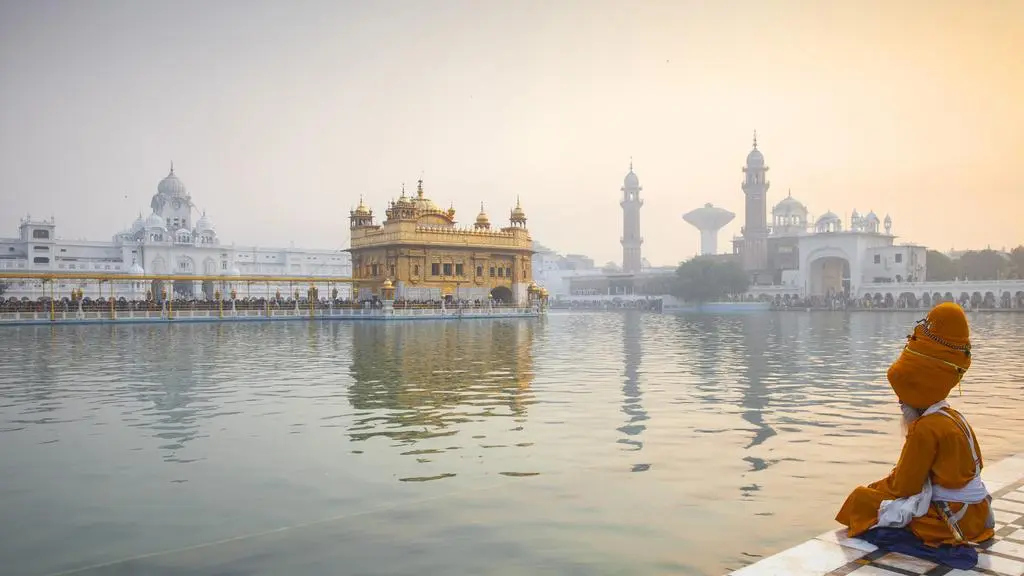
At the center of Amritsar stands the breathtaking Golden Temple, also known as Harmandir Sahib, the holiest shrine in Sikhism. Surrounded by the sacred Amrit Sarovar, the temple appears almost dreamlike as its golden structure reflects softly on the water.
The experience of visiting the Golden Temple is unlike any other. From early morning prayers to the tranquil sound of hymns echoing through the complex, every corner radiates calm and spiritual devotion. The atmosphere remains peaceful despite the constant flow of visitors, creating a rare balance between silence and movement.
At sunrise, the temple glows in soft golden light, while at night it shines brilliantly against the dark sky, its reflection shimmering in the sacred tank. Pilgrims slowly walk around the Sarovar in prayer and contemplation, while volunteers quietly perform acts of service throughout the complex.
One of the most remarkable aspects of the Golden Temple is the Langar, the world’s largest free community kitchen. Every day, more than 100,000 people are served simple vegetarian meals regardless of religion, nationality, or social status. Sitting together on the floor, visitors share food as equals, embodying the Sikh principles of humility, equality, and seva, or selfless service.
The Langar is not merely a meal—it is a living expression of humanity and compassion.
Jallianwala Bagh: A Place of Memory and Reflection
Just a short walk from the Golden Temple stands Jallianwala Bagh, one of the most significant memorial sites in India’s freedom struggle.
The garden commemorates the tragic massacre of April 1919, when British troops opened fire on a peaceful gathering of unarmed civilians. Hundreds lost their lives in an event that deeply altered India’s independence movement and remains etched into the nation’s collective memory.
Today, visitors walk through narrow entrances into a quiet memorial space where bullet marks still scar the walls. The historic well, into which many jumped in desperation to escape gunfire, remains preserved as a reminder of the tragedy.
Despite the crowds that often visit, the atmosphere inside Jallianwala Bagh carries a profound silence. It is a place that invites reflection not only on loss, but also on the resilience and sacrifice that shaped modern India.
The Wagah Border Ceremony: Patriotism on Display
Around 30 kilometers from Amritsar lies the Wagah Border, where India and Pakistan meet at one of the most heavily guarded borders in the world.
Every evening, visitors gather to witness the famous Beating Retreat ceremony, a dramatic display of synchronized marching, military precision, and national pride performed by soldiers from both countries.
The atmosphere is electric. Crowds wave flags, patriotic songs fill the air, and cheers rise from the stands as Border Security Force personnel carry out the high-energy flag-lowering ritual. Though rooted in military tradition, the ceremony has evolved into a symbolic theatrical performance watched by thousands each day.
For many travellers, the experience offers a striking contrast to the spiritual calm of the Golden Temple—revealing another emotional dimension of Amritsar’s identity.
Exploring the City Beyond Its Icons
While the Golden Temple and Jallianwala Bagh dominate most itineraries, Amritsar offers many other cultural and historical experiences.


The Partition Museum stands as one of the most moving museums in the country, documenting the human stories of the 1947 Partition. Through photographs, letters, recordings, and personal belongings, it captures the emotional trauma of displacement and migration that affected millions across the subcontinent.
Elsewhere in the city, sites such as Gobindgarh Fort and the Maharaja Ranjit Singh Museum preserve Sikh heritage and military history. The Durgiana Temple, with its striking architectural resemblance to the Golden Temple, offers another important spiritual landmark.
The bustling Hall Bazaar, meanwhile, reveals the city’s vibrant commercial life, filled with textiles, handicrafts, juttis, spices, and traditional Punjabi goods.
The Flavours of Punjab
Amritsar’s culinary identity is legendary across India. Food here is not simply nourishment—it is an expression of hospitality, celebration, and tradition.
The city’s streets are filled with the aroma of freshly baked kulchas, sizzling tandoors, and rich Punjabi gravies. Among the most iconic local dishes is the famous Amritsari Kulcha, a stuffed flatbread served with spicy chole and butter. Amritsari fish, crisp and flavorful, remains another local favourite.
Traditional meals such as makki di roti with sarson da saag reflect Punjab’s agricultural roots, while towering glasses of lassi provide relief from the region’s warmth. Sweet shops display jalebis, pinnis, and other desserts that have become part of the city’s food culture.
Historic eateries like Kesar Da Dhaba and Bharawan Da Dhaba continue to attract visitors seeking authentic Punjabi flavours passed through generations.
Yet perhaps the most memorable meal for many remains the humble Langar at the Golden Temple, where simplicity and equality become part of the dining experience.
A City Rooted in Warmth and Community
What makes Amritsar unforgettable is not only its monuments or food, but the warmth of its people. Punjabi culture is deeply woven into everyday life here—visible in lively conversations, traditional music, colourful clothing, and open-hearted hospitality.
Festivals bring even greater energy to the city, with streets illuminated by lights, music, and celebrations that reflect Punjab’s vibrant spirit. Despite modernization, Amritsar retains a strong connection to its traditions and values.
Experiencing Amritsar with Respect
Visitors to Amritsar quickly learn that the city is deeply spiritual. At the Golden Temple, modest clothing and head coverings are essential as signs of respect. Shoes must be removed before entering sacred spaces, and silence is encouraged in prayer areas.
Despite the crowds, there is an unspoken rhythm of discipline and devotion that shapes the visitor experience. The city rewards those who slow down and absorb its atmosphere beyond sightseeing alone.
A Journey for the Soul
Amritsar leaves an impression that extends far beyond travel memories. It is a city where spirituality flows through daily life, where history continues to speak through preserved spaces, and where generosity is practiced on a remarkable scale.
Whether standing before the glowing Golden Temple at dawn, reflecting at Jallianwala Bagh, sharing a meal in the Langar, or walking through crowded bazaars filled with the scent of Punjabi food, visitors encounter a city rich in emotion and meaning.
In the end, Amritsar is not simply a destination to visit. It is a place that nourishes both the senses and the spirit, offering a profound glimpse into India’s faith, resilience, and enduring cultural heart.













 https://www.youtube.com/watch?si=RtToJsBhYBatUrym&v=mOuYNSdhjHA&feature=youtu.be