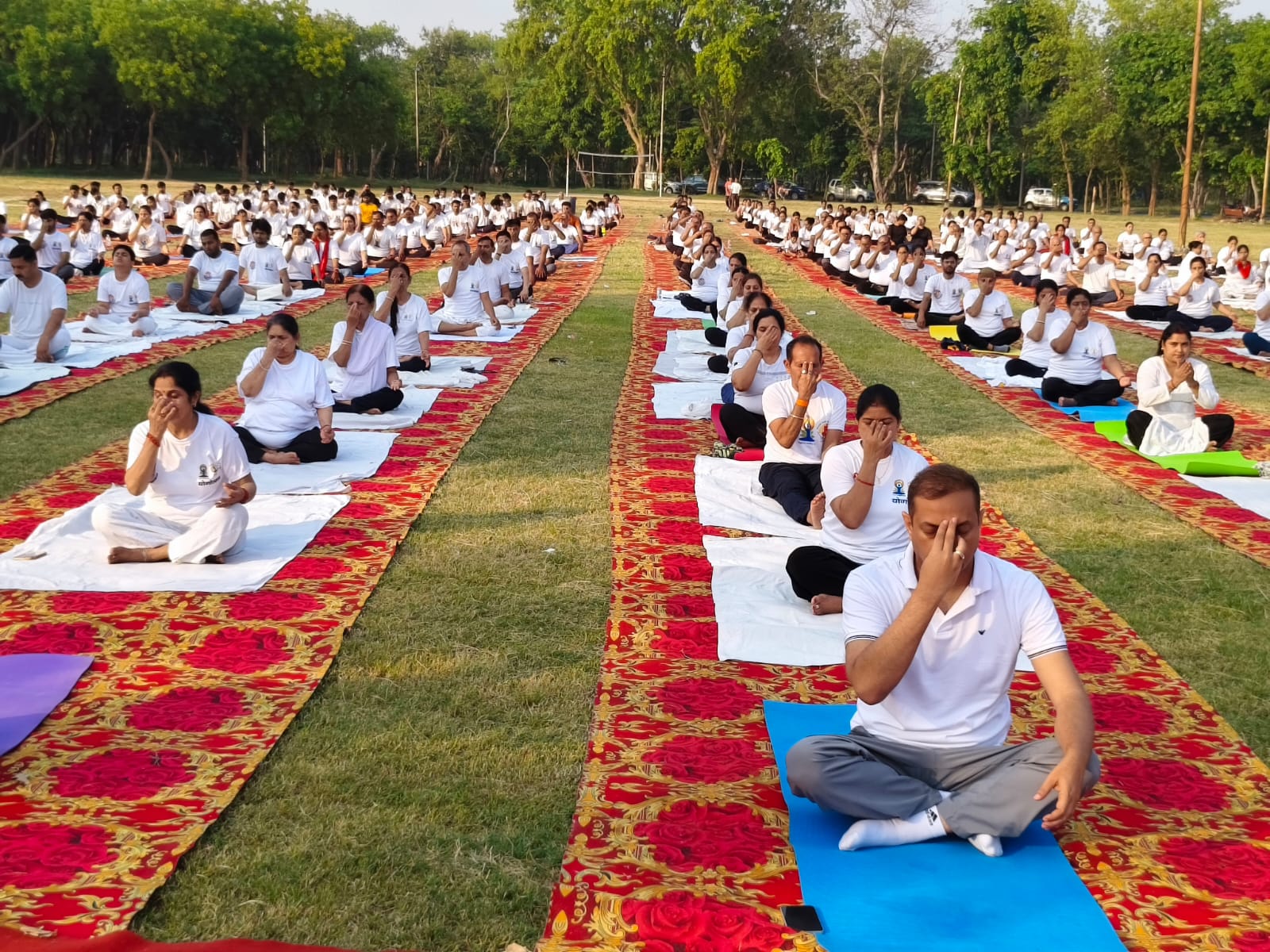
Lucknow: The Department of Yoga, Faculty of Yoga and Alternative Medicine, Lucknow University, in collaboration with the Morarji Desai National Institute of Yoga (MDNIY), New Delhi, under the Ministry of AYUSH, Government of India, organized the “Vihangam Yoga Mahotsav 2026” at the playground of Lucknow University’s Second Campus in Jankipuram on Sunday morning.
The programme commenced at 5:30 a.m. with the ceremonial lighting of the lamp and Saraswati Vandana in the presence of distinguished guests. The chief guest was Padma Shri Prof. Rajendra Prasad, while the event was presided over by Prof. R.A.S. Kushwaha, Proctor of King George’s Medical University (KGMU). Special guests included Eng. Avneesh Kumar Singh, Member of the Uttar Pradesh Legislative Council; Prof. Amita Kanojia, Dean of Student Welfare, Lucknow University; Dr. Sanjay Kumar Singh, In-charge Assistant Director, Regional Ayurvedic Research Institute under the Ministry of AYUSH; and Dr. Rajeev Mishra, Assistant Professor, Department of Social and Preventive Medicine, KGMU.
Event organizer Dr. Amarjeet Yadav said that participants were guided through the Common Yoga Protocol developed by the Government of India for International Yoga Day celebrations. The session included a series of standing, sitting, prone, and supine yogic postures aimed at improving flexibility, balance, muscular strength, and overall health.
Among the standing asanas demonstrated were Tadasana and Chakrasana, which help improve balance and nervous system coordination. Sitting postures such as Vakrasana and Uttan Mandukasana were practiced to enhance concentration and stimulate positive hormonal activity. Participants also performed Bhujangasana and Shalabhasana, which strengthen the spine, improve digestion, and activate abdominal muscles. Supine postures including Setu Bandhasana and Pawanmuktasana were demonstrated for strengthening the back and abdominal region while supporting kidney and heart health.
The Mahotsav also featured breathing exercises such as Kapalabhati, Sheetali Pranayama, Anulom Vilom, and Bhramari Pranayama. Experts explained that regular pranayama enhances lung capacity, improves blood purification, and promotes hormonal balance. Meditation and relaxation practices were also conducted to improve mental well-being, energy levels, and overall consciousness.
A key theme of the event was “Health Through Yoga,” with participants encouraged to adopt yoga as a preventive and therapeutic lifestyle practice.
Special sessions were organized to address lifestyle disorders such as hypertension, diabetes, obesity, arthritis, and stress. Speaking on the occasion, Padma Shri Prof. Rajendra Prasad noted that yoga-based techniques are increasingly being integrated into modern healthcare, reflecting their scientific validity. He shared that he frequently recommends yoga and pranayama to patients suffering from asthma and allergies and has observed encouraging results. Referring to scientific studies, he stated that regular yoga practice can reduce the risk of infections, strengthen immunity, and enhance mental resilience.


Addressing the gathering, MLC Eng. Avneesh Kumar Singh said that due to the visionary efforts of Prime Minister Narendra Modi, International Yoga Day is now celebrated across the world as a global movement. He described yoga as one of India’s greatest gifts to humanity, promoting peace, prosperity, and good health.
Later in the day, a seminar on “Yoga for Healthy Ageing” was held at the university’s Yoga Auditorium. The keynote speaker, Prof. Hari Hriday Awasthi, senior faculty member from the Faculty of Ayurveda at Banaras Hindu University, highlighted the role of yoga and lifestyle management in preventing age-related ailments such as diabetes, hypertension, arthritis, Alzheimer’s disease, and Parkinson’s disease.
Prof. Awasthi emphasized the importance of a balanced diet rich in protein, fibre, and millets for healthy ageing. He recommended Vajrasana, Paschimottanasana, and Bhramari Pranayama for reducing the risk of Alzheimer’s disease, while Virabhadrasana was suggested as beneficial for Parkinson’s patients. For arthritis management, he recommended Titli Asana, Setu Bandhasana, and Anulom Vilom.
Dean of the Faculty of Yoga and Alternative Medicine, Prof. Alok Kumar Yadav, said that regular yoga practice helps maintain vitality, manage age-related physical and mental challenges, and promote a disciplined and balanced lifestyle. He urged people to adopt yoga early in life to prevent future health complications and enhance overall quality of life.
The event witnessed enthusiastic participation from students, yoga practitioners, academicians, healthcare professionals, and members of the public, reinforcing the growing importance of yoga as a holistic approach to health and well-being.











 https://www.youtube.com/watch?si=RtToJsBhYBatUrym&v=mOuYNSdhjHA&feature=youtu.be