Lucknow: In a carefully thought out administrative move with significant political implications, the Government of Uttar Pradesh has appointed outgoing Gram Pradhans of nearly 57,694 Gram Panchayats as “Prashasaks” (administrators) after the completion of their official tenure on May 26, 2026. The decision, taken under the leadership of Uttar Pradesh Chief Minister Yogi Adityanath, has introduced a new model of rural governance continuity at a time when Panchayat elections in the state are facing considerable delays.
For the first time in Uttar Pradesh’s Panchayati Raj history, elected village heads have been entrusted with administrative responsibilities after the end of their tenure instead of handing control to government officials such as Assistant Development Officers (ADOs). The arrangement has been made under provisions of the UP Panchayat Raj Act, 1947, which allows the appointment of administrators for up to six months or until fresh elections are conducted.

The move comes against the backdrop of mounting uncertainty surrounding the three-tier Panchayat elections. While the existing Panchayats elected in 2021 completed their five-year term this month, the process for fresh elections remains incomplete due to pending voter list revisions and the politically sensitive issue of OBC reservations. The state government has constituted a dedicated Backward Classes Commission to comply with the Supreme Court’s “triple test” guidelines, which mandate empirical data collection and scientific determination of reservation quotas before local body polls can be held.
Officials indicate that the finalisation of electoral rolls and reservation structures could take several more months, making immediate elections difficult. Political observers believe the process may eventually push Panchayat polls closer to late 2026 or even beyond, coinciding strategically with the build-up to the 2027 Uttar Pradesh Assembly elections.
Traditionally, whenever Panchayat elections are delayed, bureaucratic administrators are appointed to manage local governance. However, such arrangements have often been criticised for slowing developmental work and weakening grassroots coordination. By retaining outgoing Gram Pradhans as Prashasaks, the government appears to have chosen continuity over administrative disruption.
Under the new arrangement, the Prashasaks will continue to supervise routine village-level operations, including implementation of welfare schemes, sanitation drives, rural employment programmes, road construction, pond cleaning, drinking water projects, and agricultural support initiatives. At the same time, the state has restricted their authority over major financial and policy matters, which will continue to require approval from District Magistrates and higher administrative authorities.

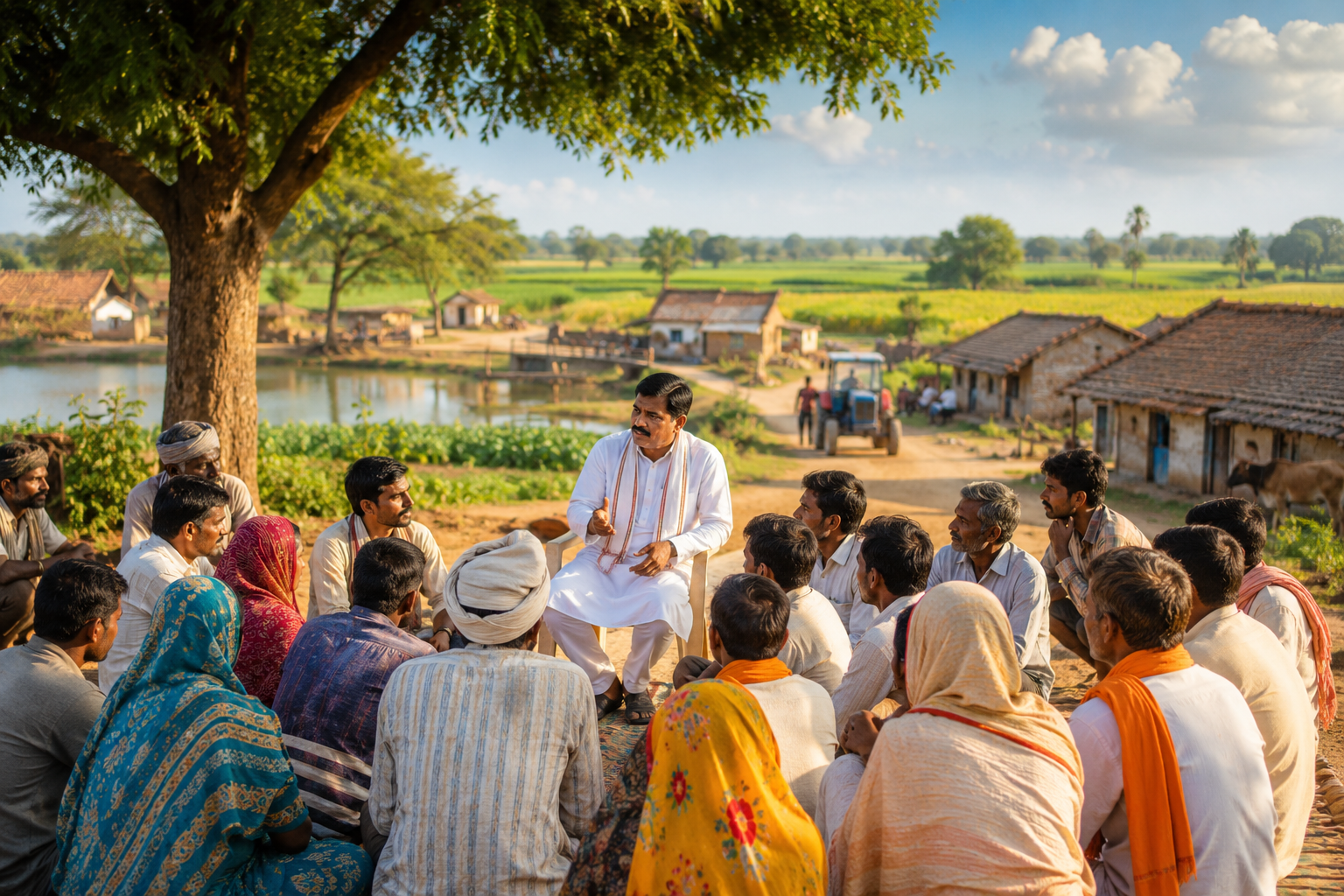
Supporters of the move argue that experienced local representatives are far better equipped to understand village-level realities than temporary bureaucratic appointees. Rural governance in Uttar Pradesh depends heavily on direct public interaction, local trust, and social coordination, particularly during the monsoon and Kharif agricultural season when village-level administration becomes critical.
The political dimension of the decision, however, is impossible to ignore. Gram Pradhans form the backbone of rural political mobilisation in Uttar Pradesh. They influence booth management, welfare distribution, voter outreach, and local dispute resolution across thousands of villages. By allowing them to remain in administrative roles, the government has effectively preserved a strong grassroots network ahead of the crucial 2027 Assembly elections.
Many political analysts see the decision as a strategic effort to maintain organisational continuity in rural areas while preventing anti-incumbency sentiments from gaining momentum. Since most incumbent Gram Pradhans have worked closely with the state administration over the last five years, the arrangement is also being viewed as a confidence-building measure between the government and rural leadership.
Opposition leaders, however, have criticised the move, alleging that the delay in Panchayat elections is politically motivated. Some opposition voices argue that extending the influence of existing office-bearers indirectly weakens the democratic spirit of decentralised governance envisioned under Article 243E of the Constitution, which emphasises timely elections to local bodies. Legal and political debates over the prolonged administrator system are expected to continue in the coming months.
The government, meanwhile, maintains that uninterrupted rural development remains its top priority. Officials argue that replacing thousands of local representatives with unfamiliar administrators would place enormous pressure on district machinery and potentially slow down public welfare projects. The administration believes that retaining known local faces will help maintain momentum in development schemes while ensuring smoother governance at the village level.