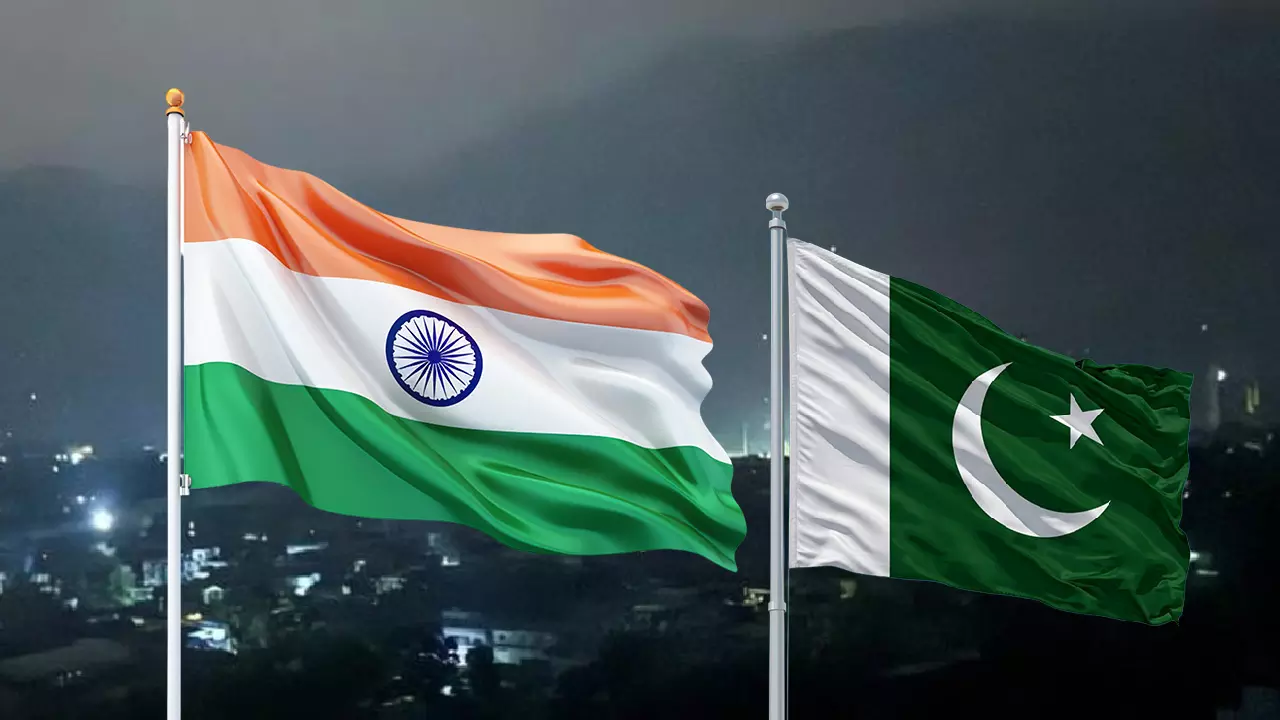
New Delhi: Even amid heightened tensions and persistent criticism from Pakistan, India has once again demonstrated a responsible and humanitarian approach in dealing with cross-border water management issues. The development comes in the backdrop of India’s decision to suspend the Indus Waters Treaty following the terror attack in Pahalgam, a move that dealt a significant diplomatic and strategic setback to Pakistan.
Pakistan has recently urged India to honour the treaty, warning that any attempt to suspend or alter the agreement could create a dangerous global precedent. Addressing an international water conference in Dushanbe, Tajikistan, Pakistan’s Minister for Climate Change and Environmental Coordination, Dr. Musadik Malik, accused India of politicising shared water resources and called for adherence to international mediation mechanisms.

Despite the sharp rhetoric from Islamabad, India has continued to act with restraint and responsibility. Authorities in Jammu and Kashmir recently opened the spillway gates of the Salal Dam in Reasi district to manage silt clearance and regulate water levels ahead of the monsoon season. Anticipating a sharp rise in water flow in the Chenab River, India issued an early warning to Pakistan to help authorities prepare for possible flooding in downstream areas.
Following India’s alert, Pakistan’s Punjab province declared a flood warning, and local disaster management officials were directed to maintain round-the-clock monitoring along the Chenab River. This is the second such instance in recent months where India has shared critical flood-related information with Pakistan despite strained diplomatic relations. A similar warning issued by India in August 2024 regarding potential flooding in the Sutlej River reportedly helped Pakistan evacuate thousands of residents from vulnerable areas.

The Indus Waters Treaty, brokered by the World Bank in 1960, governs the sharing of the Indus River system between India and Pakistan. Under the agreement, India has rights over the eastern rivers — Ravi, Beas, and Sutlej — while Pakistan primarily depends on the western rivers — Indus, Jhelum, and Chenab — for irrigation and agriculture.
Pakistan’s concern over water availability has intensified as the country remains heavily dependent on the Indus basin for farming, particularly in Punjab province, often referred to as the country’s agricultural backbone. At various global forums, Pakistani leaders have repeatedly raised concerns over India’s stance on the treaty and water-sharing mechanisms.
However, India’s latest action reflects a broader message — while New Delhi remains firm on issues related to terrorism and national security, it continues to uphold humanitarian principles and regional responsibility. By sharing advance flood warnings despite political tensions, India has reinforced its image as a mature and responsible regional power committed to protecting civilian lives and preventing humanitarian crises.