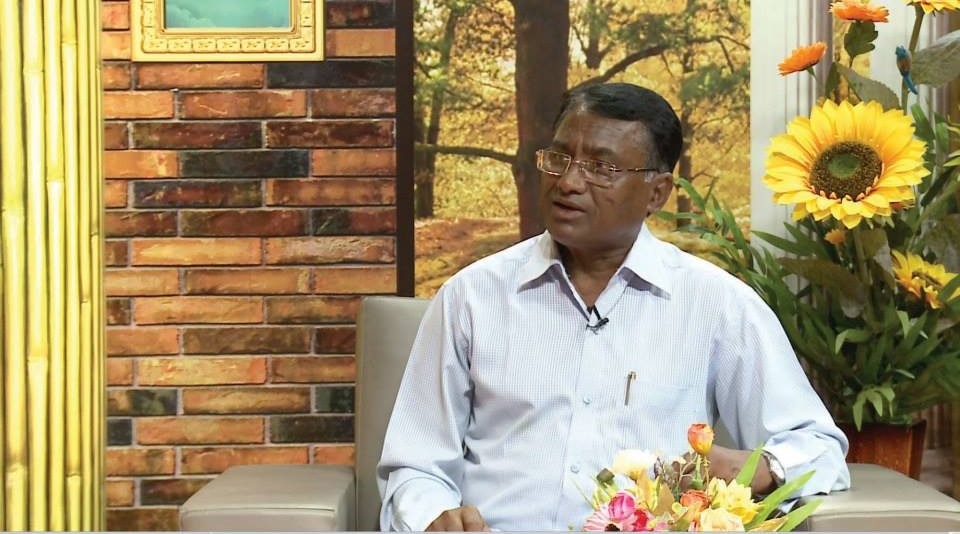
New Delhi: Ashok Kumar Singh — the man widely remembered as “the Artist,” son of hockey legend Dhyan Chand, and the first Indian player to feature in four Hockey World Cups — believes this year’s Indian squad has what it takes to end a 51-year wait for another World Cup medal, provided the forward line stays sharp.
Ashok Kumar’s own World Cup journey began in 1971, when India won bronze at the inaugural edition. Two years later, in Amsterdam, India took silver, before finally striking gold in 1975 — India’s first and, to date, only World Cup title. He played his fourth and final World Cup in 1978 in Buenos Aires under captain V.J. Philips, where India finished sixth after a loss to Spain. The years after 1975 were unkind to Indian hockey: as European nations pushed the international game from grass onto artificial turf — a shift that began at the 1976 Montreal Olympics, fittingly opened by an India-Argentina match — India struggled for decades to adapt and steadily slipped down the rankings.
Born in Meerut on June 1, 1950, the now 76-year-old Ashok Kumar also won bronze at the 1972 Munich Olympics and was part of Indian squads that took silver at the Asian Games in 1970, 1974, and 1978.
Since his 1978 World Cup appearance, only Dhanraj Pillay (1990, 1994, 1998, 2002) has gone on to play four World Cups for India. Now, veteran midfielder Manpreet Singh and striker Mandeep Singh are set to match that feat at the 2026 tournament — likely their last World Cup appearance as well.
“Don’t Be Afraid of Any Opponent”
It was the forward line of Ashok Kumar, B.P. Govinda, and V.J. Philips — playing under captain Ajit Pal Singh — that powered India to its historic 1975 title. Reflecting on the current squad, Ashok Kumar said that whenever the Indian team heads into a major tournament like the World Cup, the expectation from the Sports Authority of India, the government, and hockey fans alike is always the same: bring home a medal. He noted that for several current players, 2026 will likely be their final World Cup, and that they’ll be determined to leave nothing on the table. In his view, the current Indian side has no real weaknesses, and if the forward line finds its rhythm, a medal is well within reach — making the long-awaited hope of a podium finish, 51 years after 1975, far from unrealistic. He added that while the 1975 win remains a historic milestone, today’s team needs to write its own chapter at the 2026 World Cup.

He went on to stress that a team’s real strength lies in its forward line, even though the midfield and defense play a supporting role. Breaking into the opposition circle, converting chances, and winning penalty corners, he said, are primarily the forward line’s job — done in close coordination with the midfield. He pointed to India’s current front line of Abhishek Nain, Sukhjeet Singh, Mandeep Singh, Dilpreet Singh, and Shilanand Lakra as a genuinely sharp unit. Success at a tournament of this scale, he added, comes down to hard work, discipline, composure under pressure, and morale — teams that manage to hold their nerve under pressure are ultimately the ones that walk away with medals. His message to the squad, forward line included, was simple: don’t fear any opponent, play India’s natural game, and go into every match with only one goal — winning it.
On Strategy, Drag-Flickers, and Goalkeeping
Ashok Kumar also weighed in on the heavy focus teams and pundits place on tactics and formats ahead of big tournaments, suggesting that the real secret to success is simpler than all the talk around “strategy” suggests — it comes down to a team finding its rhythm and staying focused on converting chances into goals. Whatever system the coach sets up, he said, the players executing it in sync, with individual skill shown at the right moments, is what ultimately delivers results. He expressed confidence in India’s drag-flicking options — captain Harmanpreet Singh, Jugraj Singh, Amit Rohidas, and Rajinder Singh — but noted their effectiveness depends on the forward line working with midfielders Manpreet, Hardik, Vivek Sagar Prasad, and Nilakanta Sharma to sustain pressure inside the opposition circle and force penalty corners for the flickers to convert. If the forward line can also chip in with field goals alongside penalty corners, he said, that would be an added bonus — and a forward line converting chances consistently, combined with strong results, is what carries a team deep into the tournament regardless of format.
On goalkeeping, he called it a critical piece of modern hockey success, pointing to India’s lineage of standout keepers — from Shankar Laxman, Charles Cornelius, Ashish Ballal, and A.B. Subaiah in earlier eras to P.R. Sreejesh more recently, who played a key role in India’s back-to-back Olympic bronze medals. He said the responsibility now falls on new goalkeeper Mohit and the experienced Suraj Karkera to guard India’s net and help the team reach the podium at the 2026 Men’s Hockey World Cup — and expressed confidence that the Indian team would indeed return home with a medal.