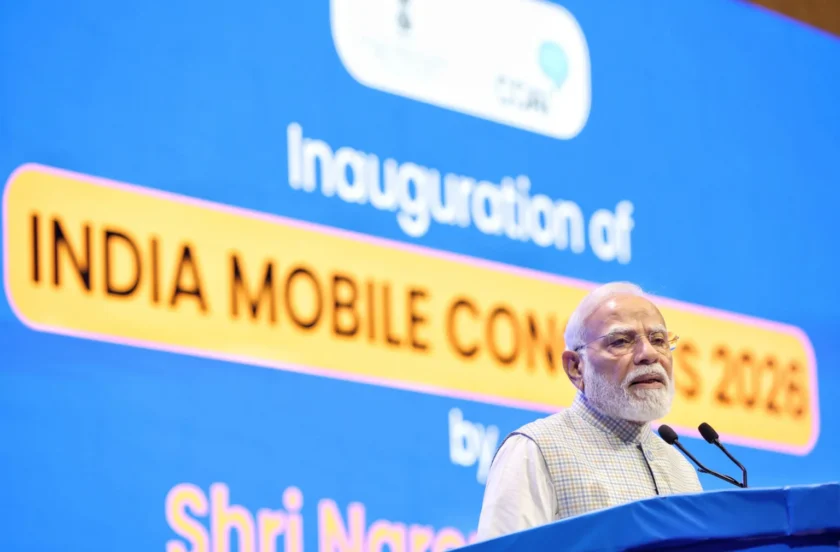
New Delhi: When Narendra Modi took the oath of office as India’s Prime Minister on May 26, 2014, he carried with him a promise that resonated across the nation: “Sabka Saath, Sabka Vikas”—development for all through collective participation. Twelve years later, in June 2026, India stands at a significant milestone. Modi has completed more than a decade in office, emerging as one of the country’s longest-serving non-Congress prime ministers and one of the most influential political leaders of contemporary India.
The journey of these twelve years has been marked by ambitious reforms, large-scale welfare programs, rapid infrastructure development, technological transformation, and a redefined global profile for India. Alongside Modi throughout this period has been Union Home Minister Amit Shah, whose organizational brilliance and administrative leadership have played a crucial role in shaping both the Bharatiya Janata Party’s political success and the government’s governance agenda.

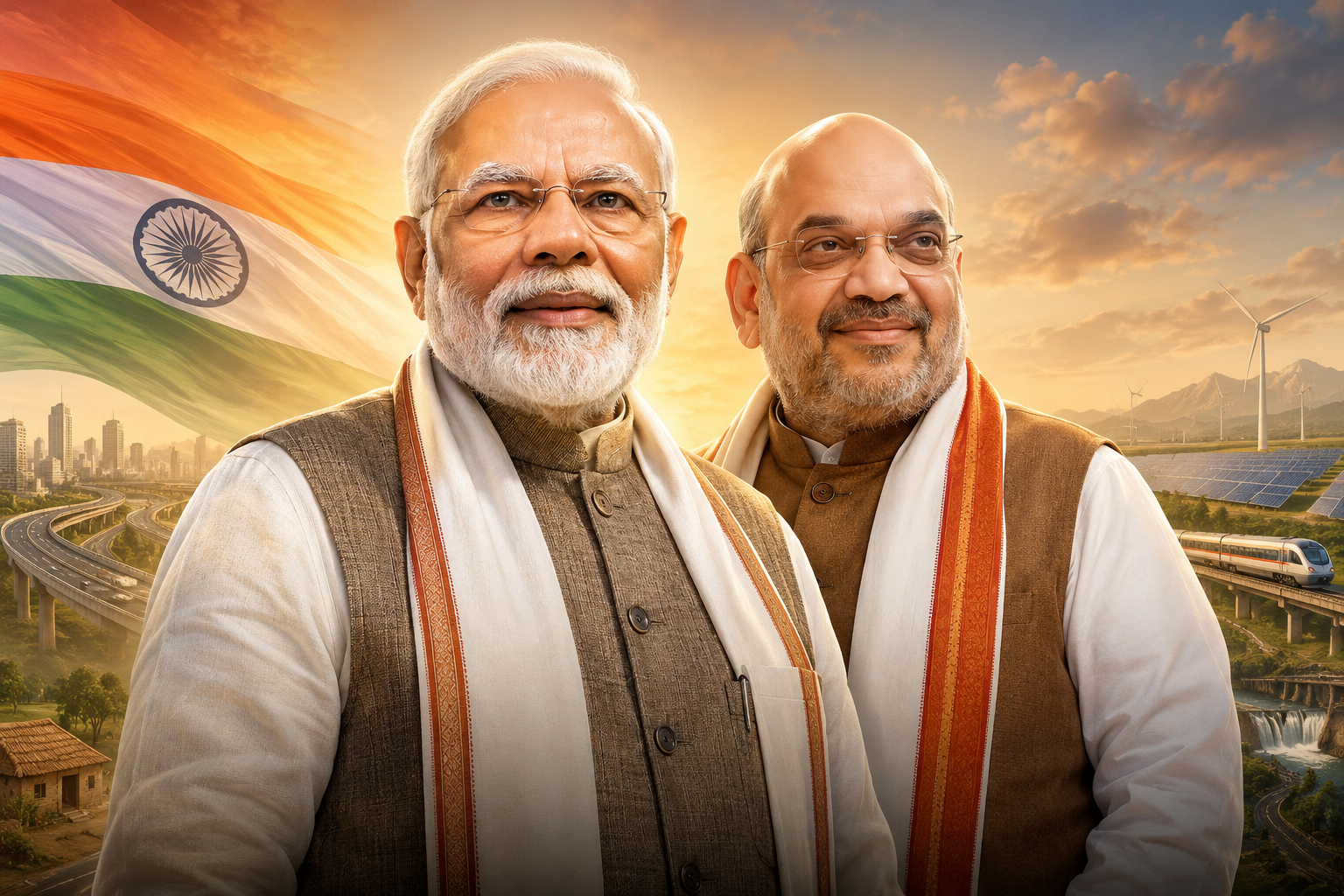
Together, the Modi-Shah partnership has become one of the most consequential political combinations in modern Indian history.
A Governance Model Focused on Scale and Delivery
One of the defining characteristics of the Modi era has been its emphasis on direct delivery of benefits to citizens. The government sought to reduce leakages, improve transparency, and ensure that welfare schemes reached intended beneficiaries.
The launch of the Pradhan Mantri Jan Dhan Yojana revolutionized financial inclusion by bringing millions of previously unbanked citizens into the formal banking system. Coupled with Aadhaar integration and Direct Benefit Transfers (DBT), welfare payments increasingly moved directly into beneficiaries’ bank accounts, minimizing intermediaries and improving accountability.
The Swachh Bharat Mission became one of the largest sanitation campaigns in the world, transforming cleanliness into a national movement. Massive investments in rural sanitation and public awareness helped improve access to toilets and hygiene facilities across vast sections of the country.
Simultaneously, initiatives such as Ujjwala Yojana provided LPG connections to economically weaker households, while Ayushman Bharat expanded access to healthcare through one of the world’s largest government-funded health insurance programs. Village electrification, once a persistent challenge, advanced rapidly, with electricity reaching nearly all inhabited villages.
These initiatives collectively strengthened the government’s narrative of delivering benefits directly to ordinary citizens and improving quality of life at the grassroots level.
Reshaping the Economy Through Structural Reforms
The Modi government’s economic agenda included several landmark reforms aimed at modernizing India’s economic framework.
The introduction of the Goods and Services Tax (GST) in 2017 created a unified national market by replacing a complex network of indirect taxes. While businesses initially faced adjustment challenges, GST represented one of the most significant tax reforms in independent India.
Another major reform was the Insolvency and Bankruptcy Code (IBC), which sought to address the long-standing issue of stressed assets and improve the ease of doing business. By creating a structured mechanism for insolvency resolution, the government aimed to strengthen financial discipline across industries.
Perhaps the most debated policy decision of Modi’s tenure was demonetization in November 2016. The withdrawal of high-value currency notes generated widespread disruption, particularly in the informal sector. While supporters viewed it as an effort to combat black money and counterfeit currency, critics questioned its economic costs and effectiveness. Nevertheless, the decision remains one of the most discussed economic interventions in recent Indian history.
At the same time, India witnessed an extraordinary digital transformation. The Unified Payments Interface (UPI) revolutionized financial transactions, making digital payments accessible, seamless, and widely adopted. Today, India stands among the global leaders in digital financial infrastructure, with billions of transactions taking place monthly through digital platforms.
Infrastructure as a Visible Symbol of Change
Infrastructure development emerged as one of the most visible hallmarks of the Modi years.
The country witnessed rapid expansion of highways, expressways, airports, railway modernization projects, and metro networks. New freight corridors, improved logistics systems, and investments in ports aimed to strengthen India’s economic competitiveness and reduce transportation costs.
Renewable energy became another area of focus. Solar power capacity expanded dramatically, positioning India among the world’s leading renewable energy markets. The push toward clean energy aligned economic growth with sustainability goals and strengthened India’s climate commitments.
Large-scale digital infrastructure also transformed governance and public service delivery. Expanding internet connectivity, digital public platforms, and e-governance initiatives helped bridge gaps between citizens and government services.
Supporters argue that this infrastructure push has laid the foundation for long-term economic growth, while critics continue to debate the pace of employment generation and the broader economic benefits flowing from these investments.
Welfare with a Focus on Dignity
The government increasingly framed welfare not merely as assistance but as empowerment.
Programs such as Jal Jeevan Mission significantly expanded access to household tap water connections, while the Pradhan Mantri Awas Yojana focused on providing housing for economically weaker sections.
Farmers received support through PM-KISAN, which delivers direct income assistance to eligible agricultural households. The emphasis on technology-enabled governance sought to ensure that benefits reached beneficiaries more efficiently than under previous systems.
This focus on last-mile delivery became central to the government’s political narrative, highlighting measurable outcomes rather than solely announcing schemes.
India’s Rising Global Profile
Over the past twelve years, India’s foreign policy has become more visible, confident, and proactive.

Prime Minister Modi’s active diplomatic outreach enhanced India’s engagement with major powers while strengthening relationships across the Global South. India played a prominent role in international forums and increasingly positioned itself as a key voice on issues ranging from climate change to global economic governance.
The country’s vaccine outreach during the COVID-19 pandemic reinforced its image as a responsible global partner. Strategic partnerships in the Indo-Pacific region gained momentum, reflecting India’s growing geopolitical importance.
While challenges remained in managing complex neighborhood relationships and regional security concerns, India’s international standing undeniably expanded during this period.
Amit Shah: The Organizational Engine Behind BJP’s Expansion
If Narendra Modi became the face of governance and national leadership, Amit Shah emerged as the architect of political consolidation.
As BJP National President from 2014 to 2020, Shah transformed the party into one of the world’s largest political organizations. His focus on grassroots mobilization, booth-level management, membership expansion, and data-driven electoral strategies reshaped the BJP’s organizational structure.
Under his stewardship, the party expanded into regions where it had traditionally been weak and secured significant victories in national and state elections. The BJP’s commanding performance in the 2019 Lok Sabha election reflected the effectiveness of this organizational machinery.
Political observers often describe Shah as the strategist who translated Modi’s popularity into electoral success through meticulous planning and execution.
Home Minister and Policy Executor
In 2019, Amit Shah assumed the role of Union Home Minister and quickly became one of the most influential figures in the government.
Among the most consequential decisions during his tenure was the abrogation of Article 370 and Article 35A, which granted special status to Jammu and Kashmir. The move fulfilled a long-standing BJP commitment and fundamentally altered the constitutional relationship between the region and the Union government.
Supporters hailed the decision as a historic step toward national integration and development, while critics raised concerns regarding federalism, political freedoms, and civil liberties.
Shah also oversaw the implementation of the Citizenship Amendment Act (CAA), a legislation that generated significant public debate and protests. The government maintained that the law aimed to provide refuge to persecuted minorities from neighboring countries, while opponents argued that it raised concerns about religious discrimination.
Beyond these headline decisions, his tenure focused heavily on internal security, counterterrorism efforts, border management, and reducing insurgency-related violence in several regions, particularly the Northeast.
Navigating Challenges and Criticism
No twelve-year assessment can overlook the debates and controversies that accompanied the government’s journey.
Critics have expressed concerns regarding institutional independence, media freedom, civil liberties, and the treatment of dissent. Questions have also been raised about unemployment, economic inequality, and social polarization.
The COVID-19 pandemic represented one of the toughest tests of governance during Modi’s tenure. While the vaccination campaign became one of the largest in the world, challenges related to healthcare infrastructure, migrant workers, and economic disruptions sparked intense public discussion.
Similarly, concerns about job creation continue to feature prominently in economic debates. While India remains one of the world’s fastest-growing major economies, translating growth into large-scale employment opportunities remains an ongoing challenge.
The government, however, maintains that welfare expansion, infrastructure investments, digital transformation, and economic reforms have improved opportunities and strengthened India’s long-term development trajectory.
The Enduring Modi-Shah Partnership
Perhaps the most enduring feature of the last twelve years has been the synergy between Narendra Modi and Amit Shah.
Their partnership combines complementary strengths. Modi brings mass appeal, communication skills, policy vision, and international stature. Shah contributes organizational discipline, strategic planning, and administrative execution.
Together, they have reshaped India’s political landscape, creating a model of governance characterized by centralized decision-making, technology-driven administration, and strong electoral organization.
As India advances toward the vision of Viksit Bharat 2047, the legacy of these twelve years will continue to be debated, analyzed, and interpreted through multiple lenses. Supporters see a period of national resurgence, stronger governance, and accelerated development. Critics view it as an era that raises important questions about institutions, social cohesion, and democratic balance.
What remains undeniable is that the Modi-Shah era has left a profound imprint on India’s political, economic, and social trajectory. Whether judged through welfare delivery, infrastructure expansion, political transformation, or governance reforms, the past twelve years represent one of the most consequential chapters in contemporary Indian history.