Addressing India-Australia CEO Forum in Melbourne, Prime Minister highlights opportunities in clean energy, nuclear power, infrastructure, AI and semiconductors
Melbourne: Prime Minister Narendra Modi has called for a stronger India-Australia strategic and economic partnership, saying the two nations are well-positioned to shape a more resilient global future amid rising geopolitical uncertainty, energy security concerns and disruptions to global supply chains.

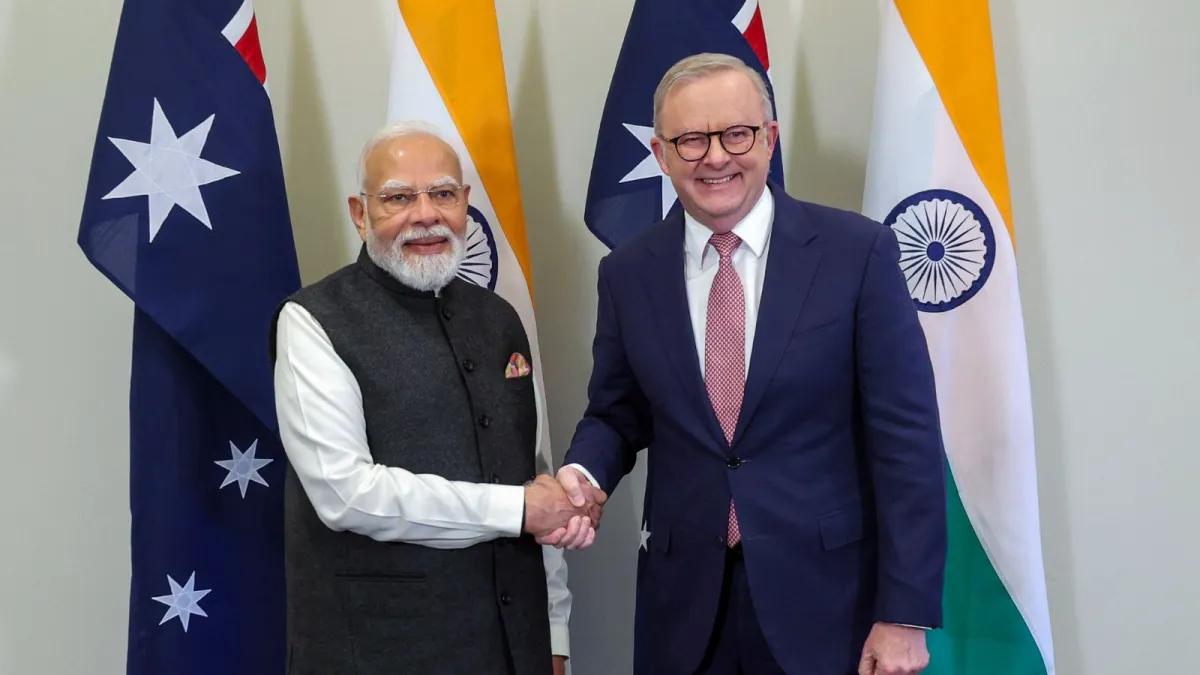
Speaking at the India-Australia CEO Forum in Melbourne after holding bilateral talks with Australian Prime Minister Anthony Albanese, Modi said the trusted partnership between the two democracies has become increasingly significant at a time when the world is confronting multiple economic and strategic challenges.
“The current global environment demands reliable partnerships,” the Prime Minister said, adding that India and Australia have laid a strong foundation for long-term cooperation by leveraging each other’s strengths over the past few years.
Highlighting the success of the India-Australia Economic Cooperation and Trade Agreement (ECTA), signed in 2022, Modi said India’s exports to Australia have doubled since the pact came into force, creating new opportunities for businesses and expanding market access for industries in both countries.
The Prime Minister also underscored India’s rapid transition towards clean energy, noting that the country is expanding manufacturing capabilities in green hydrogen, solar modules, wind turbines and hydroelectric projects. He reiterated India’s commitment to achieving 500 GW of renewable energy capacity by 2030 and reaching net-zero carbon emissions by 2070, adding that Australian technology, investment and natural resources could play a vital role in accelerating this transition.
Modi further highlighted India’s ambitious plan to build 100 GW of nuclear power capacity by 2047. Referring to recent reforms, he said the Indian government had opened the nuclear energy sector to private companies through a landmark legislative change, creating fresh opportunities for international collaboration. Given Australia’s vast uranium reserves, he said bilateral cooperation in nuclear energy could emerge as a key pillar of the strategic partnership.

Pitching India as one of the world’s most attractive investment destinations, the Prime Minister said the country offers significant long-term opportunities in ports, airports, highways, railways and urban infrastructure. He noted that India is expanding its national highway network at a record pace of nearly 34 kilometres per day, while more than 18 kilometres of new railway lines are being laid daily, reflecting the scale and speed of infrastructure development.
Modi also called for deeper collaboration in advanced manufacturing and emerging technologies. He said India is now the world’s second-largest producer of crude steel and invited Australian companies to partner in developing low-carbon aluminium, green iron and sustainable manufacturing technologies.
Emphasising India’s growing technological ecosystem, the Prime Minister said the government has committed more than US$10 billion under initiatives such as the India AI Mission, the National Quantum Mission and the Semiconductor Programme to foster world-class innovation and manufacturing.
Extending a special invitation to Australian financial institutions and pension funds, Modi pointed out that Australia’s pension funds manage assets worth over US$4 trillion. Assuring investors of a stable and transparent investment environment, he encouraged them to explore opportunities in data centres, artificial intelligence, quantum computing, semiconductors and digital public infrastructure.
The Prime Minister said stronger economic collaboration between India and Australia would not only generate mutual prosperity but also contribute to building resilient global supply chains and sustainable solutions for the future.