Islamabad: Balochistan, Pakistan’s largest and resource-rich province, has once again emerged as the focal point of escalating violence and international attention. Reports of intensified attacks by Baloch insurgent groups, coupled with large-scale military operations launched by Pakistani security forces, suggest that the decades-old conflict has entered a more volatile phase. At the same time, competing narratives on social media and online platforms have made it increasingly difficult to distinguish verified facts from propaganda. What is clear, however, is that the unrest is rooted in long-standing political grievances, economic disparities and questions of identity rather than recent security incidents alone.
The origins of the conflict date back to Pakistan’s formation in 1947. Many Baloch nationalists argue that the former princely state of Kalat was incorporated into Pakistan against the wishes of a significant section of its leadership. Over the decades, this historical dispute evolved into a nationalist movement that has periodically erupted into armed insurgency.

Economic issues remain at the heart of the unrest. Balochistan possesses abundant reserves of natural gas, copper, gold and other valuable minerals, yet it continues to rank among Pakistan’s least developed regions. Nationalist groups and many local activists contend that while the province contributes significantly to the country’s resource base, its residents have not received a proportionate share of development, employment opportunities, education or healthcare. Successive Pakistani governments have rejected claims of deliberate exploitation, pointing to investments in infrastructure and development projects. Nevertheless, perceptions of unequal resource distribution continue to fuel resentment in many parts of the province.
Security analysts note that insurgent groups such as the Baloch Liberation Army (BLA), which Pakistan has designated a terrorist organisation, have demonstrated greater operational capability in recent years. Their attacks have increasingly targeted security installations, transportation infrastructure and projects linked to strategic investments. Some observers also point to the growing participation of educated youth and women in sections of the nationalist movement, indicating shifts in its social composition.
Pakistan’s security establishment maintains that the insurgency is supported by hostile foreign actors and insists that military operations are necessary to safeguard national sovereignty and protect civilians. Officials argue that security measures are essential to counter armed groups responsible for attacks on both military personnel and civilians. However, critics contend that a predominantly military response has not resolved the underlying political issues driving the conflict.
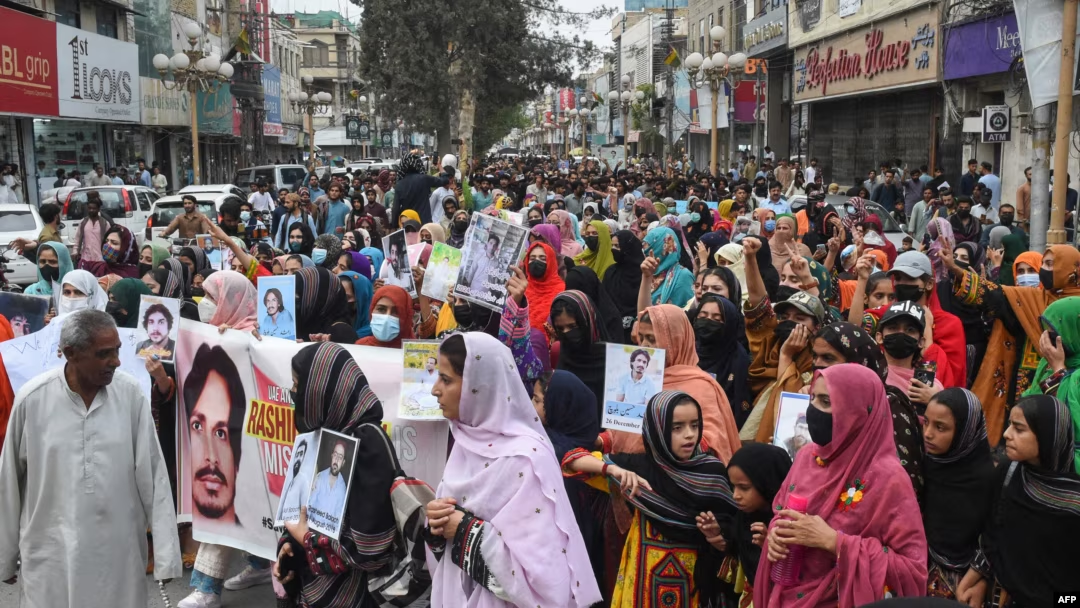
Human rights remain one of the most contentious dimensions of the Balochistan issue. Domestic and international rights organisations have repeatedly raised concerns over allegations of enforced disappearances, arbitrary detentions and extrajudicial killings in the province. Families of missing persons have organised protests and legal campaigns seeking information about their relatives. Pakistani authorities have denied systematic wrongdoing and maintain that law enforcement actions are conducted within the legal framework, though the allegations continue to attract international scrutiny.

The province’s strategic importance has further complicated the situation. Balochistan is home to the Gwadar Port, a key component of the China-Pakistan Economic Corridor (CPEC), itself a flagship project under China’s Belt and Road Initiative. Beijing has invested billions of dollars in infrastructure and connectivity projects across the region. While the Pakistani government views these investments as engines of economic growth, some local communities argue that they have not benefited adequately and fear demographic and economic marginalisation. As a result, Chinese personnel and infrastructure associated with CPEC have periodically become targets of militant attacks, increasing pressure on Islamabad to strengthen security.
Regional dynamics also influence the conflict. Balochistan shares long and porous borders with Iran and Afghanistan, making cross-border security a persistent challenge. The movement of militants, weapons and smuggling networks across these frontiers complicates counterinsurgency operations and adds another layer of geopolitical complexity.
Whether Balochistan is truly slipping beyond Pakistan’s control remains a matter of debate. While insurgent groups have demonstrated an ability to carry out high-profile attacks, Pakistan’s military continues to maintain a significant security presence across the province. The situation reflects an enduring insurgency rather than a complete erosion of state authority.
Many analysts argue that lasting stability will require more than security operations alone. They suggest that meaningful political dialogue, greater provincial participation in decision-making, equitable sharing of resource revenues, transparent governance and credible protection of human rights are essential for addressing the root causes of discontent. Without progress on these fronts, the province is likely to remain vulnerable to cycles of violence and instability.
Balochistan’s future will therefore depend not only on security measures but also on whether Pakistan can build greater political trust, address longstanding grievances and ensure that economic development benefits local communities alongside national strategic interests.