New Delhi: From fake medicines and counterfeit mobile phones to bogus food products, smuggled cigarettes and even dummy currency notes, Delhi’s sprawling grey market has emerged as a significant challenge for law-enforcement agencies and legitimate businesses.
The trade is no longer limited to isolated counterfeit shops or small-time sellers. Police investigations indicate the presence of organised networks that manufacture, package, transport and distribute illicit products through interconnected supply chains, often extending beyond Delhi into other states.

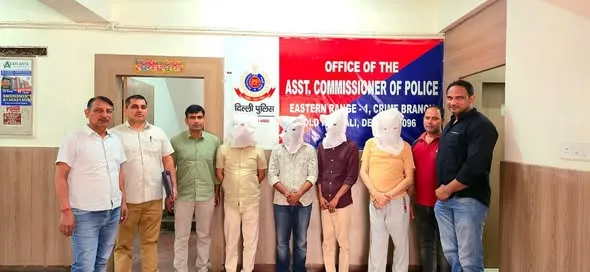
The Delhi Crime Branch has increasingly focused on dismantling these networks, conducting raids across the national capital and neighbouring regions. Recent operations have exposed the wide range of products entering the counterfeit economy and the increasingly sophisticated methods used by syndicates to disguise their activities.
Fake Currency Scams Take a New Turn
Among the more unusual cases investigated this year were alleged social-media-based currency scams detected by the Delhi Police Outer North district between May and August.
According to police, a 21-year-old travel operator from Burari was allegedly approached on Instagram by a man identified as Jitender, who promised to exchange so-called rejected banknotes and offered a return of ₹3 lakh against an initial payment of ₹50,000.
The victim reportedly met the suspects near Mahipalpur and handed over the money. Police said the suspects subsequently persuaded him to make another payment by claiming that one of their family members had suffered a medical emergency.
The final exchange reportedly took place near the Singhu Border in Narela. Instead of genuine currency, the victim allegedly received a sealed packet containing 600 dummy notes marked “Children Bank of India” and “Bharatiya Manoranjan Bank”.
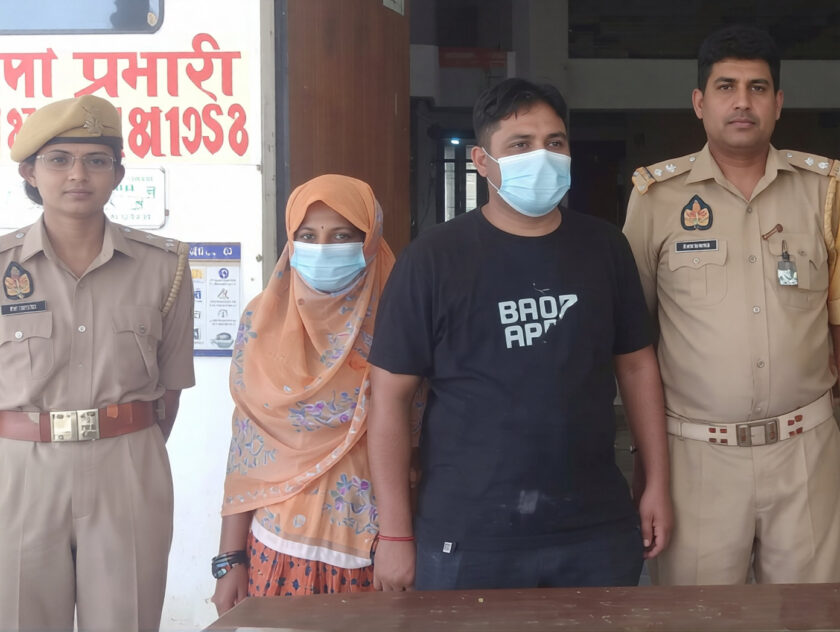
Police arrested Jitender, 25, from Rajasthan and Sandeep, 25, from Haryana. Investigators recovered the victim’s ₹50,000, additional cash of ₹1.32 lakh, bundles of dummy notes and a vehicle allegedly used to facilitate the transactions.
In another case in July, police traced a counterfeit currency network following information about fake notes circulating through a general store in Bhalswa Dairy. Officers recovered 286 counterfeit ₹100 notes and 13 fake ₹500 notes before conducting a follow-up operation in Navi Mumbai. There, investigators allegedly discovered a printing facility equipped with laptops, printers and lamination equipment.
Counterfeit Phones and Consumer Goods
Fake mobile phones and accessories remain another major component of Delhi’s grey market. The Delhi Crime Branch conducted an operation in May targeting counterfeit products bearing the names of major smartphone manufacturers.
Police seized large quantities of allegedly fake OPPO, OnePlus and Realme products. Two warehouses in Karol Bagh and a packaging facility in Moti Nagar were reportedly sealed, while eight manufacturing machines and a printing press were confiscated.
Counterfeit food products pose an additional challenge because consumers may find it difficult to distinguish fake packaging from genuine products.
In July, a Crime Branch operation in Okhla Industrial Area allegedly uncovered a racket involved in changing manufacturing and expiry dates on branded food and beverage products. Items carrying the names of brands such as Maggi, Bournvita, Horlicks and Thums Up were among the products seized. Police said goods worth more than ₹20 lakh were recovered and seven people were arrested.
Earlier, two illegal manufacturing units in East Delhi were allegedly found producing counterfeit Eno and Nescafé sachets. The operation resulted in the seizure of nearly one lakh fake Eno sachets, around 50,000 Nescafé sachets, 500 kg of coffee powder and packaging machinery.
Fake Medicines Raise Serious Public Health Concerns
Perhaps the most serious dimension of the counterfeit economy is the illegal pharmaceutical trade.
In April, the Delhi Crime Branch busted an alleged counterfeit medicine and GST fraud network, arresting six people and recovering more than 1.2 lakh counterfeit Schedule H tablets and capsules.


Police said the seized medicines were intended for patients suffering from serious conditions, including diabetes, hypertension and infections. The investigation reportedly began with a raid in Bihari Colony in Shahdara and subsequently led officers towards Delhi’s wholesale pharmaceutical market at Bhagirath Palace.
The probe allegedly uncovered links with a large illegal manufacturing facility spread over approximately 1,000 square yards in Muzaffarnagar, Uttar Pradesh.
Investigators also detected a parallel financial network allegedly involving shell companies and fabricated GST invoices. According to police, digital evidence suggested that fraudulent billing exceeded ₹50 crore.
Messaging platforms including Telegram and WhatsApp were allegedly used to coordinate transactions, create virtual business identities and circulate documentation supporting the illicit trade.
Luxury Brands and Cigarette Smuggling
Counterfeit luxury goods have also found a market in Delhi. In Vasant Kunj, police reportedly uncovered a racket involving fake branded clothing, watches and footwear allegedly being marketed through discount exhibitions designed to make the products appear legitimate.
Cigarettes represent another major segment of Delhi’s illicit market, with investigations uncovering both counterfeit and smuggled international brands.
In one recent operation, police recovered 12,640 imported cigarette sticks from three men in Karawal Nagar. A subsequent raid at a warehouse in the Budhpur Industrial Area resulted in the seizure of around 2.70 lakh additional prohibited imported cigarettes, with the alleged supplier later arrested.
Earlier, an operation near Palam Flyover in Prahladpur led to the seizure of 66,400 cigarette packs allegedly smuggled from Cambodia and valued at around ₹12 lakh. Police said the products lacked the health warnings required under Indian tobacco regulations.
In May, the Crime Branch also arrested two people in Chawri Bazar and recovered international cigarette brands, including Esse and Mond, worth approximately ₹15 lakh.
A separate raid in the Lahori Gate and Fatehpuri areas last November resulted in the seizure of around 2.7 lakh counterfeit cigarette sticks allegedly replicating major Indian and international brands.
A Network That Crosses State Borders
The pattern emerging from these cases suggests that Delhi’s counterfeit economy is increasingly connected to manufacturing and distribution networks operating outside the capital.
From pharmaceutical units in Uttar Pradesh to printing facilities in Maharashtra, police investigations have repeatedly followed supply chains beyond Delhi’s markets.
For law-enforcement agencies, the challenge therefore extends beyond seizing counterfeit goods. Dismantling the ecosystem requires identifying manufacturers, transporters, warehouse operators, financiers, distributors and retailers who enable illicit products to reach consumers.
The expanding use of social media, encrypted messaging platforms, shell companies and sophisticated packaging has further complicated the task.
The Delhi Police crackdown indicates that the fight against counterfeit goods is no longer simply about protecting trademarks. It increasingly involves tackling organised crime, financial fraud, public-health risks and consumer deception—all operating within the shadowy but lucrative world of the grey market.












 https://www.youtube.com/watch?si=RtToJsBhYBatUrym&v=mOuYNSdhjHA&feature=youtu.be