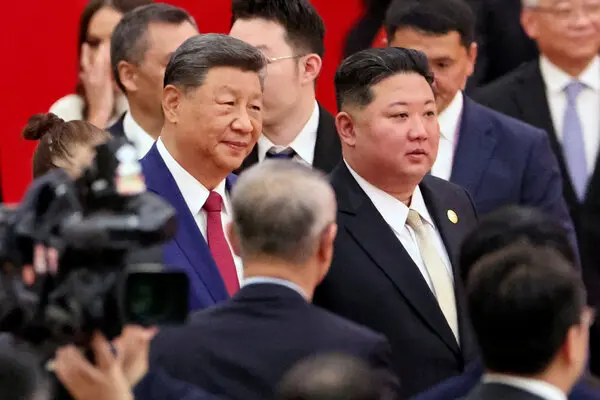
Pyongyang: Chinese President Xi Jinping arrived in North Korea for a highly anticipated two-day state visit, marking his first trip to the country in nearly seven years. The visit is being viewed as a significant diplomatic moment as China and North Korea seek to reinforce their longstanding partnership amid shifting geopolitical developments across Northeast Asia.
Xi’s visit comes at the invitation of North Korean leader Kim Jong-un and underscores the importance both nations continue to place on their strategic relationship. Accompanying the Chinese president are First Lady Peng Liyuan, senior Communist Party official Cai Qi, and Chinese Foreign Minister Wang Yi.

A Warm Welcome in Pyongyang
The North Korean capital prepared extensively for the visit, with major streets decorated in the national colors of both countries. Flags, welcome banners, and portraits of Xi and Kim were prominently displayed across Pyongyang, reflecting the symbolic significance attached to the occasion.
Officials are expected to host a ceremonial reception similar to the one Xi received during his previous visit in 2019, highlighting the close ties between the neighboring nations.
Strengthening a Historic Partnership
At the heart of the visit are discussions aimed at deepening economic cooperation, enhancing diplomatic coordination, and reviewing regional security developments. Analysts believe the two leaders will explore opportunities to expand bilateral cooperation while addressing challenges affecting the Korean Peninsula and the wider region.
The visit takes place against a backdrop of increasing engagement between North Korea and Russia, a development that has drawn considerable international attention. Observers expect discussions to include regional strategic cooperation and evolving relationships among major regional players.
Celebrating a Milestone in Bilateral Relations
This year marks the 65th anniversary of the Treaty of Friendship, Cooperation and Mutual Assistance between China and North Korea, adding historical significance to Xi’s trip. The anniversary provides an opportunity for both governments to reaffirm decades of political, economic, and diplomatic cooperation while outlining future areas of collaboration.
China has long been North Korea’s most important economic and diplomatic partner, and both sides are expected to emphasize the enduring nature of their relationship during the visit.

Regional Security High on the Agenda
Security issues are also expected to feature prominently in the discussions. Recent statements from North Korean officials have reiterated the country’s commitment to strengthening its defense capabilities, while Pyongyang has continued to highlight its strategic and military priorities.
The visit comes at a time when regional governments and international observers remain closely focused on developments surrounding North Korea’s security policies and broader stability on the Korean Peninsula.
Beijing’s Broader Diplomatic Strategy
For China, the visit represents more than a reaffirmation of bilateral ties. It also reflects Beijing’s efforts to maintain an influential role in regional diplomacy during a period of changing global alignments.
In recent months, Xi has participated in several high-level international engagements, and his arrival in Pyongyang is seen as part of a broader effort to strengthen China’s diplomatic outreach and reinforce strategic partnerships in the region.
Political analysts suggest the visit could help shape future conversations on regional security, economic cooperation, and diplomatic engagement involving North Korea and other major stakeholders. While no major policy announcements have yet been made, the meetings between Xi and Kim are expected to provide important insights into the direction of one of Asia’s most significant geopolitical relationships.
As the two leaders begin talks in Pyongyang, the visit is being closely watched around the world for its potential impact on regional stability, diplomatic cooperation, and the evolving balance of power in Northeast Asia.