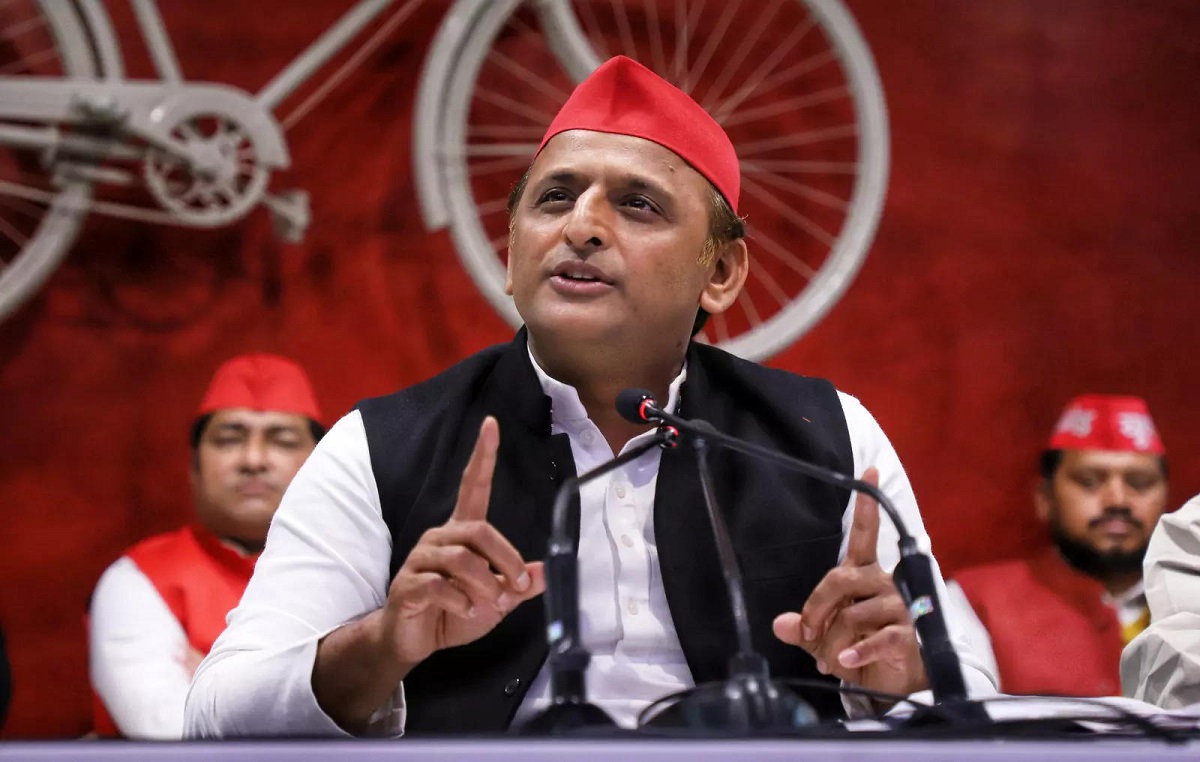
Lucknow/New Delhi: The recent Assembly election outcomes in West Bengal and Tamil Nadu have sparked fresh political calculations within the opposition camp, with the ripple effects now being felt in Uttar Pradesh. According to political sources, the developments have prompted the Samajwadi Party to reassess its electoral strategy ahead of the crucial 2027 Uttar Pradesh Assembly elections.
One of the most significant developments has been the reported termination of the Samajwadi Party’s agreement with election strategy firm Indian Political Action Committee. Sources indicate that the partnership, finalized earlier this year, has now been called off following a combination of political and organizational concerns.

Political observers note that IPAC had been associated with campaign management efforts in both West Bengal and Tamil Nadu, where the election outcomes reportedly fell short of expectations for its clients. The results have led several political stakeholders to re-evaluate the effectiveness of professional campaign consultancies in an increasingly competitive electoral landscape.
Adding to the uncertainty were recent developments involving IPAC’s internal operations. Reports of enforcement actions and investigations involving senior officials of the organization created additional concerns among political clients and reportedly affected the firm’s functioning in several states.
Sources familiar with the matter claim that the Samajwadi Party viewed the changing circumstances as a reason to reconsider its association with the consultancy. The reported closure of the firm’s Uttar Pradesh operations and downsizing of staff have further fueled speculation about its future role in state politics.
However, analysts believe the party is unlikely to completely abandon professional election management. Instead, it may explore alternative advisory teams or consultants as it prepares for the next Assembly battle.
New Challenge Emerging from Chandrashekhar Azad
While organizational restructuring remains one concern, another challenge is emerging on the political front. Chandrashekhar Azad and his Azad Samaj Party (Kanshi Ram) have intensified preparations for the 2027 elections, launching a statewide outreach campaign aimed at strengthening the party’s grassroots presence.

Party leaders have announced plans to contest all 403 Assembly seats in Uttar Pradesh. The campaign is expected to focus heavily on Dalits, Muslims, and Extremely Backward Classes (EBCs), voter groups that have also been central to the Samajwadi Party’s PDA (Pichhda, Dalit, Alpsankhyak) social coalition strategy.
According to party officials, the Azad Samaj Party intends to field a significant number of EBC and Dalit candidates, including on general-category seats, in a bid to expand its political footprint across the state.
Opposition Vote Dynamics Under Scrutiny
The growing influence of Chandrashekhar Azad has drawn attention within opposition circles. Political analysts suggest that a stronger Azad Samaj Party presence could reshape electoral equations by attracting segments of the same social groups that have supported opposition alliances in recent elections.
The Samajwadi Party and the Indian National Congress benefited from their PDA-focused campaign during the 2024 Lok Sabha elections, when the alliance performed strongly in Uttar Pradesh. However, the emergence of additional players targeting similar voter bases has raised questions about opposition unity and vote consolidation ahead of 2027.
Chandrashekhar Azad has dismissed concerns that his party could weaken opposition prospects, arguing that political alliances should be built through dialogue and mutual respect rather than assumptions about vote transfers.
As Uttar Pradesh moves closer to the next Assembly elections, the combination of shifting political alliances, strategic recalibrations, and the rise of new regional players is expected to make the state’s political landscape increasingly competitive. The developments suggest that opposition parties are entering a phase of intense reassessment as they seek to position themselves for one of the country’s most closely watched electoral contests.