Varanasi: Varanasi is set to combat rising temperatures and pollution with a series of ambitious urban development and climate-resilience projects. The city’s Municipal Corporation has launched a modern environmental relief initiative that includes the installation of “mist guns” at major intersections, cool roof technology in schools, and the transformation of a massive garbage dump into a dense urban forest using Japanese Miyawaki techniques.
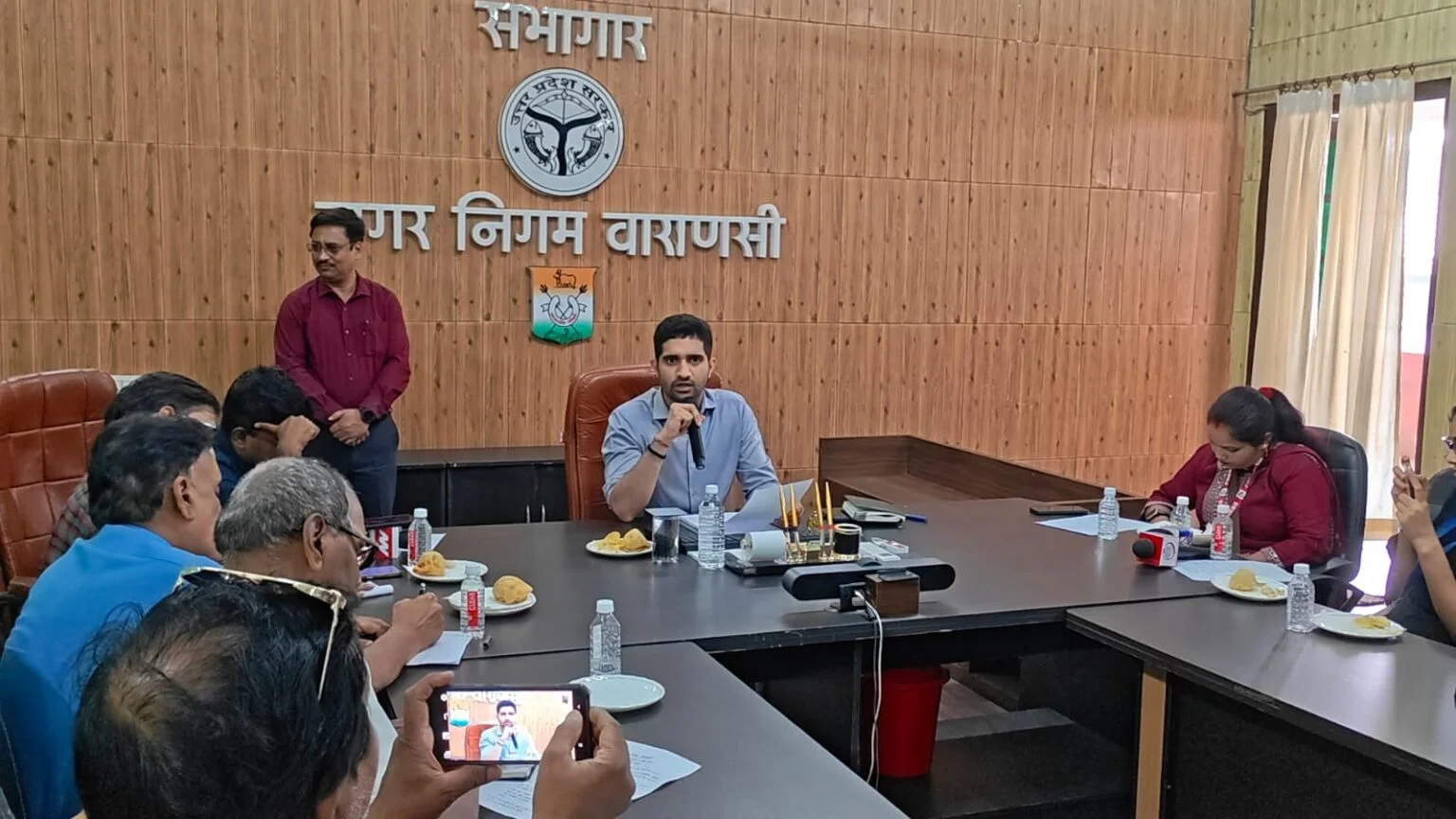
Addressing a press conference at the Municipal Corporation auditorium, Municipal Commissioner Himanshu Nagpal said the city is adopting advanced atmospheric cooling systems to provide relief during the scorching summer months. Under the proposed “Relief System” project, mist guns will be installed at key locations including Maidagin, Godowlia, Lahurabir, and Varuna Bridge.

The mist guns will spray a specially formulated fine mist into the atmosphere, helping reduce ambient temperatures by nearly 10 to 12 degrees Celsius during extreme heat conditions. The technology has already been introduced at cattle shelters in the city and is expected to be expanded rapidly across crowded urban zones.
In another major civic initiative, the Municipal Corporation has decided to construct a multi-level parking facility at Maidagin on the lines of the Assi parking model. The upcoming structure will accommodate around 100 vehicles and is expected to significantly reduce chronic traffic congestion in the busy commercial area.
The city administration has also unveiled an extensive environmental restoration project at the Karsada dumping ground, where nearly 12.64 lakh metric tonnes of legacy waste accumulated over the past decade will be scientifically processed through biomining. Once the waste is cleared, nearly 25 acres of land will be converted into a dense Miyawaki forest, often described as a “green lung” for urban areas.
Officials said the ₹53.15 crore project aims not only to eliminate the towering garbage mound but also to improve air quality and biodiversity in the region through rapid afforestation using the Japanese Miyawaki method.


The beautification drive in the city will also cover 15 major intersections and tri-junctions, including Ambedkar Chauraha near Kachahari, Lahurabir, Lanka, Maidagin, and Teliyabagh. In addition, the corporation plans phased redevelopment of all 276 parks across the city.
Another key highlight of the plan is the redevelopment of the area beneath the Lahartara-Chowkaghat flyover. Instead of remaining an encroachment-prone zone, the stretch will be transformed into a tourism-friendly urban space featuring pathways, greenery, and dormitory facilities. The ₹13 crore project is targeted for completion within the next eight to nine months.
To improve sanitation services, the Municipal Commissioner announced that 150 new vehicles have been added to strengthen door-to-door garbage collection, ensuring complete waste collection coverage across all city wards.
The civic body has also introduced “Cool Roof Coating” technology to protect students and residents of low-income settlements from excessive heat. The initiative, launched initially at JP Mehta Inter College, uses reflective paint coatings that deflect solar radiation and keep rooftops significantly cooler. Authorities plan to expand the project to nearly 100 schools in phases.
With these integrated measures, Varanasi is positioning itself as a model city in urban climate adaptation, combining infrastructure modernization, environmental restoration, and public comfort initiatives to tackle the growing challenges of heat and pollution.











 https://www.youtube.com/watch?si=RtToJsBhYBatUrym&v=mOuYNSdhjHA&feature=youtu.be