McLeod Ganj: Perched at an altitude of around 2,000 meters in the Dhauladhar range of Himachal Pradesh, McLeod Ganj is a hill town that feels suspended between earth and sky. Known widely as “Little Lhasa,” it is not just a scenic destination but a living cultural landscape where Tibetan spirituality, colonial legacy, and Himalayan geography come together in a seamless blend.
Today, McLeod Ganj is globally recognized as the seat of the Central Tibetan Administration, and the residence of the Dalai Lama, giving the town a significance that extends far beyond tourism. It is a place where exile turned into identity, and displacement evolved into cultural preservation.

From Colonial Outpost to Cultural Sanctuary
The origins of McLeod Ganj lie in the British colonial period when it was named after Sir Donald Friell McLeod. For decades, it remained a quiet administrative hill station with little attention beyond its cool climate and forested surroundings. That changed dramatically in 1959 when the Dalai Lama fled Tibet following political turmoil and established his base here.
This moment transformed McLeod Ganj into something entirely new. It became a refuge for the Tibetan community in exile and gradually evolved into one of the most important centers of Tibetan Buddhism outside Tibet. Monasteries were built, schools were established, and a cultural ecosystem began to grow organically around spiritual practice and community life.
Over time, the town also attracted global travellers, scholars, monks, and seekers, turning it into a rare space where local Himachali life, Tibetan tradition, and international presence coexist without overwhelming one another.
The Journey into the Mountains
Reaching McLeod Ganj is itself an introduction to the Himalayas. The nearest airport is Gaggal Airport near Dharamshala, while Pathankot serves as the major railhead connecting the region to the rest of India. From these points, the road climbs steadily into winding mountain terrain, revealing valleys, pine forests, and distant snow peaks.
As travellers ascend, the landscape gradually shifts from urban plains to quiet mountain air. The journey is not fast, but it is immersive, offering a slow transition into the rhythm of the hills. By the time McLeod Ganj appears, nestled against the backdrop of the Dhauladhar range, it already feels like a place apart from the rest of the world.
Seasons That Shape the Experience
McLeod Ganj changes character with every season, offering different moods throughout the year. Spring and early summer bring clear skies, mild temperatures, and ideal trekking conditions. Monsoon transforms the surrounding hills into deep green landscapes, though the rains often make travel unpredictable. Autumn is considered one of the most beautiful periods, with crisp air and uninterrupted views of the mountains. Winter, meanwhile, brings a quiet stillness, occasional snowfall, and a sense of deep retreat.
Each season reshapes the town’s atmosphere, but the underlying sense of calm and reflection remains constant.
Spiritual Core of the Town
At the heart of McLeod Ganj lies the Tsuglagkhang Complex, the spiritual center of Tibetan Buddhism in exile. This sacred space includes temples, meditation halls, and the residence of the Dalai Lama. The atmosphere here is defined by quiet movement, soft chanting, and the steady turning of prayer wheels.
Nearby, the Dalai Lama continues to be a guiding presence for the Tibetan community, and his teachings, when open to the public, draw visitors from across the world. The nearby Namgyal Monastery further deepens the spiritual landscape, serving as a center for study, ritual, and philosophical learning.
Together, these spaces create an environment where spirituality is not separate from daily life but woven into its very fabric.
Nature, Trails, and Mountain Silence
Beyond its monasteries, McLeod Ganj opens into a world of natural beauty. Forest trails, waterfalls, and high-altitude trekking routes define the region’s outdoor identity. One of the most popular experiences is the Triund trek, which leads hikers through oak and rhododendron forests before opening up to sweeping views of snow-covered peaks.

Bhagsu Nag waterfall offers a more accessible natural escape, where water cascades down rocky cliffs into a lively, social trekking stop. Dal Lake, surrounded by deodar trees, provides a quieter space for reflection, especially during early mornings when mist settles over the water.
In every direction, the mountains remain present, shaping both the physical landscape and the emotional tone of the town.
Everyday Life and Tibetan Culture
Life in McLeod Ganj moves at a gentle pace. Prayer flags stretch across narrow streets, monks walk quietly between monasteries, and small shops display handicrafts, woollen garments, and Tibetan artwork. The town has a distinct cultural rhythm shaped by both tradition and travel.
Tibetan culture is not confined to institutions here; it exists in daily gestures, conversations, and food. The presence of the Tibetan exile community has created a living cultural environment where heritage is actively preserved and shared.
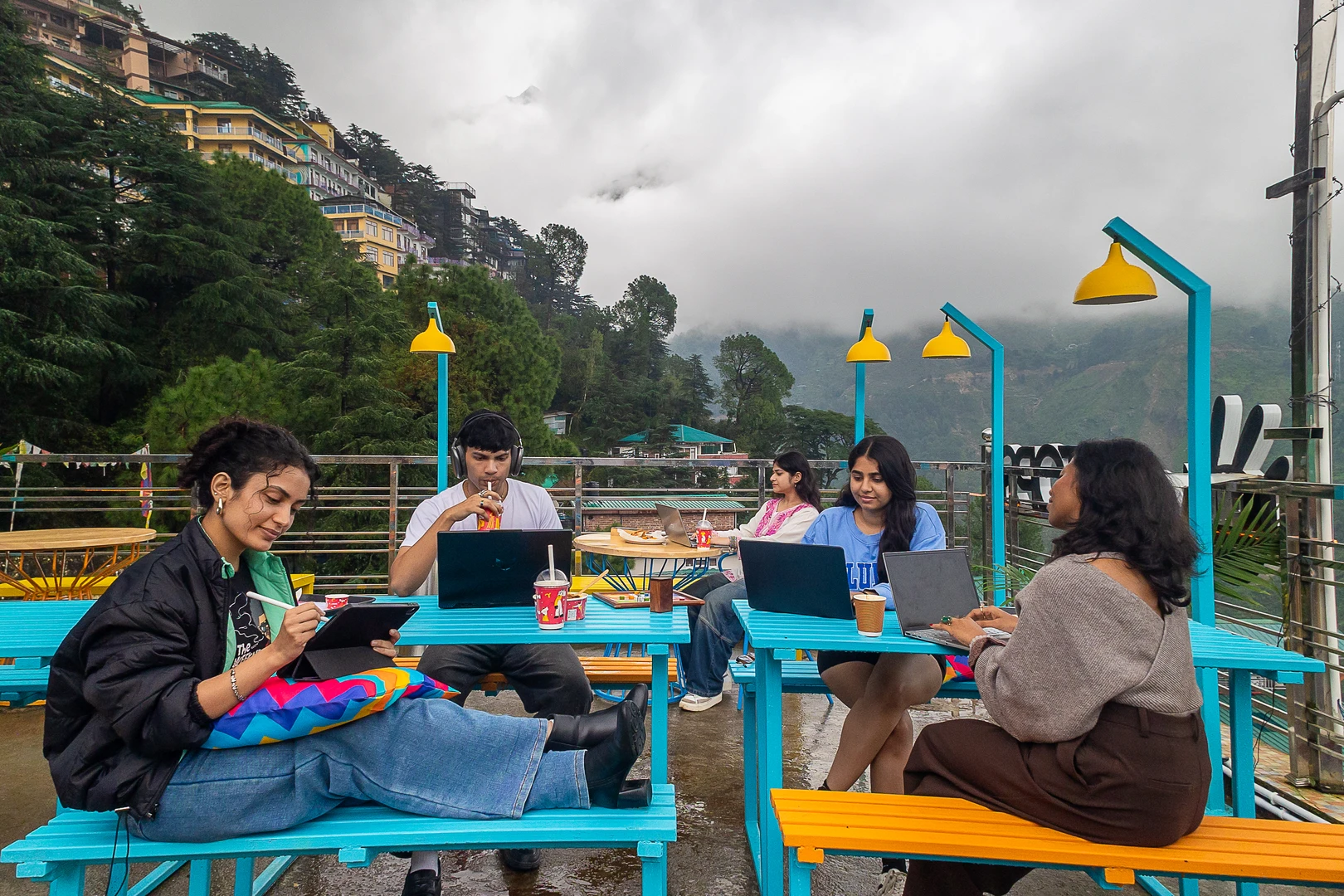
Visitors often find themselves engaging with this culture in subtle ways—through conversations in cafés, visits to small museums, or participation in meditation sessions.
Flavours of the Himalayas
Food in McLeod Ganj reflects its cultural diversity. Tibetan cuisine forms the backbone of local dining, with dishes like momos, thukpa, and tingmo offering warmth and simplicity. Butter tea, with its distinct salty richness, remains an acquired but memorable taste for many visitors.
At the same time, the town’s cafés serve a wide range of global cuisines, from Middle Eastern dishes to continental meals. This culinary mix reflects the town’s international character, where travellers from different parts of the world bring their tastes and expectations into a shared space.
Meals here are rarely rushed. They often become moments of pause, conversation, and observation, mirroring the slower rhythm of mountain life.
A Town That Encourages Stillness
What distinguishes McLeod Ganj from many other hill stations is not just its scenery or attractions, but its emotional atmosphere. It encourages stillness without demanding isolation. It invites reflection without removing interaction. It allows visitors to slow down naturally, shaped by the environment rather than forced intention.
Whether sitting in a monastery courtyard, walking through forest trails, or watching clouds move across the mountains, there is a constant sense that time behaves differently here.
Where Mountains Hold Memory
McLeod Ganj is ultimately more than a destination. It is a convergence point of history, spirituality, and landscape. It carries the memory of exile and the strength of cultural continuity. It holds the silence of mountains and the voices of a global community that found refuge within them.
To visit McLeod Ganj is not simply to see the Himalayas, but to experience a place where nature and humanity coexist in quiet balance. It remains, in every sense, Little Lhasa—a town where the mountains do not just surround life, but quietly shape it.