Special Awareness Programme Marks World Day Against Child Labour
141 Child Labour Hotspots Across 15 Districts Declared Child Labour-Free
Lucknow: A special public awareness programme was organized at Indira Gandhi Pratishthan in Lucknow on the occasion of World Day Against Child Labour, reaffirming the Uttar Pradesh Government’s commitment to eliminating child labour and ensuring every child’s right to education, protection, and holistic development.
Organized by the Labour and Employment Department, Government of Uttar Pradesh, the event aimed to raise public awareness about child labour eradication, encourage community participation, and highlight legal provisions designed to protect children from exploitation. During the programme, 141 identified child labour hotspot areas across 15 districts were officially declared child labour-free.

Addressing the gathering as Chief Guest, Labour and Employment Minister Anil Rajbhar said the state government is firmly committed to eliminating child labour and ensuring quality education for every child. He emphasized that rescued children are being enrolled in schools while their families are being connected with welfare schemes to address economic vulnerabilities that often lead to child labour.
“The government has set a target of making Uttar Pradesh completely child labour-free by 2027. Every possible effort will be made to secure a brighter future for our children, who are the foundation of the nation’s future,” he said.
Rajbhar highlighted the role of Atal Residential Schools, which provide high-quality education and modern facilities to the children of workers, enabling them to pursue their aspirations and improve their families’ socio-economic conditions.
Principal Secretary, Labour and Employment, Dr. M. K. Shanmuga Sundaram announced that 141 urban wards and gram panchayats had been declared child labour-free as part of the state’s ongoing campaign. He noted that in the first phase of the initiative, 15 districts are targeted to become child labour-free by December 2026.
According to him, a total of 543 child labour hotspots have been identified across the state where children were found engaged in work directly or indirectly. He also shared progress made in previous years, with hundreds of hotspot areas already declared child labour-free through sustained intervention and rehabilitation efforts.
Labour Commissioner Markandey Shahi stressed that achieving a child labour-free Uttar Pradesh requires coordinated efforts from all departments, stakeholders, and civil society organizations. He emphasized that the goal cannot be achieved through departmental efforts alone and called for greater community participation.
Jhansi Divisional Commissioner Vimal Kumar Dubey shared experiences from the district’s successful efforts to declare its rural areas child labour-free, offering insights into the strategies and collaborative mechanisms adopted.

One of the most inspiring segments of the programme featured children who had been rescued from child labour. They shared their personal journeys, explaining how they had transitioned from work environments to classrooms and now regularly attend school. Their stories highlighted the transformative impact of rehabilitation and educational support.
Retired IAS officer Ashok Kumar presented the successful Nizamabad Model from Andhra Pradesh, explaining how coordinated interventions had helped make the district child labour-free and offering valuable lessons for Uttar Pradesh’s campaign.
Bhuvan Ribhu, founder of Just Rights for Children, congratulated the state government on its ambitious target and pledged support in developing over 20,000 villages across Uttar Pradesh as “Safe Child Villages,” where children can enjoy protection, education, and dignity.
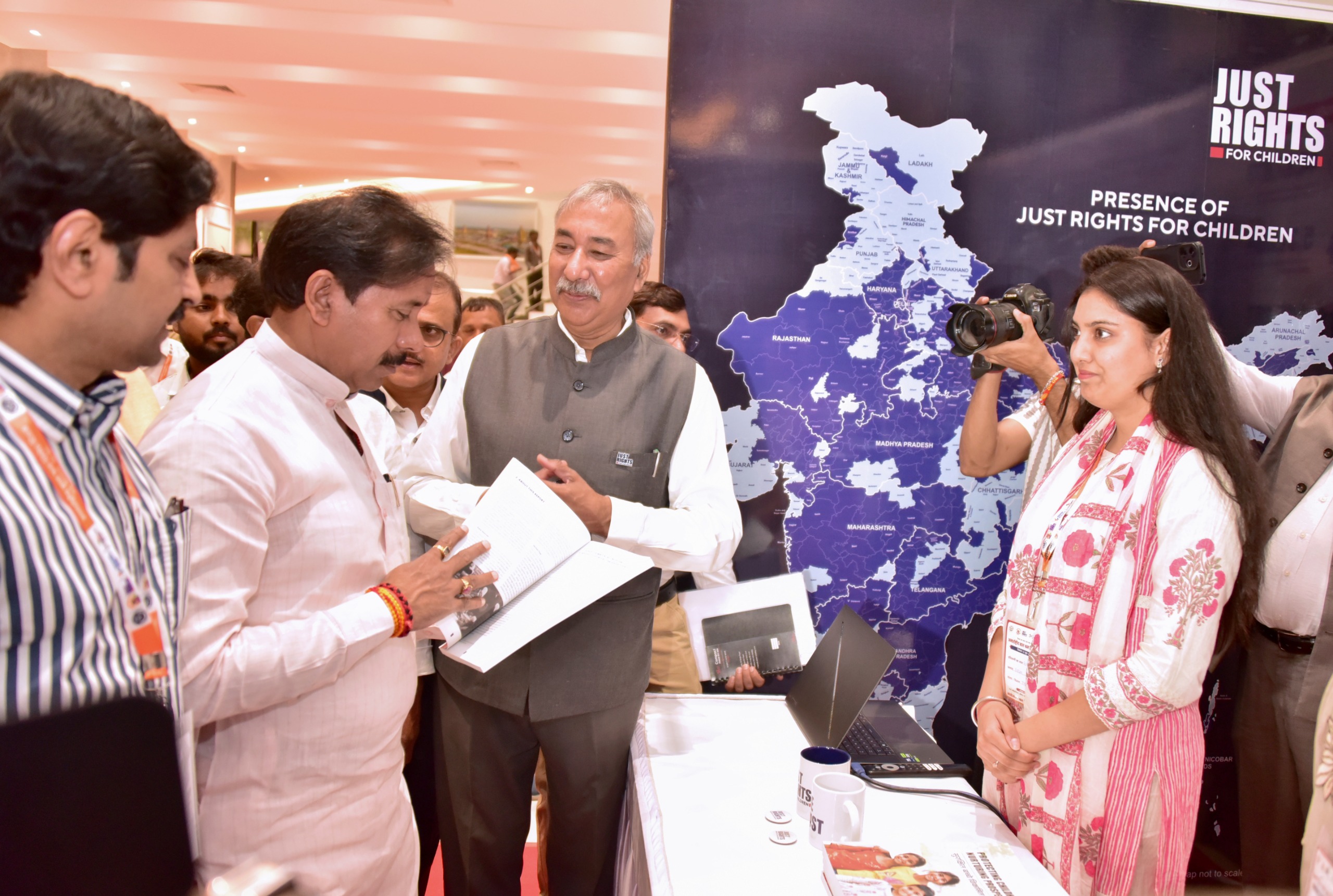
Before the formal programme began, the chief guest visited exhibition stalls representing 15 districts, including Bahraich, Balrampur, Shravasti, Fatehpur, Siddharthnagar, Sonbhadra, Chandauli, Chitrakoot, Kanpur Nagar, Kanpur Dehat, Farrukhabad, Auraiya, Etawah, Kannauj, and Gonda. The displays showcased ongoing efforts to eliminate child labour and rehabilitate affected children.
The event also featured the distribution of benefits under the Bal Shramik Vidya Yojana and welfare schemes for registered beneficiaries of the Uttar Pradesh Building and Other Construction Workers Welfare Board. Additionally, the newly launched Digital Labour Chowk platform was inaugurated during the programme.
More than 1,000 participants, including government officials, representatives of civil society organizations, labour department personnel, development partners, and stakeholders from across the state, attended the event. A panel discussion featuring experts from different states concluded the programme, focusing on strategies and best practices for child labour eradication and child rehabilitation.
The programme underscored Uttar Pradesh’s determination to build a future where every child has access to education, safety, and opportunities for growth, free from the burden of labour.