By PP Yadav
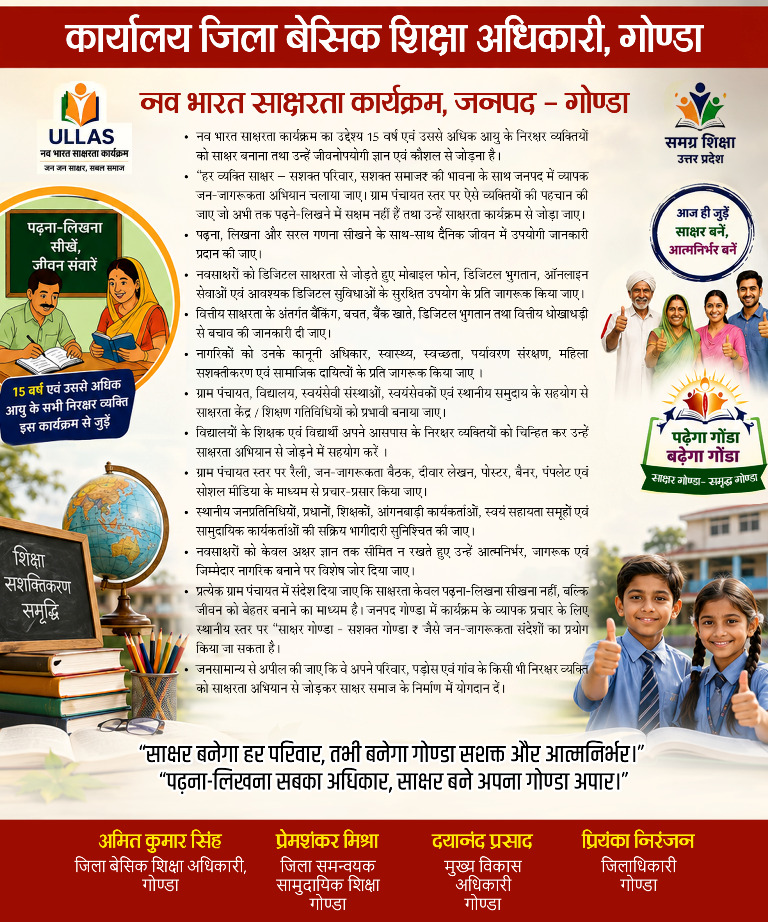
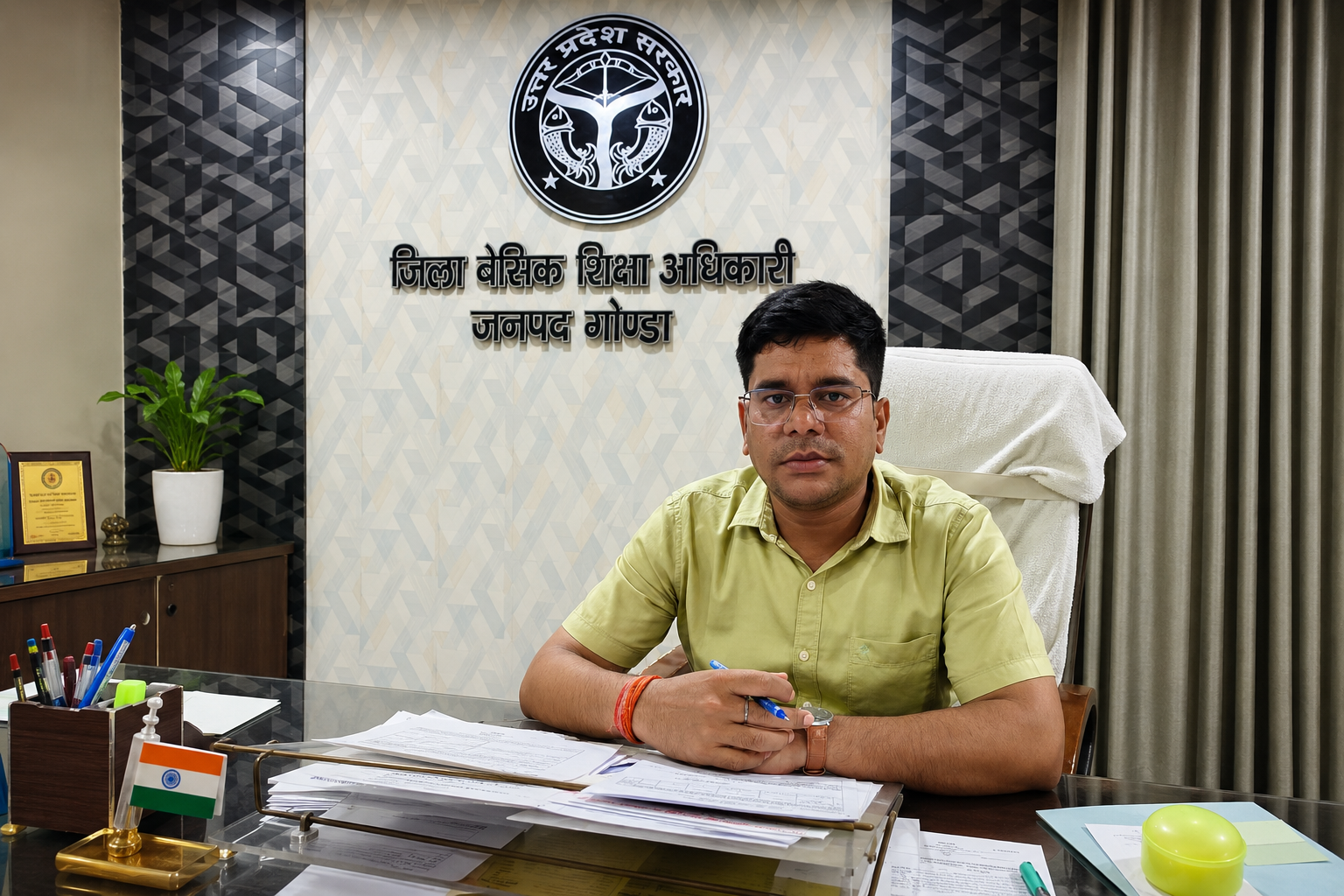
Gonda: On the occasion of Teachers’ Day, District Basic Education Officer (BSA) Amit Kumar Singh extended his greetings to teachers across Gonda and Uttar Pradesh. In a special interaction, he discussed teacher vacancies, action against unrecognised schools, RTE admissions, learning outcomes, infrastructure, welfare schemes, digital education and support for children with disabilities.

Q. What is the current status of teacher vacancies in government schools?
A. Filling vacant teaching posts is a policy matter, and the recruitment process is expected to begin soon at the government and higher-authority level. Meanwhile, teacher deployment and rationalisation in schools with fewer teachers is being carried out in accordance with government directions and court orders.
Q. What action has been taken against unrecognised schools?
A.Unrecognised schools are identified through Block Education Officers and action is taken for their closure. During the current academic session, proceedings have been initiated against around eight schools. In one case, an illegal school was sealed and an FIR was registered. The department is committed to ensuring that no unrecognised school continues to operate.
Q. How is the 25 per cent RTE quota being implemented?
A. Children from disadvantaged and weaker sections have an equal right to quality education. In previous years, 8,756 children in Gonda were enrolled in recognised private schools under the provision. Parents receive ₹5,000 for books and uniforms, while fee reimbursement of up to ₹450 per month is provided to schools. For the current session, 25 per cent of the pre-primary and Class 1 intake capacity of recognised schools has been targeted. Once the online process begins, applications will be invited through the portal and schools will be allotted through a lottery system.
Q. What is being done to improve learning outcomes and attendance?
A. Gonda has 2,609 government primary, upper-primary and composite schools, with around three lakh children aged 6-14 years enrolled. NCERT-based textbooks and workbooks are being provided, along with teacher guides to improve classroom teaching. Regular assessments through the Nipun Assessment App help identify learning gaps. The Catch-up Programme is then used to address difficult concepts and improve children’s learning levels.

Q. What progress has been made in school infrastructure?
A. Work is underway to make all 2,609 schools equipped, attractive and child-friendly under the Kayakalpprogramme. Any infrastructure-related problem brought to the department’s notice is addressed promptly. Schools are also provided composite grants based on student strength for necessary improvements.
Q. How effectively are PM POSHAN and student welfare schemes being implemented?
A. Under PM POSHAN, fresh, hot and nutritious cooked meals are provided to children in government and aided schools and madrasas. Fruits are served on Mondays and milk on Wednesdays. Through DBT, ₹1,200 per child is transferred to parents for uniforms, school bags, shoes, socks, sweaters and stationery. Complaints are investigated promptly and efforts are made to ensure proper resolution.
Q. What are the challenges in implementing NEP 2020 and digital education in rural areas?
A. Teachers have been provided five-day training in foundational numeracy and language skills under NEP 2020. Smart boards and ICT labs are being established to make learning more interactive. Although electricity supply is functioning well in most rural areas, inverters and batteries have also been arranged to ensure uninterrupted operation of digital facilities.
Q. What facilities are available for children with disabilities?
A. More than 6,000 children with disabilities have been identified through special surveys and enrolled in age-appropriate classes in schools near their homes. The district has 48 special educators to support them. Children receive tricycles, wheelchairs, crutches, hearing aids, Braille kits and TLM kits according to their needs. Girls with disabilities receive a ₹2,000 annual stipend, while children with severe disabilities receive an escort allowance of ₹6,000 for 10 months. Home-based education is also available for children unable to attend school.
Singh said the department’s focus remains on ensuring that quality, accessible and inclusive education reaches every child, particularly those from rural and disadvantaged communities.