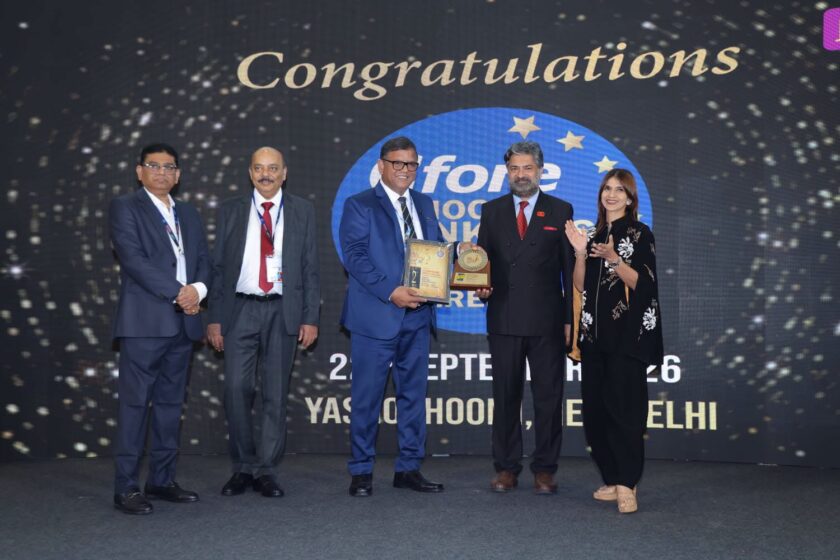
Gonda: In an era when schools are expected to prepare children not only for examinations but also for a rapidly changing world, the role of a teacher has expanded considerably. Effective education today requires academic rigour alongside emotional well-being, communication skills, creativity, character and the ability to work with others. Neeta Singh of Fulwari Public School believes that every child can progress when teaching is flexible, supportive and purposeful. From differentiated lesson planning and positive classroom discipline to English fluency and holistic development, Singh advocates an approach that places the individual learner at the centre of education.
Q. How do you plan and deliver lessons for students with different ability levels?

Neeta Singh: I begin with a clear learning outcome and then create different pathways for students to achieve it. I use the “Must, Should, Could” approach—essential knowledge for everyone, grade-level application and reasoning, and advanced extension for students ready for greater challenge. I also prepare scaffolds such as visual organisers, examples and word banks.
During lessons, I keep direct instruction focused and use flexible grouping, peer collaboration and targeted support. Differentiation should be based on complexity rather than simply giving advanced students additional work. Regular formative assessments and exit tickets help me understand individual progress.
Q. How do you handle classroom discipline and disruptive behaviour?
Neeta Singh: I believe discipline begins with clear expectations, consistent routines and respectful communication. When disruption occurs, I prefer calm intervention and private conversations rather than public confrontation.
Once, a student became frustrated during a group activity, refused to participate and disrupted the class. A private conversation revealed that he was struggling with the topic and was embarrassed to seek help. I broke the task into smaller steps and gave him a defined role within his group. His confidence improved and his behaviour changed significantly. It reminded me that understanding the reason behind behaviour is often the first step towards resolving it.
Q. How do you support a child’s academic, emotional, social and moral development?
Neeta Singh: Education must develop the whole child. Academic learning should encourage conceptual understanding, critical thinking and problem-solving. Emotional development requires a safe environment where students can make mistakes and express concerns. Group projects, sports, debates and creative activities develop teamwork, communication and empathy.
Values such as integrity, respect, accountability and responsibility should also be part of everyday school life. Co-curricular activities should complement academics and give children opportunities to discover strengths beyond marks.

Q. How do you develop English fluency and communication skills?
Neeta Singh: Fluency comes through regular practice. I encourage an English-speaking environment where students are not afraid of making mistakes. Think-Pair-Share, debates, role plays, presentations and short speeches provide opportunities for active communication. Reading, podcasts, speeches and audio-visual resources further strengthen vocabulary, comprehension and pronunciation.
Q. Why Fulwari Public School?
Neeta Singh: Fulwari’s emphasis on holistic education strongly matches my philosophy. I value a school environment that combines academic excellence with character building, technology, practical skills and co-curricular development. I also believe collaboration among teachers, parents and school leadership is essential for creating an ambitious and supportive learning environment.
Q. What professional challenge taught you an important lesson?
Neeta Singh: Early in my career, I introduced a complex project without enough structure. Stronger students dominated while others struggled and some learning outcomes were missed. I redesigned the project with clear milestones, defined roles, rubrics and regular checkpoints.
The experience taught me that creativity and independence require structure. Most importantly, teachers must remain adaptable. Recognising what is not working and changing course is an essential part of professional growth.