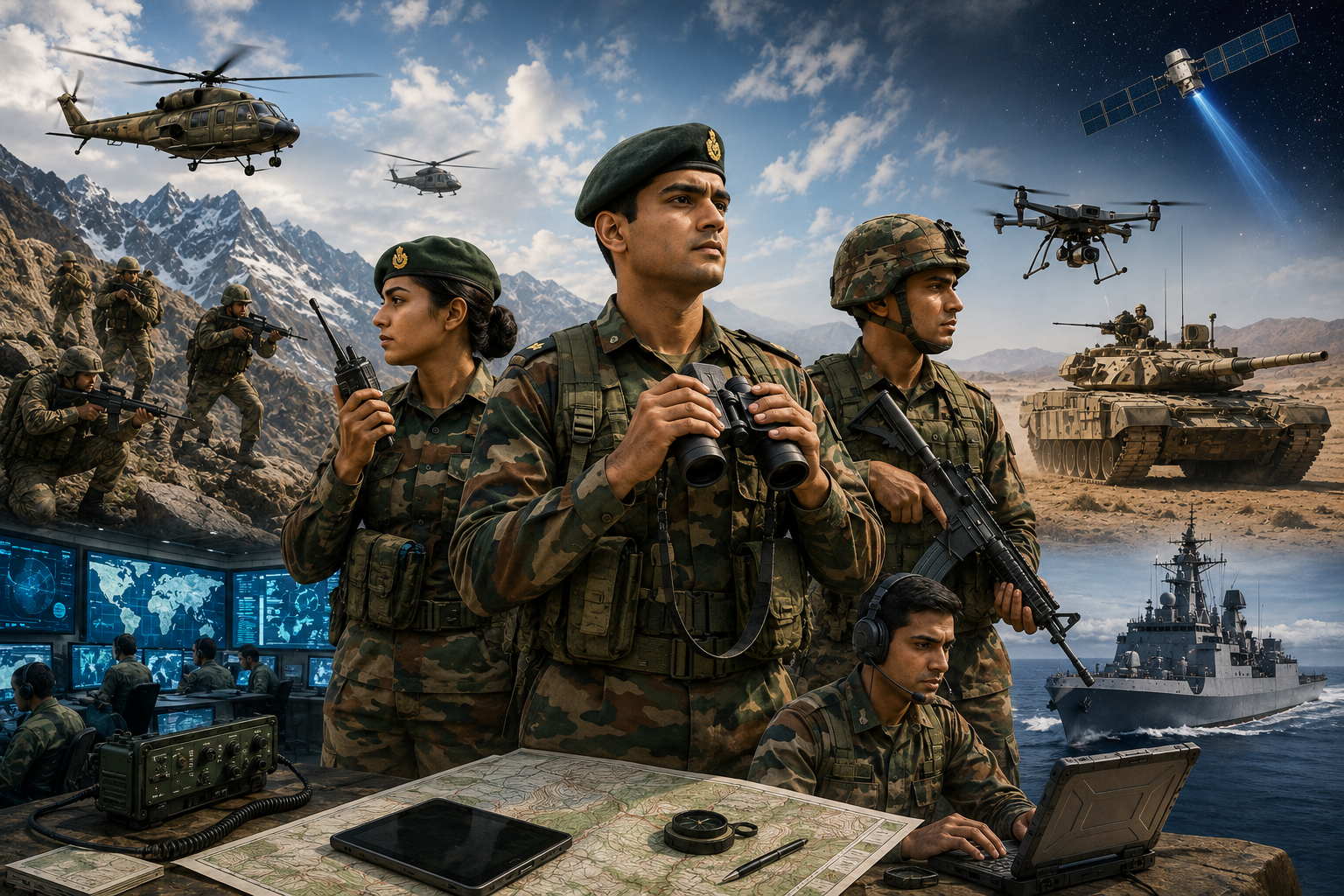
New Delhi: The image of a military officer leading troops across a battlefield remains powerful, but the nature of warfare has changed dramatically in the 21st century. Today’s conflicts are no longer fought solely with tanks, artillery, and infantry formations. Cyberattacks, drones, artificial intelligence, satellite surveillance, electronic warfare, information campaigns, and precision-guided weapons have transformed the battlefield into a complex and rapidly evolving environment.
In this changing landscape, India is investing heavily in preparing its young military officers not just to fight wars, but to understand and dominate an increasingly sophisticated theatre of war.

Beyond Physical Strength
The journey of a young officer begins long before receiving a commission. Institutions such as the National Defence Academy, Indian Military Academy, Air Force Academy, and Indian Naval Academy focus on building much more than physical endurance.
Cadets are trained to think under pressure, make quick decisions, and lead diverse teams in demanding situations. The emphasis is increasingly shifting from rote learning to problem-solving, adaptability, and leadership.
Military trainers recognize that future officers may have to make life-and-death decisions in seconds while dealing with incomplete information. Developing mental resilience has therefore become as important as building physical toughness.
Training for Realistic Combat Scenarios
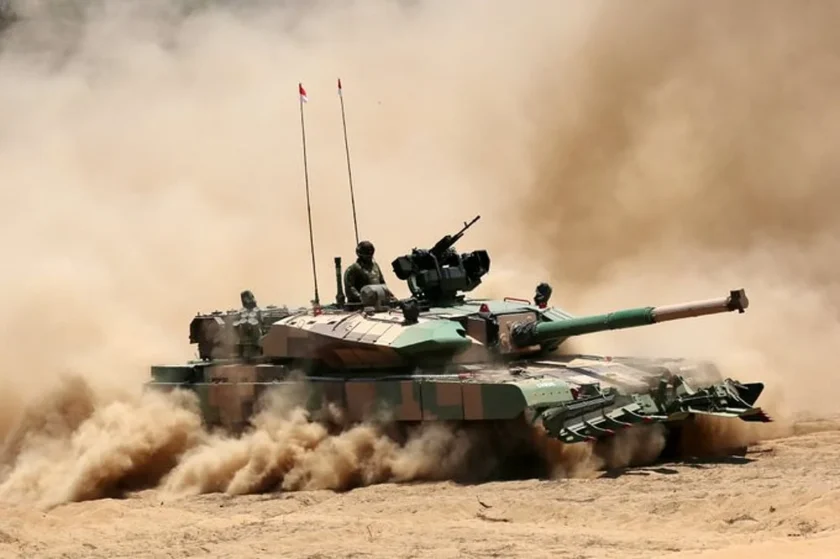
Modern military training seeks to recreate battlefield conditions as closely as possible. Young officers participate in extensive field exercises conducted in deserts, mountains, forests, riverine terrain, and urban environments.
These exercises expose them to situations they may encounter during actual operations. Whether operating in the high-altitude regions of the Himalayas, conducting counter-insurgency missions, or participating in large-scale conventional warfare simulations, officers learn to adapt to diverse operational challenges.
Night operations, live-fire exercises, combat simulations, and joint military drills help bridge the gap between classroom learning and real-world combat conditions.
Learning the Language of Technology
Technology is now a decisive factor in warfare. Recognizing this reality, the Indian Armed Forces are increasingly integrating advanced technologies into officer training.
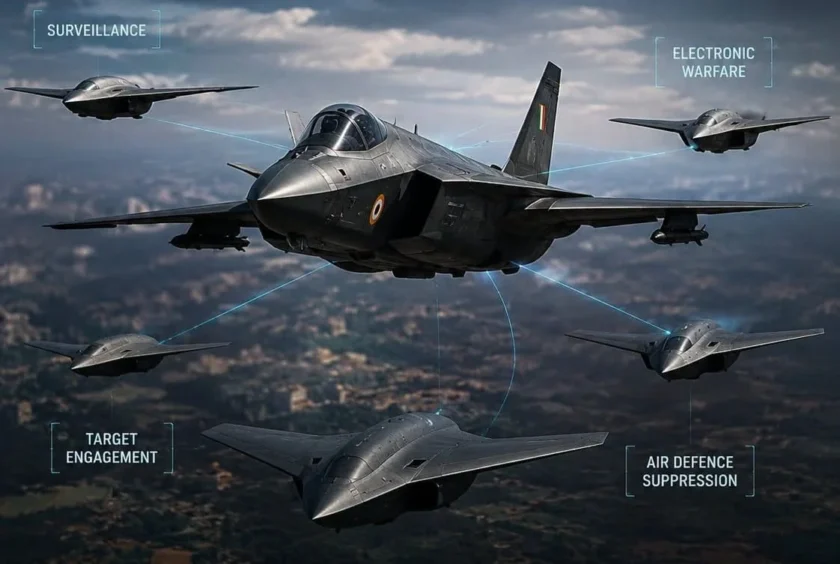
Young officers are being exposed to drone operations, cyber security, satellite communications, electronic warfare systems, artificial intelligence applications, and network-centric operations. Understanding how information flows across modern battle networks has become an essential military skill.
Military academies and specialized institutions are also encouraging officers to engage with emerging technologies that could shape future conflicts. The goal is to create leaders who are comfortable operating alongside sophisticated machines while retaining the ability to make independent judgments.
Jointness and Integrated Warfare
One of the most significant changes in military thinking is the growing emphasis on joint operations. Future conflicts are unlikely to be fought by the Army, Navy, or Air Force in isolation.
Young officers are increasingly trained to understand how different branches of the military work together. Joint exercises and integrated planning expose them to the realities of multi-domain warfare, where land, sea, air, cyber, and space capabilities must be synchronized.
The concept of theatre commands and integrated military operations has reinforced the need for officers who can think beyond their individual service and appreciate the larger strategic picture.
Leadership in Uncertainty
Weapons and technology may evolve, but leadership remains the heart of military effectiveness.

Young officers are taught that their primary responsibility is not equipment but people. They learn to motivate troops, maintain morale, and lead by example, especially during difficult circumstances.
Military training places strong emphasis on character, integrity, accountability, and courage. Officers are expected to earn the trust of the soldiers they command. This trust often becomes the decisive factor in stressful operational environments.
Instructors frequently remind cadets that soldiers follow leaders not because of rank alone, but because they believe in them.
Exposure to Global Military Practices
India’s growing military engagement with partner nations has also expanded learning opportunities for young officers. Participation in international exercises and training exchanges allows them to observe different operational philosophies and military cultures.
Such interactions broaden professional perspectives and expose officers to global best practices in planning, logistics, intelligence, and combat operations.
In an increasingly interconnected world, understanding international military trends has become a valuable component of professional development.
Preparing for the Human Dimension of Conflict
Modern warfare is not only about defeating an adversary. Military operations often involve humanitarian assistance, disaster relief, peacekeeping, and civilian engagement.
Young officers therefore receive training in communication, conflict management, cultural awareness, and crisis response. These skills help them operate effectively in complex situations where military objectives intersect with humanitarian concerns.
The ability to balance firmness with sensitivity is becoming an increasingly important quality in contemporary military leadership.
The Officer of the Future
The young Indian officer of today is being prepared for a battlefield that is far more complex than anything previous generations experienced. He or she must be physically fit, technologically aware, strategically informed, emotionally resilient, and ethically grounded.
The future theatre of war will demand leaders who can command troops, interpret data, understand emerging technologies, and make sound decisions in uncertain environments.
As warfare continues to evolve, the core objective of military training remains unchanged: to develop officers capable of leading with courage, competence, and conviction when their nation needs them most.
The battlefield may be changing, but the qualities that define exceptional military leadership continue to endure.




 ---------------------------------------------------------------------------------------------------