Kyiv: Ukraine’s defence strategy has undergone a remarkable transformation since Russia launched its full-scale invasion in February 2022.
What began as a strategy of national survival and territorial defence has evolved into a much more sophisticated model combining layered defence, drone warfare, precision strikes, electronic warfare, decentralised innovation and attacks on Russia’s military infrastructure.

The central problem for Ukraine remains stark: Russia has greater manpower, larger industrial capacity and greater quantities of artillery, missiles and other conventional military resources. Kyiv therefore cannot simply mirror Moscow’s approach. Instead, Ukraine has increasingly sought to make Russia’s numerical advantages less decisive.1. The first objective: prevent strategic defeatIn the opening months of 2022, Ukraine’s overriding strategy was straightforward: deny Russia a rapid victory.The defence of Kyiv, Chernihiv, Kharkiv and other major cities prevented Moscow from achieving its apparent objective of quickly forcing the Ukrainian government into submission.
Ukraine combined regular military forces, territorial defence units, intelligence, anti-tank weapons, artillery and rapidly organised civilian resistance.The strategic significance was enormous. Once Russia failed to achieve a decisive early victory, the conflict became a prolonged war in which Ukraine could mobilise Western political, financial and military assistance.
This produced the foundation of Ukraine’s subsequent strategy:
Survive → mobilise → adapt → impose costs → regain leverage.
2. Ukraine’s shift from manoeuvre to layered defenceAfter the major Ukrainian counteroffensives of 2022, the war increasingly became positional. The battlefield developed into a complex network of trenches, minefields, fortified positions, artillery zones and drone surveillance.Ukraine consequently invested heavily in defensive depth rather than relying exclusively on a single frontline.The modern Ukrainian defensive concept increasingly combines:fortified positions;anti-tank and engineering obstacles;dispersed military units;artillery;reconnaissance drones;FPV attack drones;electronic warfare;short- and medium-range air defence;reserves positioned behind the immediate frontline.
This is particularly important because drones have made movement extremely dangerous. Carnegie’s 2026 analysis describes the battlefield as increasingly divided into multiple air and technological layers, with reconnaissance and strike systems operating at different ranges and altitudes.Ukraine’s objective is not necessarily to make every metre of territory impossible for Russia to capture.
Rather, it is to make each Russian advance increasingly expensive and slow.
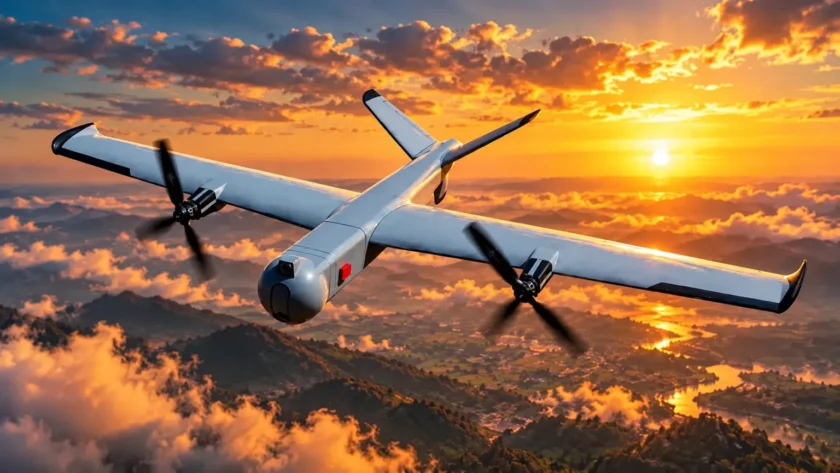
3. The drone revolutionPerhaps the most important feature of Ukraine’s contemporary defence strategy is the enormous expansion of unmanned systems.Drones have become much more than battlefield reconnaissance tools. Ukraine uses them for:reconnaissance → target acquisition → artillery correction → FPV attacks → logistics → battlefield surveillance → deep strikes.
Ukraine’s Defence Ministry reported in June 2026 that unmanned systems accounted for more than 90% of reported enemy targets hit by Ukrainian forces since the beginning of the year. The figures are Ukrainian government claims and should therefore be treated accordingly, but they illustrate the scale to which drone warfare has become institutionalised.
The important strategic point is that drones can partially compensate for shortages in conventional systems.A relatively inexpensive unmanned aircraft can locate a Russian position and enable an attack without exposing a Ukrainian soldier to the same degree of risk.
That changes the economics of warfare.4. Ukraine is building a “layered strike” systemUkraine’s strategy is increasingly moving beyond the immediate frontline.
There are effectively three overlapping strike zones:Tactical zone
Short-range FPV and reconnaissance drones attack troops, vehicles, artillery and positions close to the front.
Operational zone
Medium-range drones increasingly target headquarters, logistics centres, air-defence systems, radar installations and supply routes tens or hundreds of kilometres behind the front.Strategic zoneLong-range drones and missiles attack military-industrial facilities, fuel infrastructure, airfields and other strategic targets inside Russia.Ukraine’s Defence Ministry explicitly describes these intermediate-range systems as filling the gap between frontline FPV drones and strategic deep-strike weapons.
This is strategically significant because Ukraine is attempting to turn Russia’s geographical depth into a vulnerability.Instead of fighting only where Russian troops are attacking, Kyiv increasingly tries to disrupt the infrastructure that makes those attacks possible.
5. Deep strikes: taking the war beyond the battlefield
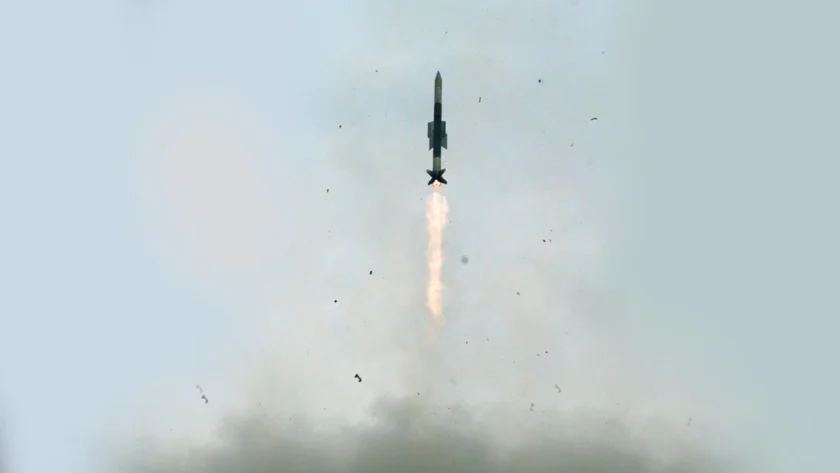
Ukraine’s long-range strike programme has become one of the most important elements of its strategy.The Ukrainian National Security and Defence Council says Ukrainian long-range drones can reach targets more than 2,000 kilometres away and that domestic deep-strike production has expanded substantially. Those figures are Ukrainian government claims and should be interpreted cautiously.The strategic logic is clearer than the individual numbers.
Ukraine wants to attack:ammunition production;weapons factories;fuel infrastructure;logistics hubs;command facilities;radar and air-defence systems;military airfields;defence-industrial infrastructure.The purpose isn’t simply destruction.It is operational disruption.If Russian forces have fewer supplies, less fuel, degraded air defence and disrupted logistics, their ability to sustain offensive operations at the front declines.
This is a classic strategy of attrition through depth.6. Air defence: protecting the state while conserving scarce missilesUkraine faces a particularly difficult air-defence problem.Russia possesses large numbers of missiles, drones and aircraft, while Ukraine has historically had fewer high-end interceptors.Consequently, Ukraine has increasingly developed a layered air-defence architecture combining:Western surface-to-air missile systems;Soviet-origin systems;mobile anti-aircraft guns;man-portable missiles;electronic warfare;mobile counter-drone teams;increasingly, specialised counter-drone technologies.
Ukraine’s Ground Forces describe a system combining missile, artillery, radar and mobile counter-UAV units.The strategic challenge is cost exchange.Using an expensive interceptor against a relatively cheap drone may protect an important target but can become unsustainable if repeated on a massive scale.Ukraine therefore increasingly needs to decide:
What must be protected? What can be dispersed? What can be concealed? And what can be defended with cheaper systems?7. Electronic warfare has become another battlefield
The Russia–Ukraine war is also an enormous contest in electronic warfare.
Both sides attempt to:jam communications;interfere with drone navigation;disrupt satellite links;locate enemy transmitters;protect their own communications;defeat enemy drone-control systems.This has created a continuous cycle:new drone → electronic countermeasure → modified drone → new countermeasure.Ukraine’s decentralised defence-industrial structure has been particularly useful here. Instead of relying exclusively on large traditional procurement cycles, Ukrainian military units and private companies have developed a much faster feedback loop between soldiers, engineers and manufacturers.
Carnegie’s 2026 analysis identifies this decentralised innovation ecosystem as one of Ukraine’s important characteristics in the current phase of the war.8. Robotics are now addressing Ukraine’s manpower problemManpower is arguably Ukraine’s greatest structural military vulnerability.
Russia can potentially sustain larger personnel losses because of its larger population and mobilisation capacity. Ukraine therefore has a powerful incentive to substitute machines for people wherever possible.This explains the rapid expansion of:unmanned ground vehicles;robotic logistics;robotic casualty evacuation;autonomous reconnaissance systems;drone-based resupply.Recent reporting indicates that Ukrainian troops are increasingly acquiring ground robots through the Brave1 defence-technology marketplace, particularly for logistics and casualty evacuation.
This isn’t simply technological experimentation.It represents a strategic objective:Reduce the number of Ukrainian soldiers exposed to the most dangerous part of the battlefield.9.
Defence and offence are becoming inseparable

One of the most interesting developments in Ukrainian strategy is that defensive warfare increasingly includes offensive action deep behind the frontline.For example, destroying a Russian logistics hub may look like an offensive operation, but strategically it can strengthen Ukrainian defence by reducing the enemy’s ability to attack.Likewise:destroying Russian air defence → makes Russian logistics and aviation more vulnerable → makes Ukrainian operations easier.
This creates a concept of active defence.Ukraine does not necessarily need to launch a massive conventional offensive to achieve an operational effect. It can gradually reshape the battlefield by attacking the systems that sustain Russian operations.
10. Ukraine’s defence strategy is also an industrial strategy
Perhaps the biggest change since 2022 is that Ukraine is no longer thinking only about acquiring weapons from foreign partners.It is trying to build a domestic defence-industrial ecosystem.This includes:drone manufacturers;missile developers;electronic-warfare companies;robotics firms;software developers;artificial-intelligence companies;distributed manufacturing.
The logic is simple.Ukraine cannot indefinitely depend on foreign deliveries for every tactical requirement. Domestic production provides greater flexibility and potentially allows Ukraine to scale inexpensive systems faster.
This is particularly important in the drone sector, where the development cycle can be measured in months or even weeks rather than the years associated with traditional weapons programmes.The biggest strengths of Ukraine’s strategy
1. Adaptability
Ukraine has repeatedly modified its tactics in response to Russian changes.
2. Technological innovation
Drones, software, electronic warfare and robotics have become integrated into operational planning rather than remaining specialist capabilities.
3. Intelligence integration
Western intelligence support, Ukrainian reconnaissance and battlefield drone surveillance have helped Ukraine understand Russian movements and vulnerabilities.
4. Distributed defence industry
A network of private companies and military innovators provides flexibility.
5. Strategic depth strikes
Ukraine can increasingly impose costs on Russian military infrastructure far beyond the frontline.
6. International interoperability
Western artillery, air defence, armoured vehicles, missiles, intelligence systems and training have expanded Ukraine’s capabilities.But the strategy has serious weaknessesUkraine’s strategy is not a guaranteed path to victory.
ManpowerTechnology cannot completely replace infantry. Eventually, territory has to be occupied and defended by people.AmmunitionDrone warfare reduces dependence on some conventional ammunition but does not eliminate the need for artillery shells, air-defence interceptors and other expensive systems.Air-defence saturationRussia can launch large numbers of drones and missiles simultaneously, forcing Ukraine to make difficult decisions about where to allocate scarce interceptors.Russian adaptationRussia has demonstrated an ability to copy, modify and mass-produce new technologies, including increasingly sophisticated drones and electronic-warfare systems.
Industrial asymmetry
Russia’s larger industrial and demographic base remains a major advantage.Western dependence
Ukraine’s ability to sustain high-end air defence, certain missile capabilities, intelligence and some advanced weapons remains closely linked to external support.
The central strategic dilemma
Ukraine’s biggest challenge is that successful defence does not automatically produce victory.A defensive strategy can prevent Russia from achieving its objectives, but eventually Ukraine needs favourable political and military conditions for negotiations or territorial recovery.This creates a difficult equation:Hold the frontline + preserve manpower + destroy Russian capabilities + maintain international support + generate enough offensive power to change the strategic balance.That is much harder than simply stopping a Russian advance.
What Ukraine appears to be trying to achieve now
The emerging Ukrainian model can be summarised as:1. Stop Russian breakthroughs.2. Make the frontline increasingly lethal through drones and sensors.3. Protect Ukrainian soldiers through fortifications, dispersion and robotics.4. Attack Russian logistics and command systems.5. Destroy or suppress Russian air-defence systems.6. Strike Russia’s military-industrial and energy infrastructure.7. Expand domestic weapons production.8. Create local technological advantages faster than Russia can adapt.9. Preserve Ukraine’s manpower and state capacity.10. Use military pressure to improve Ukraine’s eventual negotiating position.In that sense, Ukraine’s strategy has evolved from “defend the territory” to “defend the state while systematically degrading the systems that allow Russia to wage war.”
The larger lesson
The Russia–Ukraine war is demonstrating that modern defence is no longer simply about tanks versus tanks, artillery versus artillery or soldiers versus soldiers.It is increasingly about the integration of:sensors + drones + software + electronic warfare + air defence + precision strike + industrial capacity + human decision-making.Ukraine’s comparative advantage is not mass. It is adaptability and innovation.Russia’s comparative advantage is not necessarily tactical sophistication at every level, but scale—manpower, territory, industrial capacity and the ability to absorb losses.
The war therefore increasingly resembles a contest between Ukrainian technological adaptation and Russian strategic mass. The decisive question is whether Ukraine can use technology and external support to make Russia’s numerical and industrial advantages prohibitively expensive before Ukraine itself runs out of manpower, ammunition, money or political support.That is the central strategic contest of the war as it enters its fifth year.