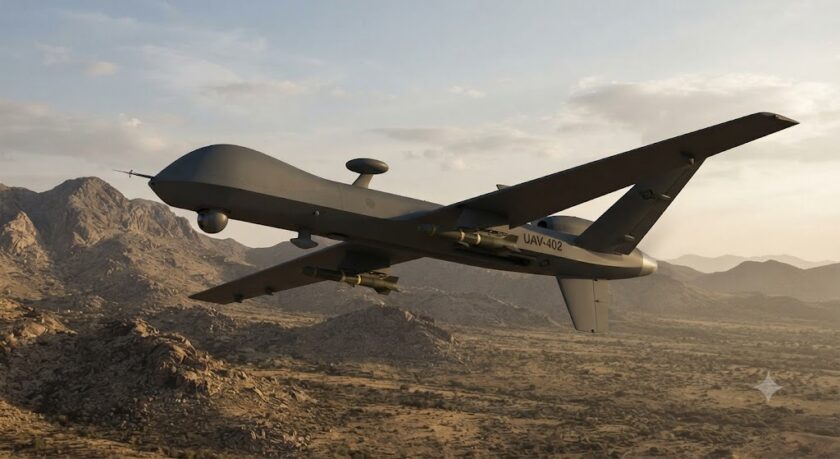
Tehran: The latest escalation in the Middle East conflict is increasingly shifting attention from battlefields and military installations to the region’s critical oil routes. A reported drone attack on Saudi Arabia’s East-West oil pipeline has highlighted the vulnerability of infrastructure that was designed to reduce the kingdom’s dependence on the Strait of Hormuz.
The roughly 1,200-kilometre East-West pipeline carries crude from Saudi Arabia’s eastern oil fields to the Red Sea port of Yanbu. It has a maximum capacity of around 7 million barrels per day. The reported attack forced operations to be suspended, raising fresh concerns over the resilience of global oil supplies.

The development is particularly significant because Saudi Arabia built the pipeline as an alternative route to the Strait of Hormuz. Under normal circumstances, roughly 20 million barrels of crude oil and petroleum products pass through the strategic waterway every day. With shipping through Hormuz already facing disruption amid the conflict, damage to Saudi Arabia’s alternative export route adds another layer of uncertainty for energy markets.
Oil prices have responded to those concerns. Brent crude has moved above $100 a barrel, reaching around $109 in the latest market movement described in the report. Energy prices often rise before an actual shortage develops because traders price in the possibility that supplies could become harder or more expensive to transport.
The consequences would become more serious if the pipeline remains out of service for an extended period. Yanbu’s ability to handle crude exports could be affected, forcing Saudi Arabia to reassess its supply and transportation arrangements. The pipeline had recently been carrying an estimated 4 million to 5 million barrels of crude a day, making any prolonged disruption significant for international markets.
Saudi Arabia’s geographical position adds to the challenge. The kingdom faces risks across several important energy corridors. The Strait of Hormuz lies to its east, while the Bab al-Mandab Strait and Red Sea shipping routes to the south and west have also faced security concerns linked to attacks by Yemen’s Houthi movement. The conflict around Hormuz and the reported damage to the East-West pipeline therefore weaken several layers of Saudi Arabia’s energy-security network simultaneously.
The incident also illustrates why oil prices are determined by more than production volumes. Transportation costs, insurance premiums, strategic reserves and geopolitical risk all influence the final price. A pipeline shutdown does not necessarily mean that millions of barrels of crude have disappeared from the global supply system. Instead, it can make transporting available oil to consumers more difficult, costly and uncertain.
For India, the implications could become important if elevated crude prices persist. Domestic petrol and diesel prices do not necessarily respond immediately to every movement in international crude prices because refiners and fuel retailers operate with existing inventories and domestic pricing considerations. However, a prolonged period of crude prices above $100 a barrel could increase India’s import bill and put pressure on the rupee. Higher energy and transportation costs could eventually feed into prices across sectors, including manufacturing, logistics and food distribution.
The security dimension is also becoming more complicated for Saudi Arabia. Riyadh has recently deepened security cooperation with Pakistan and Turkey through an agreement concerning the protection of Mecca. Continued attacks on Saudi energy infrastructure could put greater focus on the practical scope of such security partnerships, including air defence, military support and protection of critical infrastructure.

Saudi Arabia’s confrontation with the Houthis also has a long historical background. Following the 1934 Saudi-Yemeni war, areas including Asir and Najran came under Saudi control. After Yemen’s monarchy was overthrown in 1962, Egyptian President Gamal Abdel Nasser deployed troops in support of the republican government. Saudi Arabia responded by providing financial and military assistance to forces supporting the Zaydi monarchy.
The modern Houthi movement emerged much later as a major challenge to both Yemen’s government and Saudi interests. Fighting between the Houthis and Saudi-backed forces intensified during the 2000s, and Saudi forces directly intervened in 2009. The difficult mountainous terrain and guerrilla-style warfare created substantial military challenges. In 2019, Houthi attacks also targeted pumping stations associated with Saudi Arabia’s East-West pipeline, demonstrating the vulnerability of the kingdom’s energy infrastructure to relatively low-cost attacks.
The broader strategic question now concerns Iran’s role in the regional conflict. Iran has extensive relationships with armed groups across the Middle East, while the Houthis have developed their own military and political structures in Yemen. Any strategy that increases pressure on shipping through Hormuz, threatens Red Sea commerce or exposes Gulf energy infrastructure can raise the economic cost of the conflict for the United States and its partners.
Such a strategy would also shift part of the battlefield from conventional military positions to global commodity markets. Higher oil prices can affect inflation, transportation costs, industrial production and economic growth far beyond the Middle East. At the same time, responsibility for individual attacks and the extent of coordination between Iran and regional armed groups can be difficult to establish and remains a matter requiring evidence rather than assumption.
For Saudi Arabia, the vulnerability of long-distance energy infrastructure presents a particularly difficult security problem. A military base can be protected through concentrated security measures, but a pipeline stretching hundreds of kilometres cannot be guarded in the same way. A relatively small drone attack on a critical point can temporarily disrupt an infrastructure network worth billions of dollars.
The next major indicators will be the speed with which Saudi Arabia restores pipeline operations and developments around the Strait of Hormuz, the Red Sea and Bab al-Mandab. If multiple export and shipping routes remain disrupted simultaneously, the pressure on crude markets could intensify further.
The Middle East conflict is therefore no longer confined to territory, military installations or regional shipping lanes. Its effects are increasingly being transmitted through the global energy system, with oil transportation routes emerging as one of the most consequential pressure points for markets and economies worldwide.