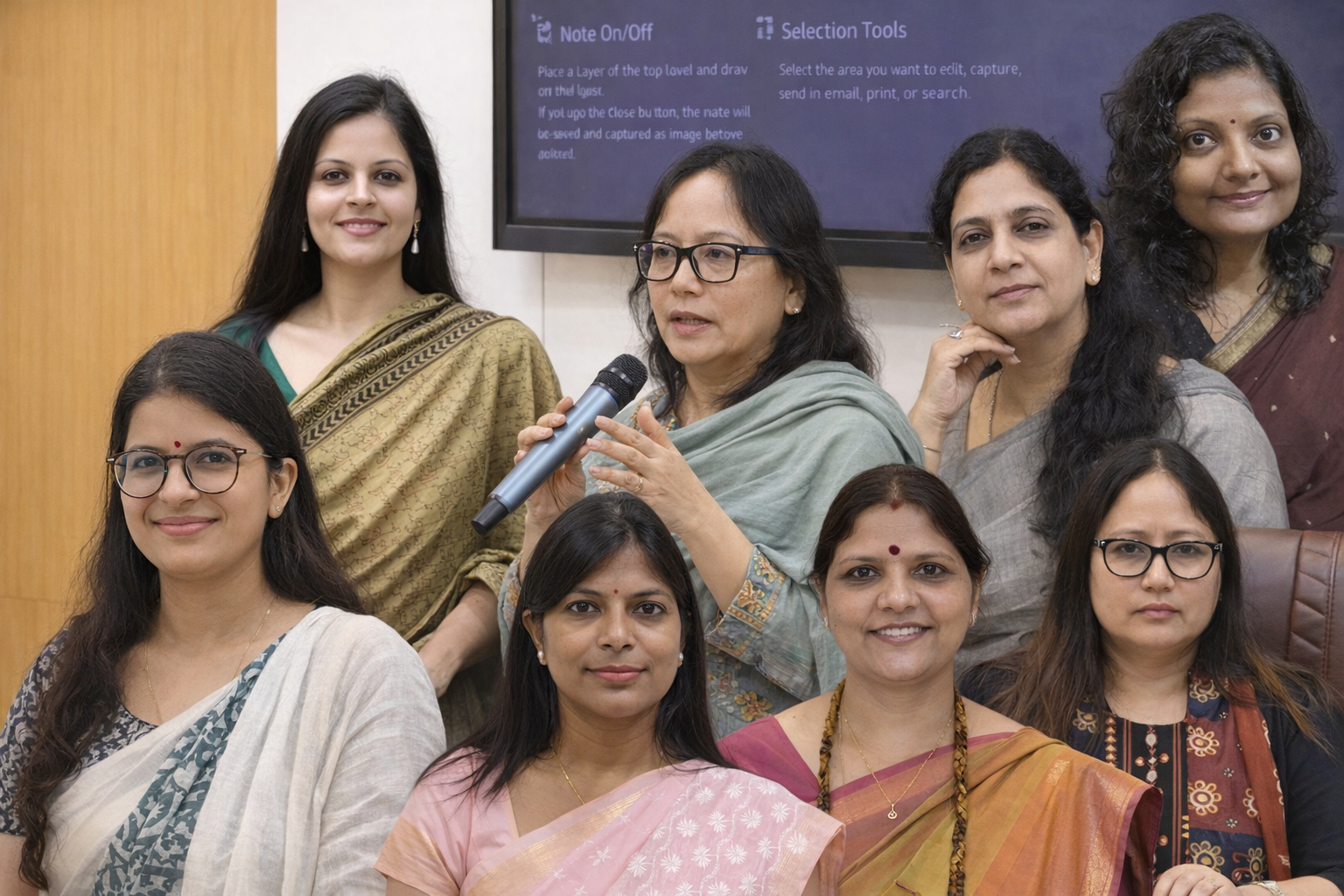
Walk into the corridors of Uttar Pradesh’s Health and Medical Education departments today, and you’ll notice something that would have been unusual not long ago: most of the key decisions, from policy drafting to on-the-ground delivery, are being driven by women.
Under the Yogi Adityanath government, eight women IAS officers are now steering the state’s health services. Their responsibilities run from Principal Secretary-level roles to Director General, Mission Director and senior administrative posts in specialised institutions. In India’s most populous state, that is a striking example of inclusive leadership.
The people at the top
At the apex are V. Hekali Zhimomi, Ritu Maheshwari and Dr. Pinky Jowel. Their positions shape the broad direction of health policy, how resources are distributed, and how different departments work together. Their experience matters most in one place: making sure decisions taken in Lucknow actually improve care for patients in cities and villages alike.
Neha Sharma serves as Director General of Medical Education, a role that covers medical colleges, nursing institutions and paramedical training centres. Her department is working to add medical seats, strengthen faculty and bring teaching standards in line with national and global benchmarks. The goal is simple: more skilled doctors and health workers for the state.
Insurance, policy and administration
The State Agency for Comprehensive Health Insurance Scheme (SACHIS) is led by Archana Verma, a 2014-batch officer, as Chief Executive Officer. The agency delivers health insurance cover to the state’s population, especially economically vulnerable families. Her focus has been on faster claim settlements, wider outreach to beneficiaries and keeping the scheme financially sustainable, so that help reaches people when they need it.
Kritika Sharma, Special Secretary in the Medical Education Department, handles policy coordination and regulatory matters. She also acts as the link between the government and medical institutions, helping clear the operational hurdles that can slow down colleges and universities.

At the Health Department headquarters in Lucknow, Nidhi Bansal is Director (Administration). Personnel, establishment matters and the daily working of the secretariat all come under her. It is unglamorous work, but it keeps the whole department running smoothly and accountably.
Neelam, Additional Director in Medical Education, is focused on infrastructure. She tracks the progress of new medical colleges, makes sure regulatory norms are met, and pushes projects toward completion so that training capacity grows on schedule.
A different way of governing
Taken together, these officers represent a new approach to running the state’s health sector. Supporters point to greater sensitivity toward patients, more transparency in how schemes are carried out, and a more organised approach to both preventive and curative care. From policy desks in Lucknow to insurance claims and new medical colleges across the state, the overhaul is being handled end to end by this team.
The government’s decision to trust so many key roles to women also sends a message: competence matters, whatever the gender. It gives other states a model to consider as they look to improve public service delivery through experienced, inclusive leadership.
There is a wider effect as well. For young women preparing for the civil services, seeing officers like these in charge of health and medical education makes the idea of leading in critical public sectors feel real and reachable.
As Uttar Pradesh works toward better health outcomes and a larger, better-trained medical workforce, these eight officers will remain central to how far that effort goes.












 https://www.youtube.com/watch?si=RtToJsBhYBatUrym&v=mOuYNSdhjHA&feature=youtu.be