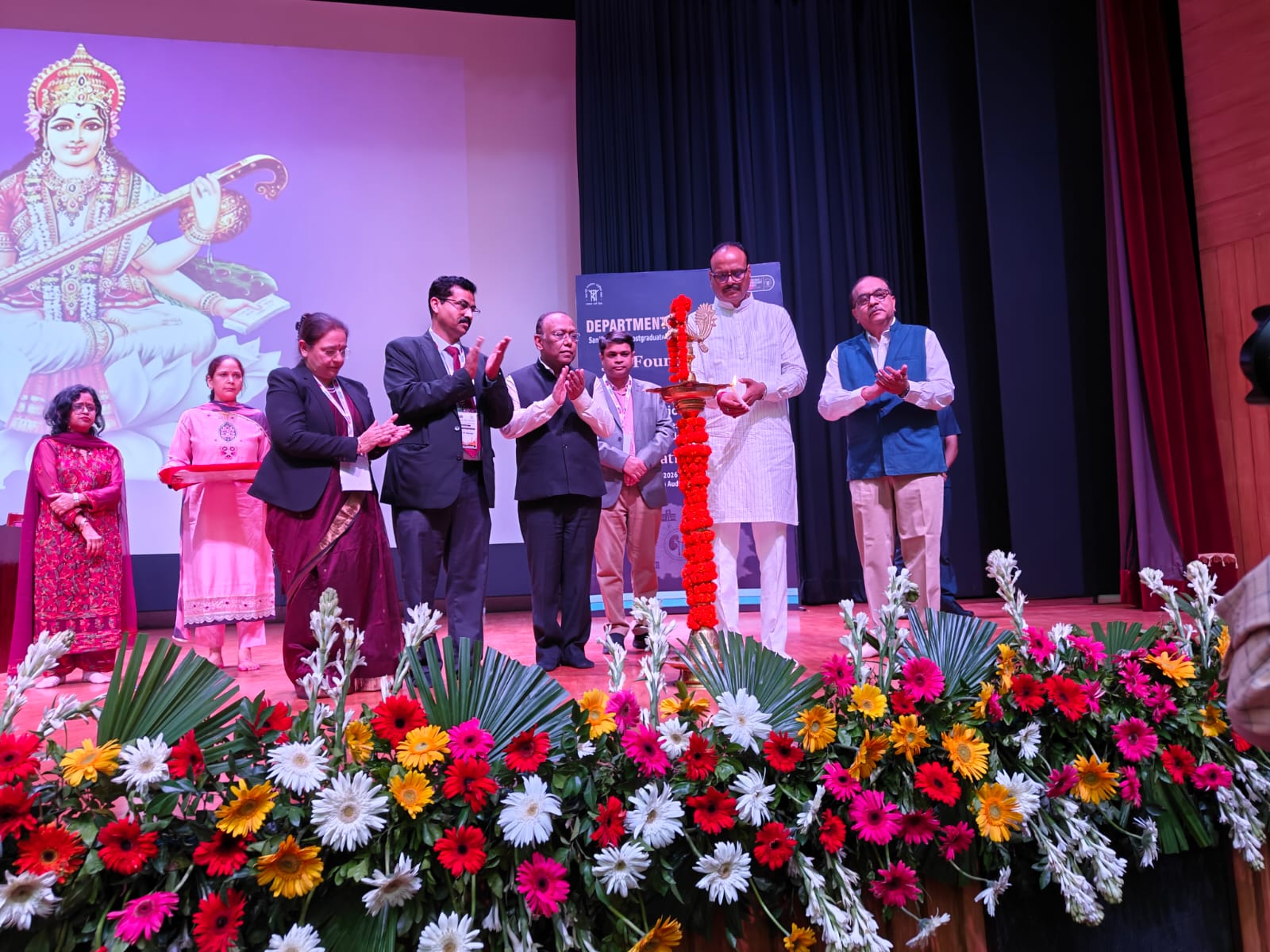
Lucknow: The Department of Nephrology at Sanjay Gandhi Postgraduate Institute of Medical Sciences celebrated its 39th Foundation Day on 16 May 2026 at the prestigious H.G. Khorana Auditorium in an atmosphere marked by academic excellence, reflection, and commitment toward advancing organ transplantation services in Uttar Pradesh. The event brought together eminent nephrologists, transplant physicians, surgeons, policymakers, healthcare professionals, donor families, and medical students from across the country. The celebration highlighted not only the remarkable journey and achievements of the department over nearly four decades but also the growing importance of deceased donor transplantation programs in India.
The Department of Nephrology at SGPGIMS was established on 15 May 1987 with the appointment of its founding Head, Dr. Vijay Kher, along with pioneering faculty members Prof. R.K. Sharma and Prof. Amit Gupta. Over the years, the department has evolved into one of India’s leading centers for nephrology, dialysis, kidney transplantation, and advanced renal research. It has played a pioneering role in patient care, academics, training, and transplantation services in North India. Since assuming leadership of the department, the current Head, Prof. Narayan Prasad, has initiated several academic and clinical innovations. Beginning in 2022, he introduced the concept of theme-based Continuing Medical Education (CME) programs as part of the Foundation Day celebrations to encourage focused discussions on emerging healthcare priorities. The theme selected for this year’s CME was “From Vision to Reality: Replicating Successful Deceased Donor Transplantation Models Across Uttar Pradesh,” reflecting the urgent need to strengthen deceased organ donation systems in the state.

The Chief Guest of the program was the Hon’ble Deputy Chief Minister of Uttar Pradesh and Minister of Medical Education, Health and Family Welfare, Shri Brajesh Pathak. In his keynote address, he emphasized the importance of developing robust organ donation and transplantation infrastructure across Uttar Pradesh. He acknowledged the efforts of SGPGIMS in promoting transplantation services and assured complete support from the state government toward expanding deceased donor transplantation programs. Shri Pathak stated that organ donation represents one of the noblest forms of humanity, as it provides a second chance at life to critically ill patients even after the donor’s death. During the ceremony, he honoured the family members of late Mrs. Lakshmi from Lucknow and another deceased donor family from Madhya Pradesh for their courageous and compassionate decision to permit organ donation after brain death declaration. Their contributions helped save multiple lives through organ transplantation. Addressing the audience, the Deputy Chief Minister remarked that through organ donation, a person continues to live in the hearts and bodies of many others even after death.
The program was also graced by Shri Amit Kumar Ghosh, Additional Chief Secretary, Government of Uttar Pradesh, who attended as the Guest of Honour. In his address, he highlighted the widening gap between organ demand and organ availability in India and stressed the need for sustained public awareness campaigns to encourage organ donation. He emphasized that greater community participation, transparent allocation systems, and strong institutional coordination are essential to building a successful deceased donor transplantation program in Uttar Pradesh. He also appreciated the efforts of SGPGIMS in initiating discussions on policy implementation and public engagement.
Padmashri Prof. R.K. Dhiman, Director, SGPGIMS, addressed the gathering and spoke about the transformative role of awareness and institutional collaboration in strengthening transplantation services. Referring to successful organ donation initiatives in Chandigarh and other parts of the country, he said that similar achievements could be replicated in Uttar Pradesh through dedicated teamwork, public trust, and coordinated healthcare systems. He reiterated the institute’s commitment toward expanding organ donation awareness and enhancing transplantation facilities in the region.
One of the major highlights of the CME was the lecture delivered by Prof. Narayan Prasad on the “Current Status and Future Horizons of Deceased Donor Transplantation in Uttar Pradesh.” Presenting important epidemiological and healthcare data, he explained that nearly 24,000 deaths occur annually in Uttar Pradesh due to road traffic accidents. He emphasized that if even 1% of these cases could result in successful deceased organ donation, the state could potentially facilitate around 480 kidney transplants and approximately 240 liver and heart transplants every year. He further elaborated that, apart from major organs, tissues such as lungs, pancreas, skin, bones, and corneas could also be utilized for transplantation and tissue banking. Prof. Prasad stressed that developing a structured deceased donor program would significantly reduce waiting lists, improve survival outcomes, and provide hope to thousands of patients suffering from end-stage organ failure.
The CME featured lectures from several nationally renowned experts in transplantation medicine. Dr. Shruti Tandon from Jaslok Hospital, Mumbai, delivered a detailed presentation on the complexities associated with brain death declaration. She discussed the ethical, legal, and medical aspects of brain death certification and highlighted the importance of timely donor identification, family counselling, organ preservation, and critical care management for successful transplantation outcomes. Her lecture provided practical insights into the multidisciplinary coordination required for deceased donor transplantation.
Dr. Vivek Kute from the Institute of Kidney Diseases and Research Centre (IKDRC), Ahmedabad, shared the experiences and achievements of the Gujarat organ transplantation model, which is considered one of the most successful deceased donor programs in India. He discussed how government support, efficient coordination networks, public awareness campaigns, and dedicated transplant teams helped Gujarat establish a robust organ donation ecosystem. He also explained how similar strategies could be adapted and implemented in Uttar Pradesh to improve organ donation rates and transplantation outcomes.

Another important session was delivered by Dr. Natarajan Gopalakrishnan from Chennai, Chairman of the Tamil Nadu Transplant Authority. He highlighted Tamil Nadu’s remarkable success in deceased donor transplantation and informed the audience that the state had already recorded 57 deceased organ donations during the first two months of 2026 alone. He discussed the role of transparent allocation systems, public participation, and strong policy implementation in making Tamil Nadu a national leader in organ donation. His lecture served as an inspiring example of how administrative commitment and public trust can transform transplantation services.
Prof. Anil Kumar, Director of the National Organ and Tissue Transplant Organization (NOTTO), delivered the keynote lecture on “Strategies to Strengthen Organ Donation Programs Across States.” He discussed the national framework for organ donation, the role of state and regional transplant organizations, and the importance of creating efficient donor registries and allocation mechanisms. He also highlighted the need for public education, ICU-based donor identification systems, and inter-state collaboration to improve deceased donor transplantation rates in India.
Dr. M.S. Ansari, HOD, Urology spoke on the surgical challenges and technical complexities involved in organ retrieval and deceased donor transplantation. He elaborated on perioperative management, organ preservation techniques, vascular reconstruction, and strategies to improve graft survival. His presentation highlighted the importance of surgical expertise and multidisciplinary teamwork in ensuring successful transplantation outcomes.
The event also included the Foundation Day Award Ceremony, during which faculty members, resident doctors, nursing officers, dialysis staff, technicians, and supporting personnel of the department were honoured for their exemplary contributions in patient care, transplantation services, academics, research, and departmental development. These awards recognized the dedication and hard work of healthcare professionals who have significantly contributed to the growth and reputation of the department over the years.
The Foundation Day Oration was delivered by Dr. Arvind Gupta, Head of the Department of Nephrology at Motilal Nehru Medical College, Prayagraj. He spoke about the evolving challenges in nephrology and transplantation and emphasized the importance of collaborative academic growth and innovation in improving patient outcomes.
A special moment of the celebration was the conferment of the “Lifetime Achievement Award” upon Dr. Vijay Kher, the founding Head of the Department of Nephrology at SGPGIMS. He was honoured for his extraordinary and pioneering contributions to nephrology and kidney transplantation in India. His leadership and vision laid the foundation for the department’s growth into a nationally recognized center of excellence. Dr Anupama Kaul, co-chair of the CME, put forth a strong message about the necessity of prevention of kidney diseases in view of increasing cost of management of kidney diseases, dialysis and transplantation.
The event concluded with a vote of thanks proposed by the Organizing Secretaries, Dr. Manas Ranjan Patel and Dr. Santosh Kumar V, who expressed gratitude to all dignitaries, speakers, delegates, donor families, and participants for making the event a grand success. In his concluding remarks, Prof. Narayan Prasad stated that the Foundation Day celebration represented not merely a commemoration of 39 years of achievements but also a renewed commitment toward building a strong, sustainable, and equitable deceased donor transplantation system in Uttar Pradesh. He emphasized that the selfless contributions of donor families would continue to inspire the medical community and society at large toward the noble cause of organ donation and saving lives.