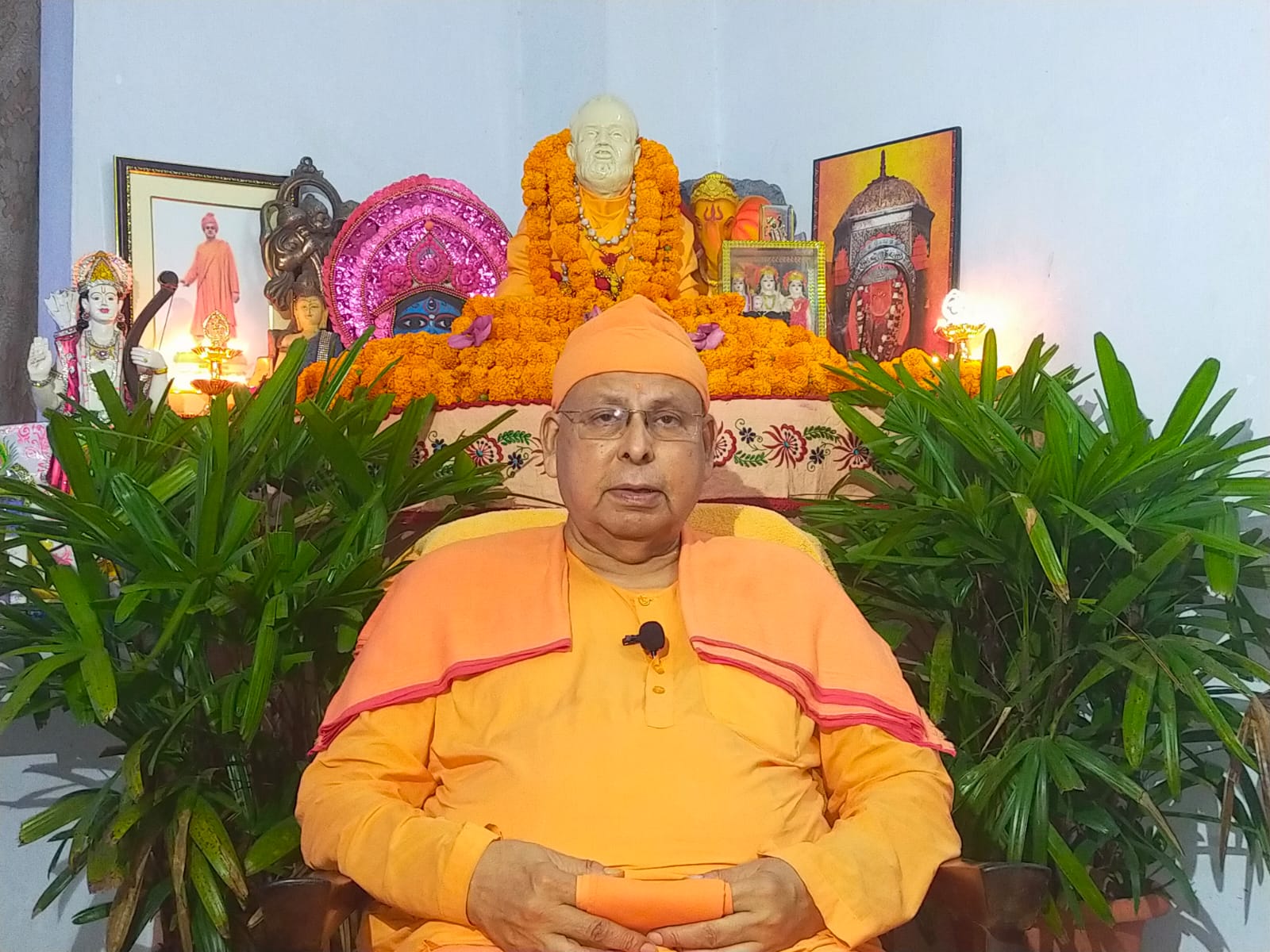
Lucknow: Emphasizing the transformative power of a true spiritual guide, Swami Muktinathananda, President of the Ramakrishna Math, Lucknow, said that the grace of a Guru has the ability to accomplish what may appear impossible. He was addressing devotees during the Tuesday morning Sat-Prasang (spiritual discourse) at the monastery.
Speaking on the significance of the Guru in India’s spiritual tradition, Swami Muktinathananda said that a Guru is far more than a teacher who imparts knowledge. A true Guru guides the disciple’s life, leading him or her toward God and spiritual realization. Referring to the teachings of Sri Ramakrishna Paramahamsa, he explained that the saint presented a profound understanding of the Guru-disciple relationship through both his life and teachings.
Swami Muktinathananda said Sri Ramakrishna classified spiritual teachers into four categories based on their compassion and role in guiding disciples.
According to him, the first category consists of Adham Acharyas (ordinary teachers), who merely impart instructions and consider their duty complete without taking responsibility for the disciple’s spiritual progress. The second category comprises Madhyam Acharyas (intermediate teachers), who remain concerned about the disciple’s condition, offering encouragement and guidance along the spiritual path.
The third category includes Uttam Acharyas (superior teachers), who, when necessary, adopt a firm approach to help disciples remain steadfast in their spiritual practices. Above all these, Swami Muktinathananda said, are the Supreme Acharyas or Divine Incarnations, who not only guide their disciples but also assume responsibility for their spiritual welfare through boundless compassion and grace.
He described Sri Ramakrishna Paramahamsa as the finest example of such a supreme spiritual master. Rather than imposing rigid rules, Sri Ramakrishna guided each disciple according to his or her individual temperament, circumstances, and spiritual readiness, nurturing inner transformation through love, compassion, and devotion to God.

Illustrating the power of a Guru’s grace, Swami Muktinathananda recounted the life of Girish Chandra Ghosh, who struggled with numerous worldly weaknesses and personal shortcomings. Despite these flaws, Sri Ramakrishna never rejected him but instead showed him the path of complete surrender. Through the Master’s unwavering faith and compassion, Girish Chandra Ghosh underwent a profound spiritual transformation and eventually became one of Sri Ramakrishna’s most devoted disciples.
He also cited the example of Kalipada Ghosh, who was addicted to alcohol. Instead of condemning him, Sri Ramakrishna accepted him with compassion and fulfilled his promise to guide him even during his final days.
Another example shared during the discourse was that of Surendranath Mitra, whom Sri Ramakrishna never compelled to abandon alcohol outright. Instead, he advised him to first offer whatever he consumed to the Divine Mother. Swami Muktinathananda explained that this simple spiritual practice gradually transformed Surendranath’s outlook and led him towards a life of deeper devotion.
Drawing lessons from these incidents, Swami Muktinathananda said Sri Ramakrishna’s greatness as a spiritual teacher lay not merely in his teachings but in his ability to awaken the divine potential within every individual. He saw not the faults of people but the divinity hidden within them, and through patience, love, and compassion inspired lasting inner change.
Concluding his discourse, the Ramakrishna Math President said that Sri Ramakrishna’s message remains timeless: anyone who sincerely surrenders to God and the Guru with faith and devotion is assured of spiritual progress. He urged devotees to understand the profound significance of the Guru’s role and embrace the path of spirituality with unwavering faith, trust, and surrender.
“The grace of the Guru can make even the impossible possible. That is the essence of Sri Ramakrishna’s life and teachings,” Swami Muktinathananda said.













 https://www.youtube.com/watch?si=RtToJsBhYBatUrym&v=mOuYNSdhjHA&feature=youtu.be