Lucknow: With the 2027 Uttar Pradesh Assembly elections approaching, political activity in the state is intensifying as major parties work to consolidate their electoral strategies in the 403-member Assembly.
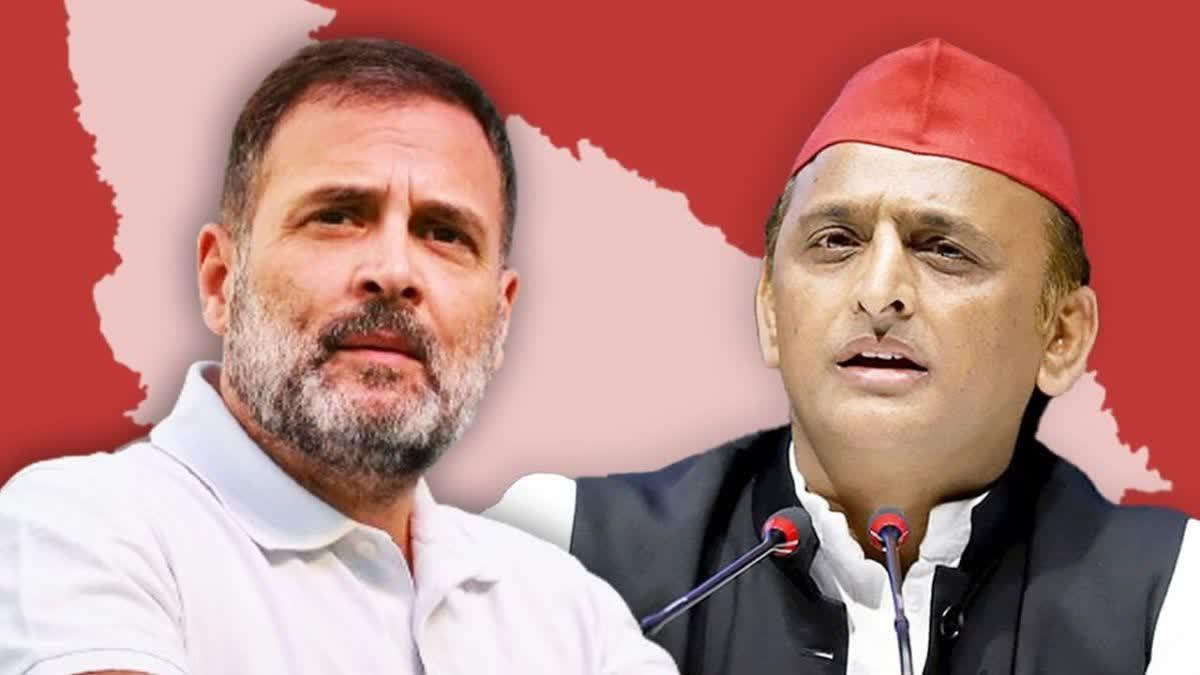
The Congress is increasingly signalling that it does not want to contest the election merely as a junior partner to the Samajwadi Party (SP), setting the stage for potentially difficult negotiations over seat-sharing within the opposition camp.

The Bharatiya Janata Party (BJP), led by Chief Minister Yogi Adityanath, is focusing on law and order, development under the “double-engine” government and welfare schemes to strengthen its electoral base. At the same time, the party faces the challenge of rebuilding its organisational structure and regaining the support of non-Yadav Other Backward Classes and Dalit voters following the Lok Sabha elections.
The SP, under national president Akhilesh Yadav, is seeking to challenge the BJP through its PDA formula, referring broadly to backward classes, Dalits and minorities. However, shifting interpretations of the PDA framework in recent weeks have, according to political observers, created uncertainty over the precise social coalition the party intends to build.
The SP is also attempting to reach out to Brahmin voters. However, opposition among sections of upper-caste voters over the reservation issue and Akhilesh Yadav’s subsequent assertion that the controversy was part of a BJP conspiracy could create difficulties for the party in consolidating support among the upper castes.
Despite these challenges, the SP is positioning itself as the principal opposition alternative through candidate selection and grassroots campaigning while making a series of populist promises. The growing pressure from Congress, however, could make it increasingly difficult for Akhilesh Yadav to maintain a broad PDA-based alliance and negotiate seat-sharing arrangements.
Congress Looks to Rebuild Its Organisation
The Congress is seeking to capitalise on the encouraging signals it received in the last Lok Sabha election and rebuild its organisational presence across Uttar Pradesh.
The party’s strategy reportedly involves strengthening its organisation down to the block and booth levels rather than relying solely on an electoral alliance. Its approach combines Rahul Gandhi’s emphasis on social justice and constitutional issues with Priyanka Gandhi Vadra’s focus on directly engaging women and young voters.
The Congress’s renewed emphasis on grassroots organisation indicates that the party wants to recover political space it has lost in Uttar Pradesh over the years and contest the 2027 Assembly election with a substantially larger and more respectable share of seats.
The possibility of a more assertive Congress could put additional pressure on the SP, which has so far sought to establish itself as the principal opposition force in the state.

Rahul-Priyanka Factor
Rahul Gandhi’s “Save the Constitution” campaign and issues surrounding social justice and representation are expected to form an important part of the Congress’s messaging in Uttar Pradesh. Party workers are preparing to take these themes to villages and local communities across the state.
Priyanka Gandhi Vadra’s potential role in the campaign could further strengthen the Congress’s outreach to women and younger voters. Her earlier emphasis on women’s political participation and the “Ladki Hoon, Lad Sakti Hoon” campaign continues to provide a framework for the party’s women-centric messaging.
A more aggressive Congress campaign could simultaneously strengthen the opposition vote and complicate the SP’s efforts to retain political dominance within the anti-BJP camp.
Mayawati Seeks to Rebuild BSP’s Social Coalition
Meanwhile, Bahujan Samaj Party (BSP) supremo Mayawati is working to revive the party’s traditional support base, particularly among Jatav voters, while undertaking organisational changes at the booth level.
The BSP is also seeking to revisit elements of its 2007 social-engineering strategy, which brought together Dalits, Brahmins and Muslims. If the BSP succeeds in rebuilding this coalition, a three-cornered contest could lead to significant fragmentation of opposition votes.
Seat Sharing Could Become Key Battleground
The central political question for the opposition ahead of the 2027 election is likely to be the distribution of Assembly seats between Congress and the SP.
While the SP is attempting to project itself as the principal challenger to the BJP, Congress appears determined to secure a more substantial role rather than remain a subordinate alliance partner. The eventual seat-sharing formula could therefore become one of the most important indicators of the opposition’s electoral strategy.
For the BJP, meanwhile, crossing the majority mark of 202 seats will remain the immediate objective in the 403-member House. The party is expected to intensify its organisational and campaign machinery in the months ahead.
The contest between the BJP, SP, Congress and BSP is likely to become increasingly competitive as the election approaches. Whether the opposition can prevent a division of anti-BJP votes—and whether Congress and the SP can agree on a mutually acceptable seat-sharing formula—could prove decisive in determining the shape of the 2027 Uttar Pradesh Assembly election.