NEW DELHI: Prime Minister Narendra Modi asserted that his government had prevented nearly Rs 5 lakh crore from being diverted into the wrong hands through digital technology and Direct Benefit Transfer (DBT), declaring that he would continue to act against irregularities despite opposition.
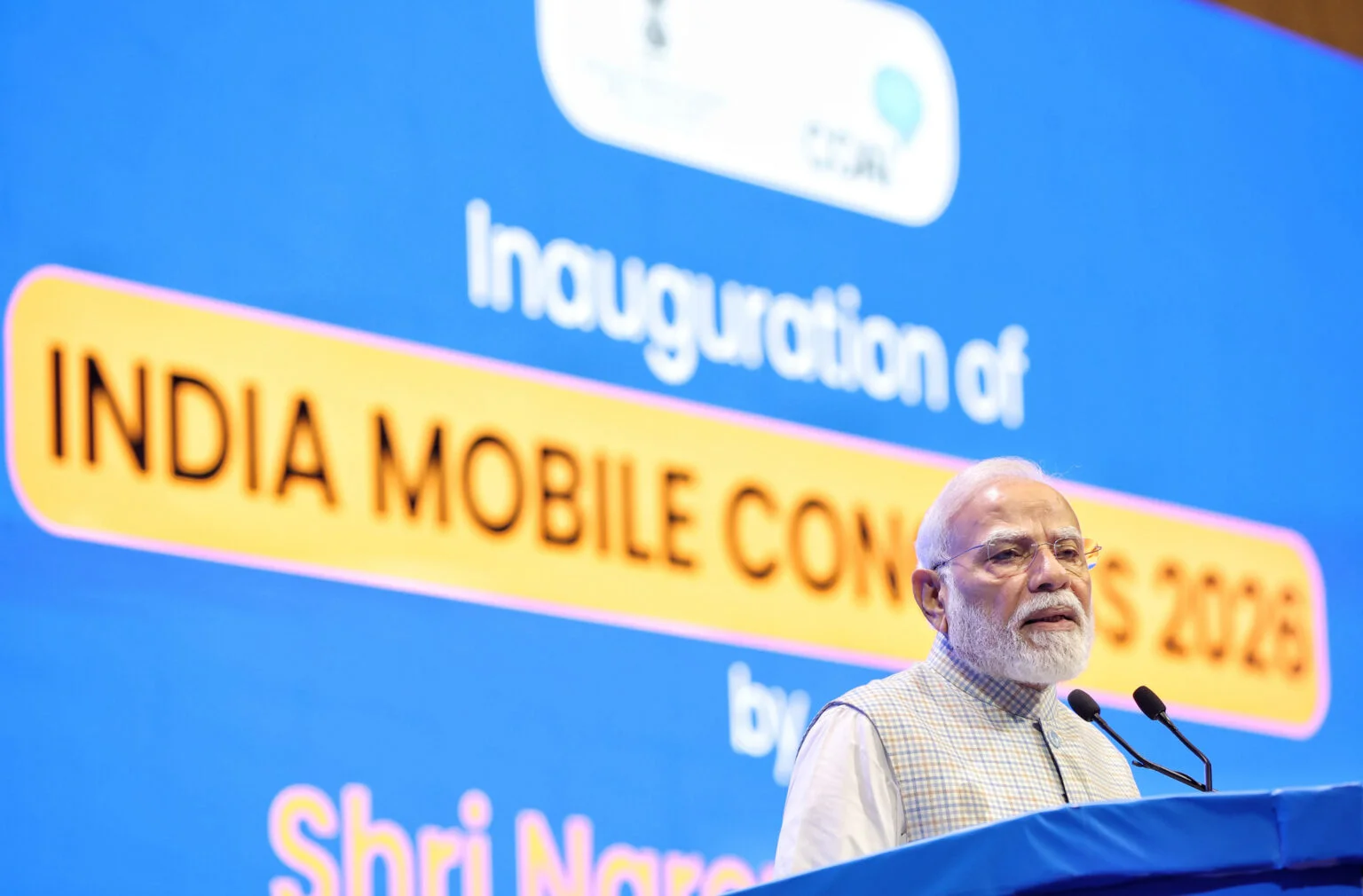
Addressing the inauguration of the 10th edition of the India Mobile Congress 2026 at Yashobhoomi in New Delhi, Modi said the government had transferred nearly Rs 50 lakh crore directly to beneficiaries through DBT, improving transparency and reducing leakages in the delivery of public welfare schemes.

“Those whose free earnings have stopped will they love Modi?” the Prime Minister asked, defending the measures taken by his government. He said he was determined to stop wrongdoing and would not be deterred by those who continued to criticise him.
Modi highlighted the transformation of India’s telecommunications sector over the past 10 to 12 years, saying mobile connectivity had evolved beyond communication to become a key instrument of good governance.
He said hundreds of government services were now accessible through mobile phones, enabling citizens to access benefits without repeatedly visiting government offices. Digital governance, he added, had reduced the time and money people previously spent travelling to banks, hospitals and administrative offices, many of which were concentrated in urban centres.
The Prime Minister cited the PM-KISAN Samman Nidhi scheme as an example of direct transfers, stating that more than Rs 4 lakh crore had been deposited into farmers’ bank accounts. Beneficiaries receive mobile notifications when the money is credited, he said, adding that the initiative had helped reach millions of small farmers who had previously struggled to access government assistance.

Modi said the country’s digital transformation had also helped address the digital divide that existed a decade ago, when access to modern technology was largely limited by financial means.
Under the Digital India initiative, the government had focused on making technology more accessible, expanding telecommunications infrastructure and encouraging domestic manufacturing of mobile phones and telecom equipment, he said.
Emphasising India’s linguistic and geographical diversity, Modi said mobile connectivity had made public services more accessible to people across different regions. Digital platforms, he added, had helped connect citizens with government schemes and services regardless of their location.
His remarks came amid opposition protests over the Election Commission’s Special Intensive Revision (SIR) of electoral rolls in various states, with opposition parties demanding the resignation of the Chief Election Commissioner.
The Prime Minister reiterated that mobile technology and digital governance remained central to the government’s development agenda, arguing that transparent transfers and wider connectivity had improved the delivery of public services.