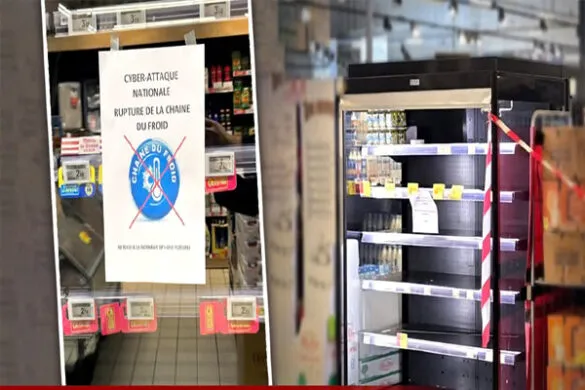
Paris: A suspected cyberattack targeting supermarket refrigeration systems in France has raised serious concerns about the vulnerability of connected retail infrastructure, after hackers allegedly manipulated refrigerator settings, causing temperatures to soar above 50°C and reportedly triggering fires in around 150 connected refrigeration units.
According to reports cited in the supplied source, the Paris prosecutor’s office has confirmed that connected refrigeration systems used by major food retailers across France were affected. Investigators are examining how the attackers gained access to the systems and whether the incidents were part of a coordinated campaign.

Four European Countries Investigate Possible Coordinated Attack
Besides France, Denmark, the Netherlands and Belgium have reported similar incidents involving supermarket refrigeration systems. European security agencies are investigating possible links between the cases, including the potential involvement of Russia-linked hacking groups. However, no attribution has been conclusively established.
Reports indicate that France has ordered a high-level investigation, with authorities coordinating information-sharing efforts with their counterparts in other affected countries.
Les Mousquetaires, the parent company of French supermarket chain Intermarché, reportedly said that some refrigerators remained heated to around 50°C for approximately six hours.
Major French Supermarket Chains Reportedly Targeted
The affected retailers reportedly include Carrefour, Monoprix, Auchan, Intermarché and E.Leclerc, among other major supermarket operators. The incidents have raised concerns about the potential financial losses caused by damaged equipment, spoiled food and disruptions to store operations.
Initial accounts suggest that the attackers may have accessed central IT networks and manipulated refrigeration controls, forcing equipment into continuous defrost mode. The resulting loss of cooling reportedly caused temperatures to rise sharply.

Retailers subsequently faced the prospect of discarding food products over concerns about spoilage and food safety. The full financial impact of the incidents remains unclear.
Outdated Firmware Under Scrutiny
Danish refrigeration technology manufacturer Danfoss reportedly said that the affected refrigeration units were operating on older firmware versions. The company had previously issued alerts urging retailers and customers to update software and strengthen cybersecurity measures.
The incidents have highlighted the risks associated with outdated software in connected industrial and commercial equipment. Refrigeration systems, once treated primarily as physical infrastructure, increasingly rely on networked controls that can become potential targets for cybercriminals.
Investigators are now examining the method of intrusion, the extent of the damage and whether inadequate software updates contributed to the breaches.
The case underscores the growing importance of securing operational technology in essential supply chains, particularly in the food retail sector, where a cyber incident can threaten not only business operations but also food safety.