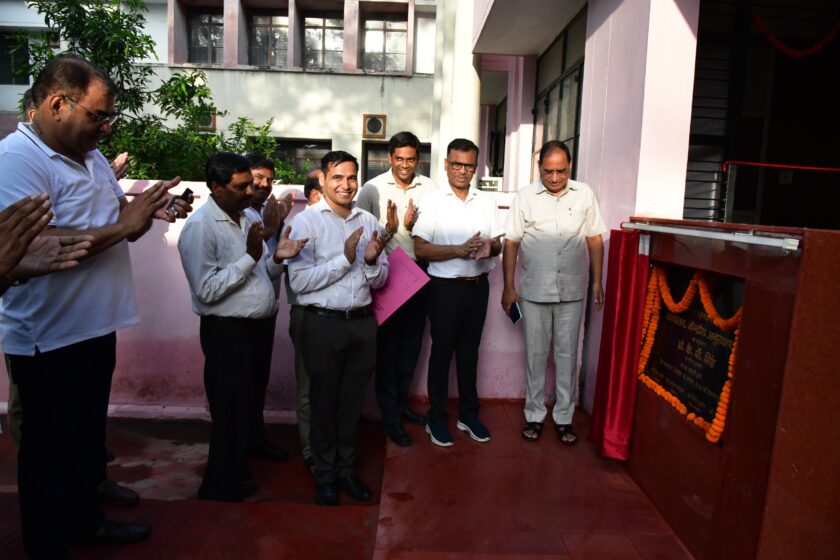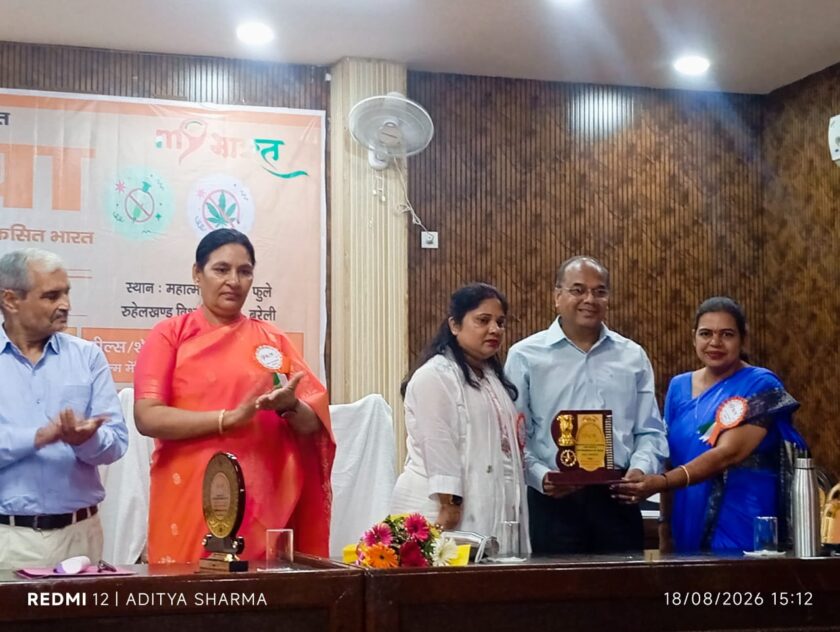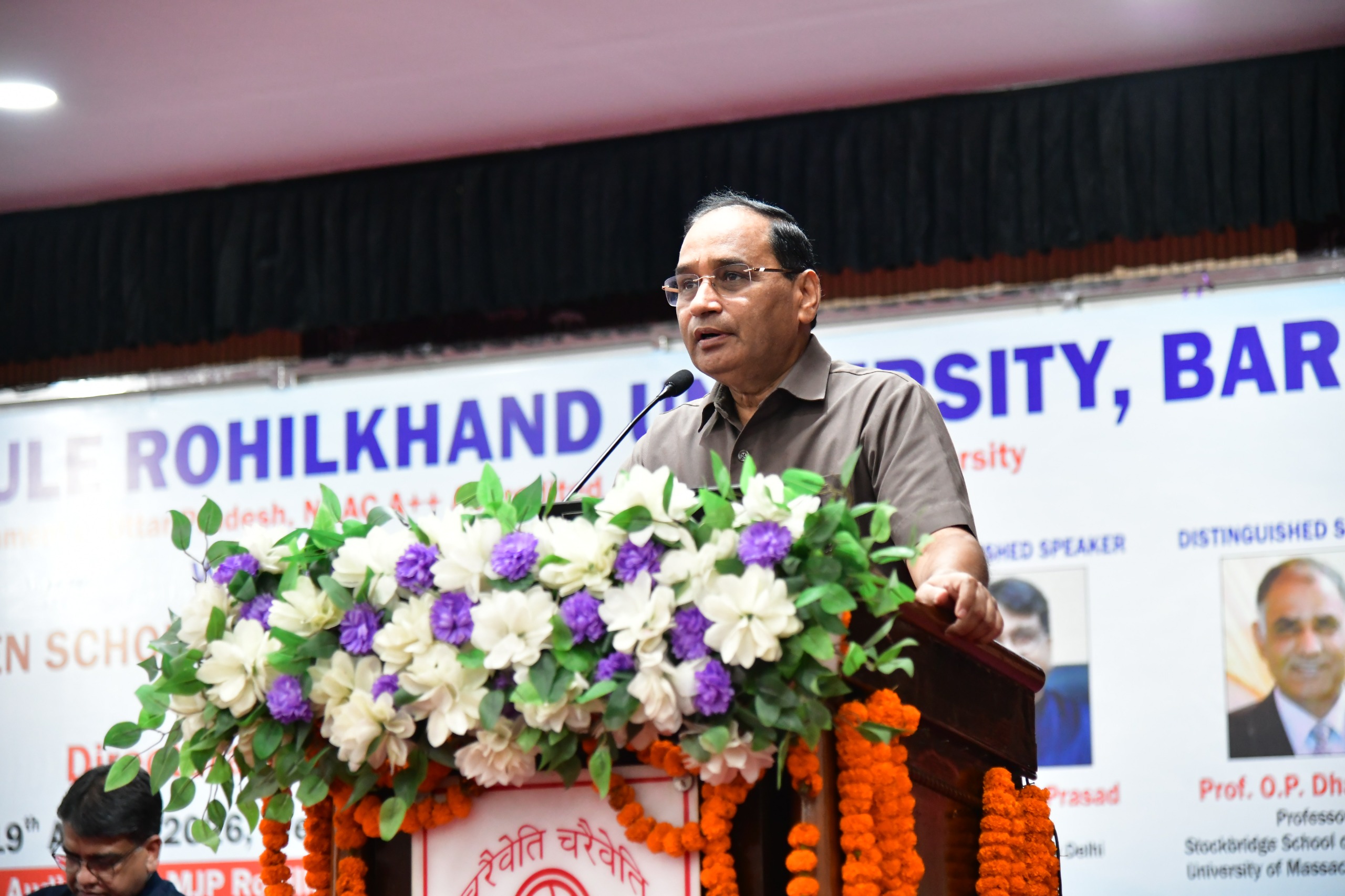
Bareilly: The identity of a university and its researchers should be defined not by the number of research papers or scholars, but by the quality, credibility, originality and social relevance of their work, Vice-Chancellor of Mahatma Jyotiba Phule Rohilkhand University, Prof KP Singh, said at the “Next Gen Scholar Orientation Conclave” held at the Atal Auditorium.
The conclave was organised by the Directorate of Research under the inspiration of university Chancellor and Uttar Pradesh Governor Anandiben Patel and the patronage of Vice-Chancellor Prof KP Singh. Experts from India and abroad guided newly enrolled research scholars on quality research, research integrity, scientific publishing, patents, digital research resources, international collaborations and career opportunities.

At the beginning of the programme, Director of the Directorate of Research Prof Alok Srivastava outlined the directorate’s establishment, objectives, functioning, facilities available to research scholars and various ongoing initiatives. He said the conclave was aimed at guiding scholars towards original, high-quality and globally relevant research right from the beginning of their PhD journey.
Research Must Address Social and National Challenges
Addressing the scholars, Prof KP Singh said a university’s reputation should be built on the quality and reliability of research rather than merely the number of researchers or publications.
He emphasised that researchers must develop a sensitive understanding of social issues alongside becoming successful scientists or engineers. According to him, research should ultimately contribute towards finding solutions to problems faced by society and the nation.
‘The Road to Success Is Not Always Straight’
Prof OP Dhankar of the Stockbridge School of Agriculture, University of Massachusetts, USA, said successful research begins with the selection of the right research topic and mentor. He advised scholars to identify knowledge gaps and proceed with clear hypotheses, objectives and scientifically sound experimental designs.
He described critical thinking, accuracy, reproducibility and scientific rigour as the foundations of quality research. Referring to the challenges researchers face, he said, “The road to success is not always straight,” and stressed that failed experiments should be treated as an integral part of the research journey and used as opportunities for learning.
Prof Dhankar also highlighted the importance of teamwork and international research collaboration in modern science. He briefed scholars about opportunities under programmes such as SPARC, VAJRA, VAIBHAV and GIAN, and encouraged them to explore postdoctoral opportunities through conferences, professional networking and international collaborations.
For publishing in high-impact journals, he emphasised the need for strong and reliable data, clear scientific writing, effective figures, appropriate journal selection and a thorough understanding of the peer-review process. He stressed that teamwork and collaboration are key to success.

Research Ethics Cannot Be Compromised
Prof Manoj Prasad, Director of BRIC-NIPGR, New Delhi, spoke on “Climbing the Career Ladder: The Role of Mentor and Mentee”. He described the PhD journey as a progression from a learner to an independent researcher and eventually a mentor.
He advised scholars at the initial stage of their research careers to focus on comprehensive literature reviews and experimental techniques. As they progress, they should develop skills in troubleshooting, independent thinking, quality publishing and leadership.
Prof Prasad placed strong emphasis on research integrity and advised scholars to stay away from data fabrication, manipulation, image manipulation and plagiarism. He stressed the importance of maintaining raw data and laboratory notebooks systematically and encouraged researchers to learn from negative results rather than conceal them.
He said a strong academic CV should not be measured merely by the number of research papers. Quality publications, contemporary skills in areas such as artificial intelligence, machine learning and data science, along with national and international exposure, are increasingly important for building a successful research career.
Experts Highlight Digital Research, Patents and Scientific Publishing
During the technical sessions, Hitesh Kumar Solanki, Scientist-D at the INFLIBNET Centre, Gandhinagar, provided guidance on digital and academic research resources. Lakhpat Singh, Training Manager at IEEE, discussed important aspects of quality research, technical resources and scientific publishing.
The conclave emphasised that research should not remain confined to obtaining degrees or increasing publication counts. Instead, it should be driven by ethics, originality, innovation, social responsibility, modern technology, teamwork and global collaboration, ultimately contributing meaningfully to society and national development.
Report from Bareilly by Akhilesh Chandra Saxena


 ---------------------------------------------------------------------------------------------------