Mumbai: Sony SAB’s Hastinapur Ke Veer continues to bring alive the untold childhood years of the Pandavas and Kauravas, exploring the relationships, values, and experiences that shaped the future of Hastinapur. Among the key figures influencing this journey is Shakuni, portrayed by Chandan Anand, a character known for his intelligence, strategic thinking, and ability to influence people through words rather than force.
In this conversation, Chandan Anand talks about preparing for the role of Shakuni, developing the character’s unique mannerisms, his experience working with the young cast members and the lessons audiences can take away from Shakuni’s journey in Hastinapur Ke Veer.
1. Shakuni is one of the most intriguing and complex characters in Indian mythology. How did you prepare for such a layered role?
Preparation takes time and the moment I learned I would be playing Shakuni, I started reading everything I could about him. I also studied the performances of actors who had portrayed Shakuni before. Acting involves four key elements – Aangik (physicality), Vachik (voice and speech), Satvik (emotions) and Aaharya (costume and appearance). For the physical aspect, I worked on how pronounced Shakuni’s limp should be. For the vocal side, I developed his speech pattern, pitch and tone. If you notice, he speaks differently with his sister, differently with Maharaj and differently with the children. These nuances were all part of the preparation. I also read a book on Shakuni to better understand his mindset. One creative suggestion I made was to use a lens in one eye to give him a slightly unsettling and mysterious presence. These were some of the key elements that helped me shape the character.
2. Hastinapur Ke Veer explores the younger years of the Pandavas and Kauravas. What new side of Shakuni are you portraying in the show?
With the children, Shakuni tries to be more of a friend, much like that fun uncle many of us have in our lives. There is always one uncle who understands you, jokes around with you and naturally becomes your favourite. That is the space Shakuni occupies with them. Whenever the children come to him with questions or concerns, he sees it as an opportunity. Those moments allow him to subtly influence their thinking and steer situations in the direction he wants. Every question they ask becomes a chance for Shakuni to quietly advance his plans while appearing caring and trustworthy.
3. Ever since the show has launched, viewers have been talking about Shakuni’s unique clap. How did this gesture come about?
During the first look test, I remembered a villainous character I had played earlier who had a signature hand gesture that became closely associated with him. This time, the team encouraged me to create a unique gesture for Shakuni as well. Since Shakuni is synonymous with dice and strategy, I wanted something that reflected that. Then I recalled a distinctive way my grandfather used to clap while reciting poetry. I adapted that gesture for Shakuni because, in many ways, all of his moves and game plans are controlled by his hands. I’m happy that audiences have connected with it and I have my grandfather to thank for the inspiration.

4. As an actor, do you enjoy playing morally grey characters more than straightforward heroes?
Not at all. As actors, we need to be flexible and capable of portraying every shade of emotion and every kind of character. For some reason, I often get offered negative roles, but I don’t look at them any differently. Whatever role comes my way, my responsibility is to bring it to life with honesty and conviction. At the end of the day, my job is simply to perform the character to the best of my ability.
5. Was there any element of Shakuni’s look that helped you get into the character?
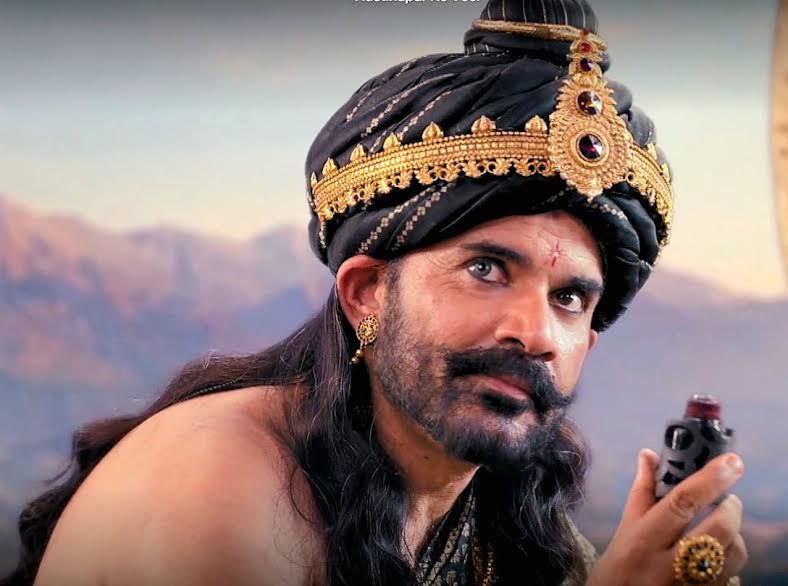
I absolutely love the costume design for Shakuni. The dominant black reflects the darker and more cunning side of the character, while the intricate golden detailing adds a sense of royalty and grandeur. The jewellery, turban and overall styling come together beautifully to create a striking look. I’ve really enjoyed wearing it and I think the audience is connecting with it as well. In fact, I liked the look so much that I even put up a poster of it on my wall.
6. The show has a mix of experienced and young actors. What was your experience with young cast members?
I love performing with children because they bring a genuine sense of innocence and spontaneity to the set. After working in the industry for over two decades, I feel it’s important to hold on to that childlike quality as an actor. In fact, I learn a lot from them. They have an incredible ability to switch on and switch off effortlessly. Just moments before a shot, they are chatting, laughing and playing around, but the instant the camera rolls and action is called, they slip completely into their characters. That natural ease and honesty in performance is something truly admirable.
7. What lessons can today’s audience take away from Shakuni’s journey?
When I look at many negative characters, I often feel that a lot of life is wasted in seeking revenge, mocking others and constantly plotting against people. Shakuni is perhaps one of the strongest examples of this in our mythology. Personally, I don’t relate to that mindset. I have come across such people in real life, but I don’t believe that path brings peace or happiness. I believe in being kind, joyful and forgiving. When we learn to let go of mistakes and not hold on to grudges, life becomes much lighter, simpler and more beautiful.













 https://www.youtube.com/watch?si=RtToJsBhYBatUrym&v=mOuYNSdhjHA&feature=youtu.be