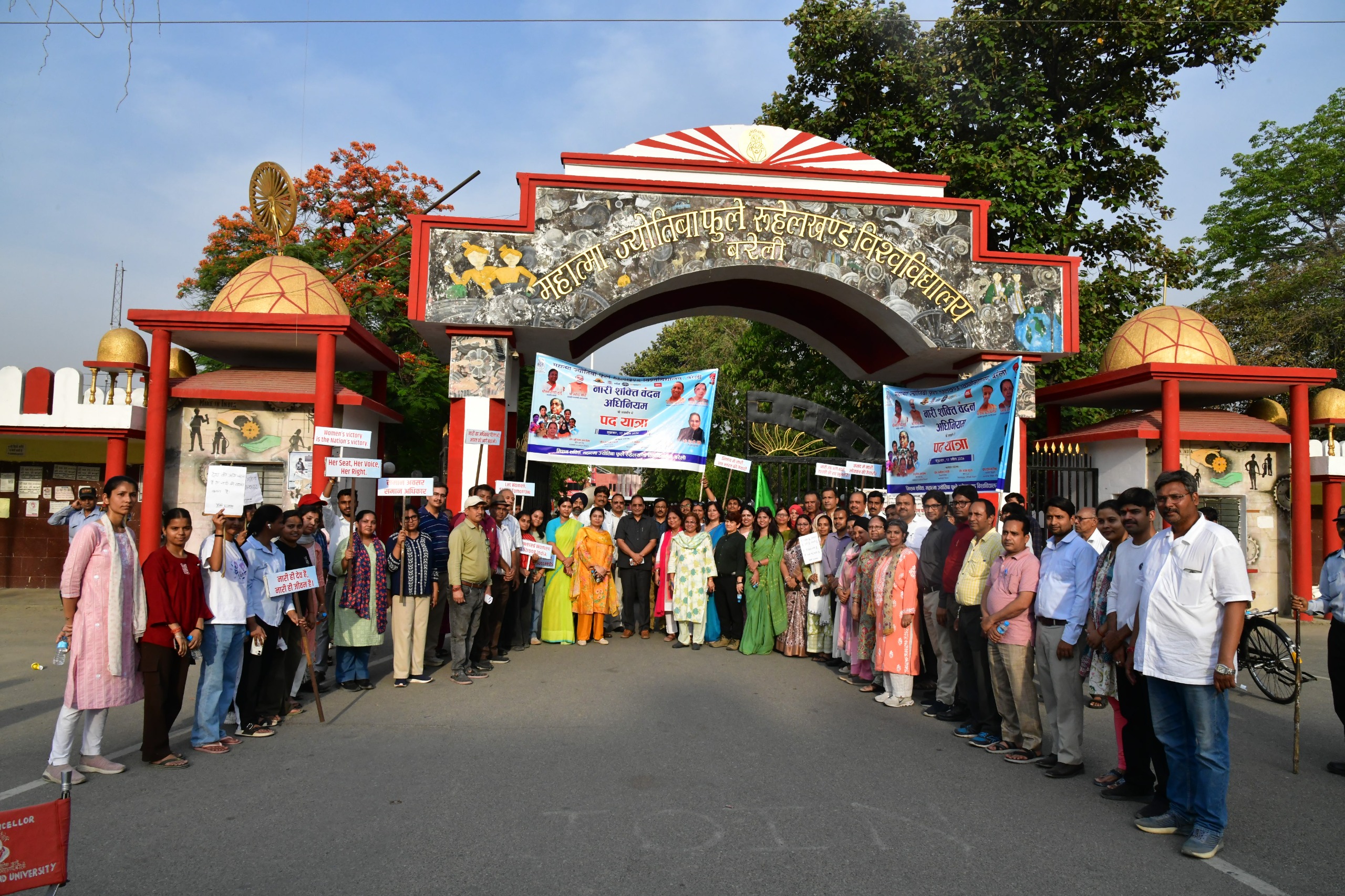
Bareilly: A massive human chain and awareness march were organised at Mahatma Jyotiba Phule Rohilkhand University in support of the Nari Shakti Bandhan Adhiniyam (Women’s Reservation Bill), highlighting the call for greater political representation of women.
The event was conducted under the leadership of Vice-Chancellor Prof. K.P. Singh and witnessed enthusiastic participation from faculty members, officials, staff, research scholars, and a large number of students. The human chain was formed in the park located in front of the university’s administrative building, symbolising unity and support for women’s empowerment.

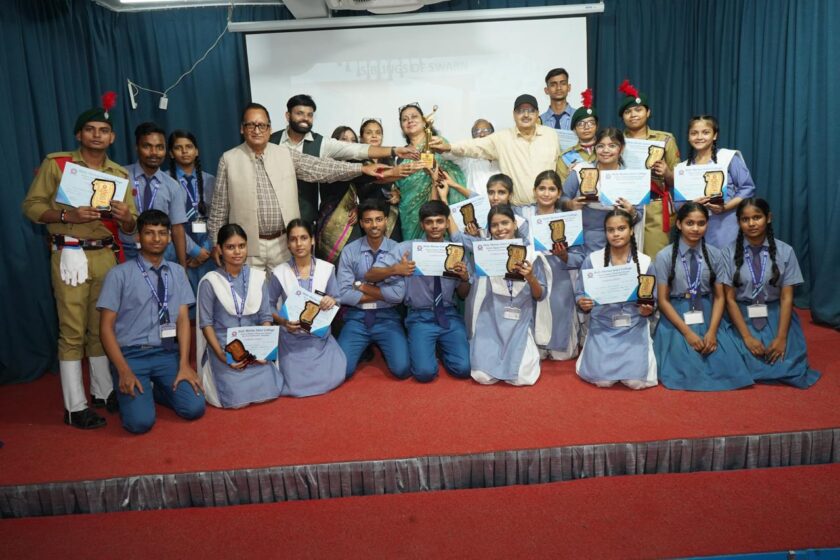
Ranjana Solanki, proprietor of Lata Gas Agency, attended the programme as the chief guest and was honoured by the Vice-Chancellor with a memento. Addressing the gathering, she emphasised that women possess immense potential and only require opportunities to excel. Sharing her personal journey, she highlighted the resilience and determination of women in overcoming challenges.
In his address, Prof. K.P. Singh elaborated on the significance of the Women’s Reservation Bill, stating that providing 33 percent reservation to women in legislative bodies would lead to social and familial upliftment and accelerate national progress. He noted that while women constitute nearly half of the population, their representation in decision-making roles has historically been limited. He described the initiative of Narendra Modi to enhance women’s participation as a welcome and progressive step.
Following the human chain, a grand march was taken out from the administrative building premises. The procession passed through Gate No. 3 and nearby routes including Dohra Road and Pilibhit Road, before concluding at the university’s main entrance.

The event was attended by Registrar Harish Chandra, Controller of Examinations Sanjeev Kumar Singh, Prof. Archana Gupta, Prof. Tulika Saxena, Prof. Anita Tyagi, Prof. Shobhana Singh, and many other members of the university community.
The programme reflected strong support for the legislation and reinforced the message of gender equality and inclusive governance.
— Report by Akhilesh Chandra Saxena, Bareilly