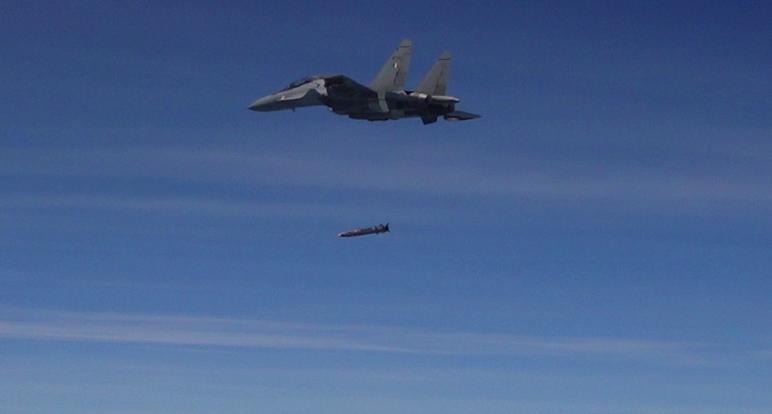
New Delhi | India has taken a major leap in advanced military capabilities with the public display of its Long Range Anti-Ship Hypersonic Missile (LR-ASHM) during the 77th Republic Day Parade at Kartavya Path on January 26. Developed by the Defence Research and Development Organisation (DRDO), the missile was showcased for the first time in a vehicle-mounted, ground-launched configuration, signaling India’s growing readiness in hypersonic weapons technology.
Capable of striking targets at a range of nearly 1,500 kilometers, the LR-ASHM can reportedly cover this distance in about 15 minutes due to its hypersonic speed—more than five times the speed of sound. The system is designed to target high-value naval assets such as aircraft carriers, destroyers, and other strategic warships, making it a potential game-changer for sea-denial operations in the Indian Ocean Region.
Vehicle-Mounted, Ground-Launched System
The LR-ASHM displayed at the parade is a land-based, vehicle-mounted missile system. Defence sources confirmed that limited production of the missile has already begun, with the current focus on fine-tuning the system in coordination with the Indian Navy to meet operational requirements. Such an approach is standard for cutting-edge weapon systems before full-scale induction.
At present, the missile’s size and weight make it more suitable for a coastal battery role rather than deployment directly from naval platforms. However, officials have clarified that this is only the first step in a broader roadmap.
Naval Version Planned for the Future
DRDO and the Indian Navy have indicated that a ship-launched naval variant of the LR-ASHM will be developed in the future. This would require significant redesigns in terms of weight, propulsion, structure, and integration with ship-based launch systems. Once realized, such a version would further enhance India’s maritime strike capability across different operational platforms.
Why Different Versions Are Needed
Defence experts emphasize that missiles designed for land, sea, and air launch cannot be identical. Each platform imposes distinct operational and structural constraints. As a result, separate variants of the LR-ASHM will be developed to ensure optimal speed, range, maneuverability, and survivability without compromising performance.
Strengthening India’s SAGAR Vision

The LR-ASHM is seen as a critical enabler of India’s SAGAR (Security and Growth for All in the Region) vision. The doctrine emphasizes secure sea lanes, regional stability, and freedom of navigation in the Indian Ocean. By deploying credible deterrence capabilities, India aims to ensure that external powers operate in the region only for peaceful trade and cooperation.
At the same time, the missile sends a clear message that India possesses the capability to counter military coercion or aggression in its maritime neighborhood.
Role in Indo-Pacific Shared Security
Looking ahead, India’s maritime strategy is increasingly focused on collaborative security. Under the broader ocean and Indo-Pacific vision, India is expected to work closely with partners such as ASEAN nations, Japan, and Australia to build a coordinated regional security framework. Advanced systems like the LR-ASHM strengthen India’s role within this shared security architecture.
Why Hypersonic Capability Matters
The LR-ASHM is a hypersonic glide missile, capable of flying at extremely high speeds while maintaining a low-altitude, maneuverable flight profile. These characteristics make it exceptionally difficult for enemy radar and air defense systems to detect, track, and intercept in time. This survivability is what makes the missile particularly effective for sea-denial missions.
India’s Growing Strategic Role
The Indian Ocean carries some of the world’s most critical sea lanes, supporting global trade, energy flows, and maritime communication. With the induction of systems like the LR-ASHM, India has reinforced its position as a key security provider in the region.
The missile’s debut not only highlights India’s technological progress but also underscores its commitment to safeguarding regional stability while strengthening national defense in an increasingly complex strategic environment.