Lucknow, Uttar Pradesh: Chief Minister Yogi Adityanath has directed officials to prepare a comprehensive skill development roadmap aligned with the evolving needs of the textile and apparel sector, emphasizing that training programs must translate into meaningful employment opportunities for young people.
Chairing a high-level review meeting, the Chief Minister said Uttar Pradesh is steadily emerging as one of India’s leading destinations for investment, production, and employment in the textile and garment industry. To sustain this growth, he stressed the need for a skilled workforce capable of meeting the sector’s present and future demands.

Focus on Industry-Oriented Skill Development
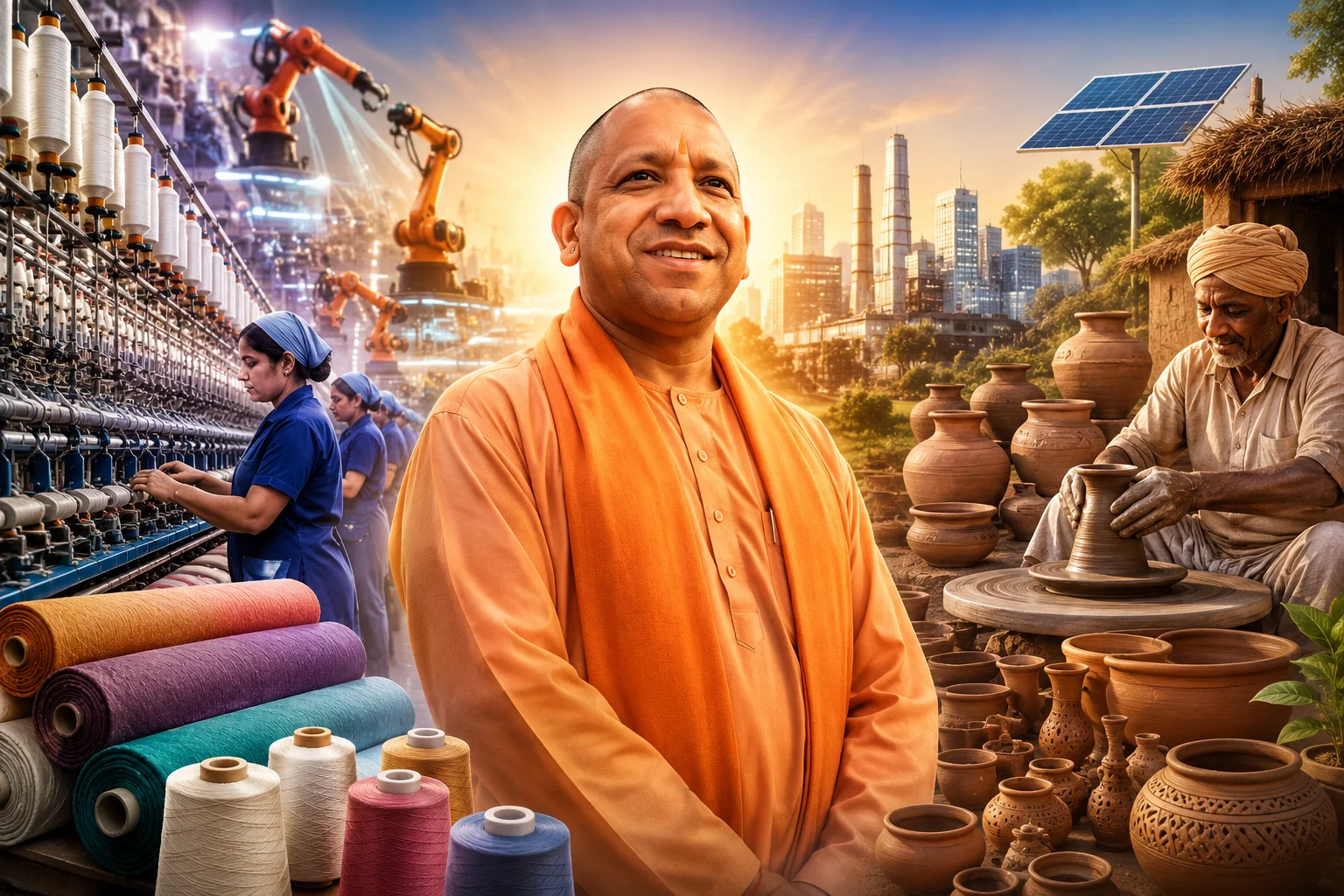
Yogi Adityanath noted that rapid technological advancements are transforming the textile industry, with automation, advanced machinery, and technical textiles becoming increasingly important. He instructed officials to update training modules in line with industry requirements and ensure that skill development initiatives remain relevant, practical, and employment-oriented.
According to data presented during the meeting, more than 228,000 youth have been trained under the Samarth Scheme so far, while over 160,000 trainees have been linked to employment opportunities. Women have emerged as key beneficiaries, accounting for more than 87 percent of the total trainees. Additionally, the Uttar Pradesh Skill Development Mission has provided training and certification to thousands of candidates in textile-related trades.
Officials also presented a proposed framework aimed at strengthening coordination among industries, training institutions, and government departments. Discussions focused on improving training quality, transparency, monitoring mechanisms, and employment outcomes through technology-driven systems.
Boost for Pottery Sector and Rural Livelihoods
Reviewing the progress of the pottery sector, the Chief Minister described it as an important component of Uttar Pradesh’s cultural heritage, environmental sustainability, and rural economy. He highlighted the role of earthen products in supporting artisan families while promoting eco-friendly alternatives.
To enhance the competitiveness of the sector, he directed departments to provide artisans with modern designs, solar-powered pottery wheels, improved tools, technical support, financial assistance, and better marketing opportunities. He also emphasized expanding the use of pottery products and integrating artisans into modern value chains.

Strengthening Traditional Industries Through Innovation
Officials informed the meeting that under the Chief Minister’s Pottery Employment Scheme, 1,331 units have been established between 2019-20 and 2025-26. These units have attracted capital investments worth ₹33.02 crore, while margin money assistance of over ₹5.57 crore has been extended to beneficiaries.
Artisans have also been provided opportunities to showcase and market their products through pottery festivals, exhibitions, and trade fairs. For the financial year 2025-26, authorities have already received a significant number of applications against the target of establishing 300 new units.
The Chief Minister directed officials to expedite the disposal of pending loan applications and ensure timely delivery of scheme benefits to eligible beneficiaries.
Linking Artisans to Global Markets
Yogi Adityanath stressed that traditional industries require more than preservation; they need innovation, branding, digitization, and stronger market access. He called for integrating pottery products with e-commerce platforms, modern design development, and advanced marketing systems to help artisans reach national and international markets.
He further instructed departments to prepare a time-bound action plan covering skill development, financial assistance through banking partnerships, technological upgradation, marketing support, and employment generation.
“Traditional skills combined with modern technology can become a powerful engine of rural prosperity,” the Chief Minister said, underscoring the government’s commitment to creating sustainable livelihoods while preserving Uttar Pradesh’s rich artisanal heritage.