Lucknow | In a major initiative to strengthen flood preparedness and disaster response mechanisms, a state-level flood mock exercise is scheduled to be conducted on June 11, 2026 across 44 highly vulnerable and sensitive districts of Uttar Pradesh. The exercise is being organized jointly by the National Disaster Management Authority (NDMA), Government of India, and the Uttar Pradesh State Disaster Management Authority (SDMA).
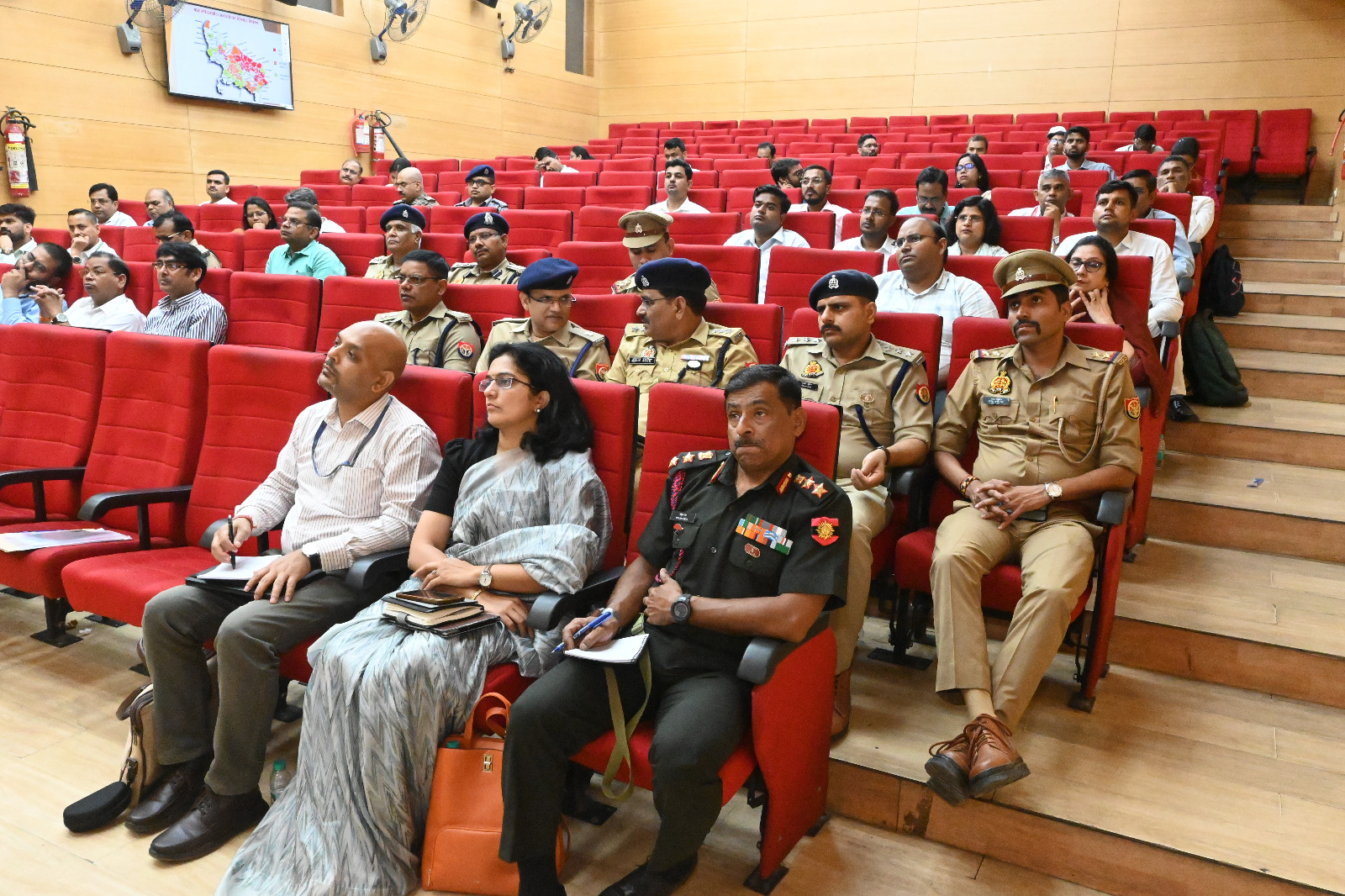
As part of the preparatory phase, a Table Top Exercise was conducted on June 09, 2026 at the Auditorium of Yojana Bhawan, Lucknow. The session was held under the chairmanship of senior officials from NDMA, including Dr. Krishna S. Vats, Member, NDMA, and Lt. Gen. Yogendra Dimri (Retd.), Vice Chairman of the Authority.
The meeting was attended by representatives from multiple agencies including the Indian Army, Indian Air Force, Revenue Department, NDRF, SDRF, Police, Fire Services, Agriculture, Irrigation and Water Resources, Health, Panchayati Raj, Food and Civil Supplies, Transport, Energy, Civil Defence, Telecom, Rural Development, Animal Husbandry, Public Works Department, Central Water Commission, Meteorological Department, Indian Railways, as well as district-level officials including District Magistrates and Additional District Magistrates (Finance/Revenue), who joined via video conferencing.
Focus on Coordination and Ground-Level Preparedness
Addressing the meeting, NDMA Member Dr. Krishna S. Vats stated that such exercises provide critical insights into ground-level relief and rescue operations. He emphasized that these simulations help districts review their disaster management and flood response plans while improving coordination among central and state agencies, armed forces, NDRF, SDRF, and local administration.
Vice Chairman Lt. Gen. Yogendra Dimri (Retd.) highlighted that the State Disaster Management Authority has been regularly conducting such mock exercises to strengthen flood preparedness. He noted that these exercises help evaluate departmental response plans, coordination among agencies, and emergency response systems at the district level.
He further stated that involvement of NGOs, community groups, and media enhances public awareness and helps identify gaps in resources, manpower, communication systems, and response capabilities, thereby strengthening the overall disaster management framework.
Technical Sessions and Scenario-Based Discussions
During the first session, forecasting agencies including the India Meteorological Department (IMD), Central Water Commission (CWC), and FMISC provided detailed inputs on weather patterns, heavy rainfall predictions, river water levels, and flood forecasts.

Various departments including irrigation, health, telecommunications, animal husbandry, public works, and education shared their preparedness plans and operational roles during flood emergencies.
Rapid response agencies such as PAC, Fire and Emergency Services, SDRF, NDRF, Home Guards, NCC, and the Indian Army presented details of their resources and operational readiness.
Representatives from Assam, Haryana, and Punjab also shared best practices from their respective states in disaster management and flood response.
Second Session: District-Level Simulation Exercise
In the second session, NDMA Advisor Brigadier Ravindra Gurung (Retd.) conducted a comprehensive tabletop simulation exercise involving all 44 districts. Key focus areas included activation of District Emergency Operation Centres (DEOC), Incident Response System (IRS), evacuation planning, dissemination of flood warnings, establishment of relief camps and field hospitals, and response mechanisms for infrastructure damage such as roads, railways, and bridges, as well as boat capsize incidents.
Statewide Mock Drill on June 11
Officials informed that the final state-level flood mock exercise will be conducted on June 11, 2026 across 44 highly vulnerable districts covering 118 tehsils in Uttar Pradesh. Senior state officials will monitor the exercise through video conferencing and review the response actions being taken at the district level.
The initiative aims to enhance real-time coordination, strengthen emergency response systems, and ensure preparedness for effective flood disaster management across the state.













 https://www.youtube.com/watch?si=RtToJsBhYBatUrym&v=mOuYNSdhjHA&feature=youtu.be