Mayawati and Chandrashekhar Azad Signal New Contest for Leadership in Uttar Pradesh’s Dalit Politics
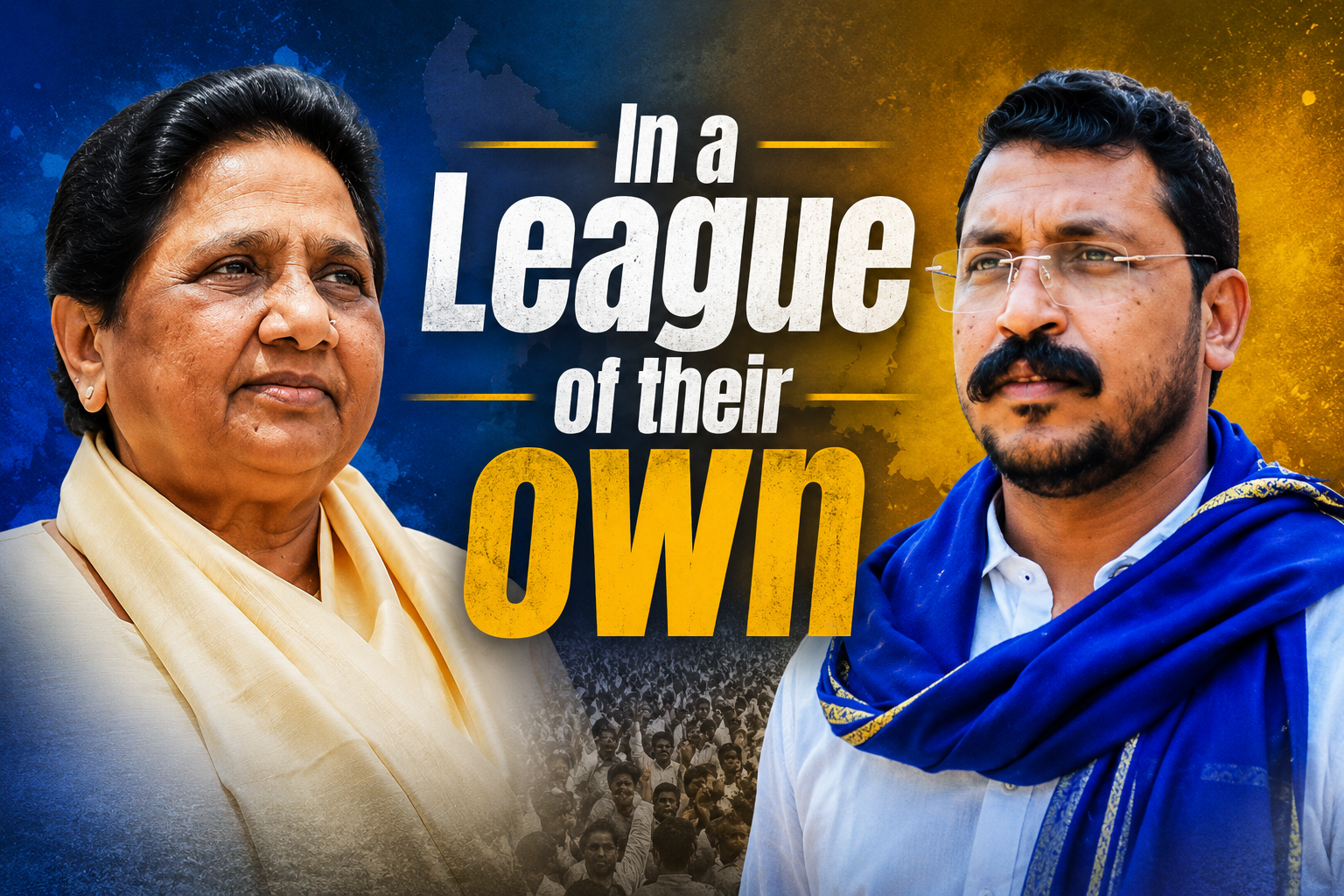
Lucknow: A renewed debate over the future of Dalit leadership has emerged in Uttar Pradesh following contrasting responses by Bahujan Samaj Party (BSP) chief Mayawati and Azad Samaj Party (Kanshi Ram) president and MP Chandrashekhar Azad to the alleged murder of Dalit student Lalita Gautam in Meerut. Political observers view the exchange as an early indication of a broader contest for influence within Dalit politics ahead of the 2027 Uttar Pradesh Assembly elections.
Without naming Chandrashekhar Azad directly, Mayawati criticised protest-based politics, describing such campaigns as driven by “crocodile tears” and “narrow political interests.” She urged members of the Dalit community to seek justice through constitutional institutions and the judiciary rather than through street protests. According to the BSP leader, large-scale demonstrations that result in violence, road blockades or damage to public property often leave young people from economically weaker sections facing legal consequences, ultimately harming the communities they seek to represent.

Responding to the remarks, Chandrashekhar Azad argued that while constitutional remedies remain essential, public protests are also necessary when communities face injustice. He maintained that waiting solely for legal proceedings is not always sufficient and that democratic movements play an important role in securing accountability and social justice.
The exchange has highlighted two distinct political approaches. Mayawati has consistently argued that lasting social transformation can only be achieved by gaining political power, a philosophy rooted in BSP founder Kanshi Ram’s concept of the “master key” of state power. Chandrashekhar Azad, by contrast, has built his political profile around grassroots mobilisation, public protests and advocacy on issues involving Dalit rights and social justice.
Mayawati’s remarks also received support from BJP leader Sangeet Som, who said society should remain cautious of those who incite unrest. His comments have reignited political debate, with opposition parties continuing to accuse the BSP of maintaining a relatively soft stance towards the BJP—an allegation the BSP has consistently denied, maintaining that it keeps an equal distance from all political parties.
The discussion comes against the backdrop of significant changes in Uttar Pradesh’s political landscape over the past two decades. The BSP achieved its greatest electoral success in 2007, winning 206 seats in the 403-member Assembly and forming a majority government under Mayawati’s “Sarvajan” social engineering strategy. However, the party lost power in 2012 and has since witnessed a steady decline. It failed to win a Lok Sabha seat in 2014, was reduced to 19 Assembly seats in 2017, won 10 Lok Sabha seats in alliance with the Samajwadi Party in 2019, secured only one Assembly seat in 2022, and again failed to open its account in the 2024 Lok Sabha elections. Political analysts estimate that the BSP’s vote share has declined from around 30 per cent in 2007 to roughly 10–13 per cent in recent elections.
At the same time, Chandrashekhar Azad has emerged as a prominent Dalit leader, particularly among younger voters. He first gained statewide attention following the 2017 Shabbirpur violence in Saharanpur through the Bhim Army movement. His activism during protests against the Citizenship Amendment Act (CAA), campaigns against caste-based atrocities and advocacy for social justice helped expand his political profile. He later founded the Azad Samaj Party and strengthened his position by winning the Nagina Lok Sabha seat in the 2024 general elections without the support of a major electoral alliance.

Political analysts note that Dalit voting patterns have become increasingly diverse. While a significant section of the Jatav community is still believed to support the BSP, non-Jatav Dalit voters have shown greater political mobility over the past decade. Some have shifted towards the BJP, citing welfare schemes and political representation, while others have been drawn to newer leaders such as Chandrashekhar Azad and movement-based politics.
Recognising these shifts, Mayawati has recently focused on rebuilding the BSP’s organisational structure, strengthening booth-level networks and reiterating that the party will contest the 2027 Assembly elections independently. She has repeatedly ruled out pre-poll alliances and reaffirmed the BSP’s commitment to its “Sarvajan Hitay, Sarvajan Sukhay” philosophy and governance-focused politics.
Chandrashekhar Azad, meanwhile, continues to advocate a model that combines constitutional rights with public mobilisation. Supporters argue that electoral politics alone cannot address social discrimination, while critics contend that sustained institutional engagement is equally necessary for long-term change.
Political observers believe the debate extends beyond individual statements and reflects a broader struggle over the future direction of Dalit politics in Uttar Pradesh. With the BJP seeking a third consecutive term in the state, the Samajwadi Party aiming to build on its improved performance in the 2024 Lok Sabha elections and the Congress working to expand its organisation, the Dalit vote is expected to remain a decisive factor in the 2027 Assembly election.
Whether the BSP succeeds in retaining its traditional support base or Chandrashekhar Azad expands his appeal among younger and non-Jatav Dalit voters could significantly influence the state’s political landscape. The evolving contest highlights not only a leadership challenge within Dalit politics but also differing visions of how social justice and political empowerment should be pursued in contemporary Uttar Pradesh.