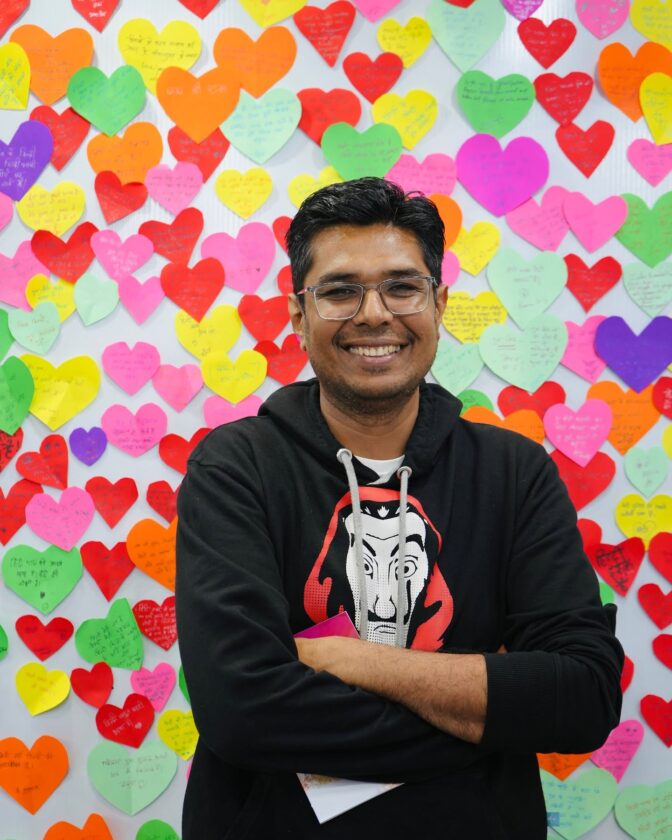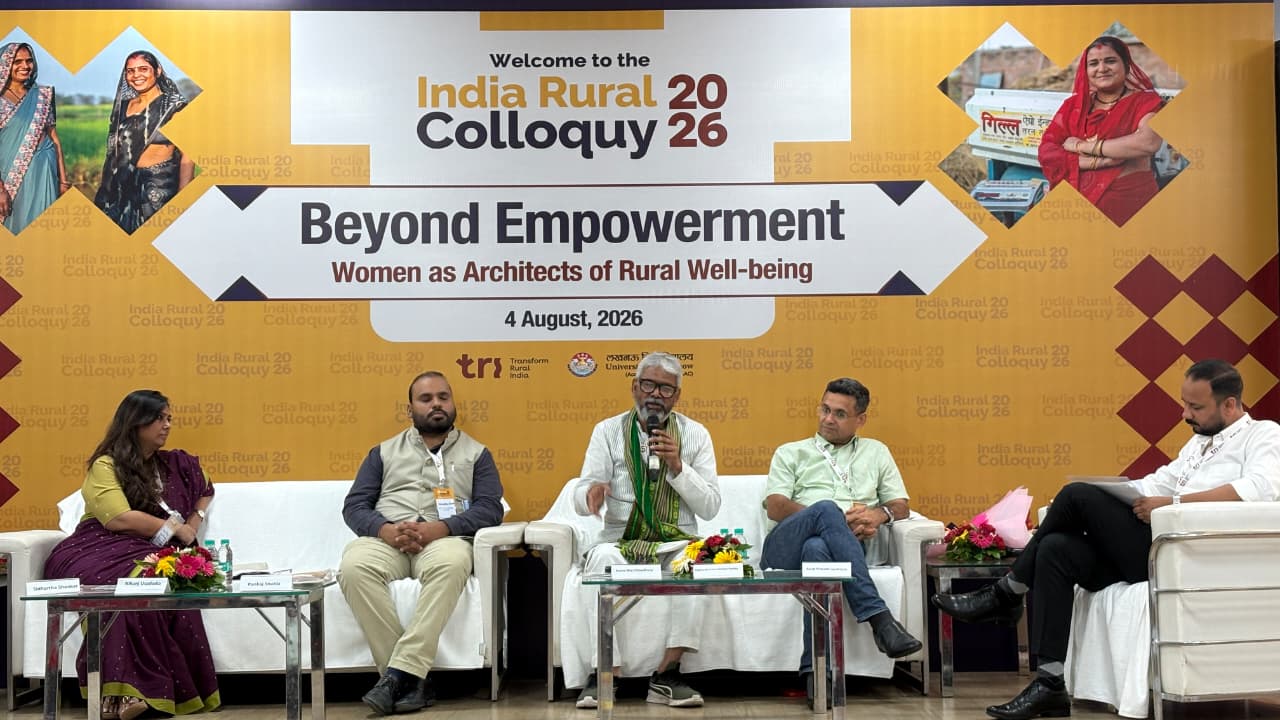
Umashankar Pandey The Padma Shri Awardee was speaking at The Sixth Edition of the India Rural Colloquy 2026
Lucknow : Umashankar Pandey, Padma Shri Awardee and Jal Yoddha addressed the Sixth Edition of the India Rural Colloquy (IRC) 2026 at Lucknow today. Organised by Transform Rural India (TRI) at the Department of Social Work, University of Lucknow, the chapter was focused on the theme, ‘Women as Architects of Rural Well-Being (Leading Resilient Communities to Shared Prosperity).

Addressing policymakers, thought leaders, and grassroots representatives, Pandey emphasized on the power of collective action. In his opening address, he further stated, “When you speak, I speak and all of us speak together, only then will the world change.”
Panel discussions about youth entrepreneurship, rural livelihoods and women-led entrepreneurial initiatives also featured dignitaries like Sarveshwar Shukla, Joint Commissioner of Industries, Department of MSME & Export Promotion, GoUP, Praveena Chaudhary, Joint Director, Department of Panchayati Raj, GoUP, Renu Mishra, Executive Director, Association for Advocacy and Legal Initiatives Trust (AALI), Sandeep Giri, Professor, Department of Social Work, University of Lucknow, Purna Roy Chowdhury, Chief Functionary and Chief Program Officer, Trickle Up India Foundation, Sidhartha Shankar, Deputy General Manager, NABARD and Shri Hiralal (IAS), Secretary, National Integration Department, Government of UP.
Speaking on the importance of entrepreneurship in driving inclusive growth, Sarveshwar Shukla noted that the CM Yuva scheme has empowered nearly 2 lakh youth to embark on their entrepreneurial journeys, turning ideas into enterprises and creating jobs. He emphasised that the vision of a transformed rural India can only be realised when youth and women become self-reliant entrepreneurs and job creators, strengthening local economies from within.
Emphasising the central role of rural development in India’s growth story, Hiralal (IAS), Secretary, National Integration Department, Government of Uttar Pradesh, said that India cannot become a developed nation until its villages are developed. He noted that urban growth alone cannot deliver the vision of Viksit Bharat, underscoring the need for balanced and inclusive development that strengthens rural economies, institutions and communities alongside cities.

Founded in 2016, Transform Rural India works alongside rural communities to advance inclusive development rooted in local leadership. As it enters its second decade in 2026, TRI is deepening its gender-intentional approach while scaling community-led models to drive equitable and sustainable change across rural India. It has organised annual rural colloquies since 2021.
Delineating the blueprint the 2026 colloquy arrived at, Rajeev Tripathi, Associate Director, TRI added, “Rural transformation starts when women stop being just the backbone of the family unit and start becoming the architects of the rural economy. This Uttar Pradesh Chapter was focused on how self-help groups, sustainable agricultural and climate-resilient practices as well as active leadership roles in local village governance, can empower women to not just savour economic independence but also uplift their communities.”
Speakers emphasised that Uttar Pradesh can emerge as the next frontier of rural transformation by enabling women to be institutional leaders and market influencers who steer local systems and create lasting well-being. The sessions also explored policy reforms, institutional innovations and partnerships required to accelerate women-led enterprise and their financial inclusion.
The Uttar Pradesh Chapter concluded with reflections from distinguished attendees, synthesising the day’s conversations into a shared agenda for advancing women-led rural transformation across the state.
The India Rural Colloquy, the flagship event of Transform Rural India (TRI), returns for its sixth edition in 2026. What began as a virtual series has grown into a national, multi-state platform bringing together policymakers, business leaders, academics, civil society and communities to shape ideas and action for rural India. This year, the eight-day Colloquy will travel across Assam, Madhya Pradesh, Uttar Pradesh, Chhattisgarh, Jharkhand and New Delhi, examining critical challenges across livelihoods, governance, climate resilience, gender, health, technology and local economic development. Insights emerging from these conversations will translate into actionable pathways towards a flourishing rural India.