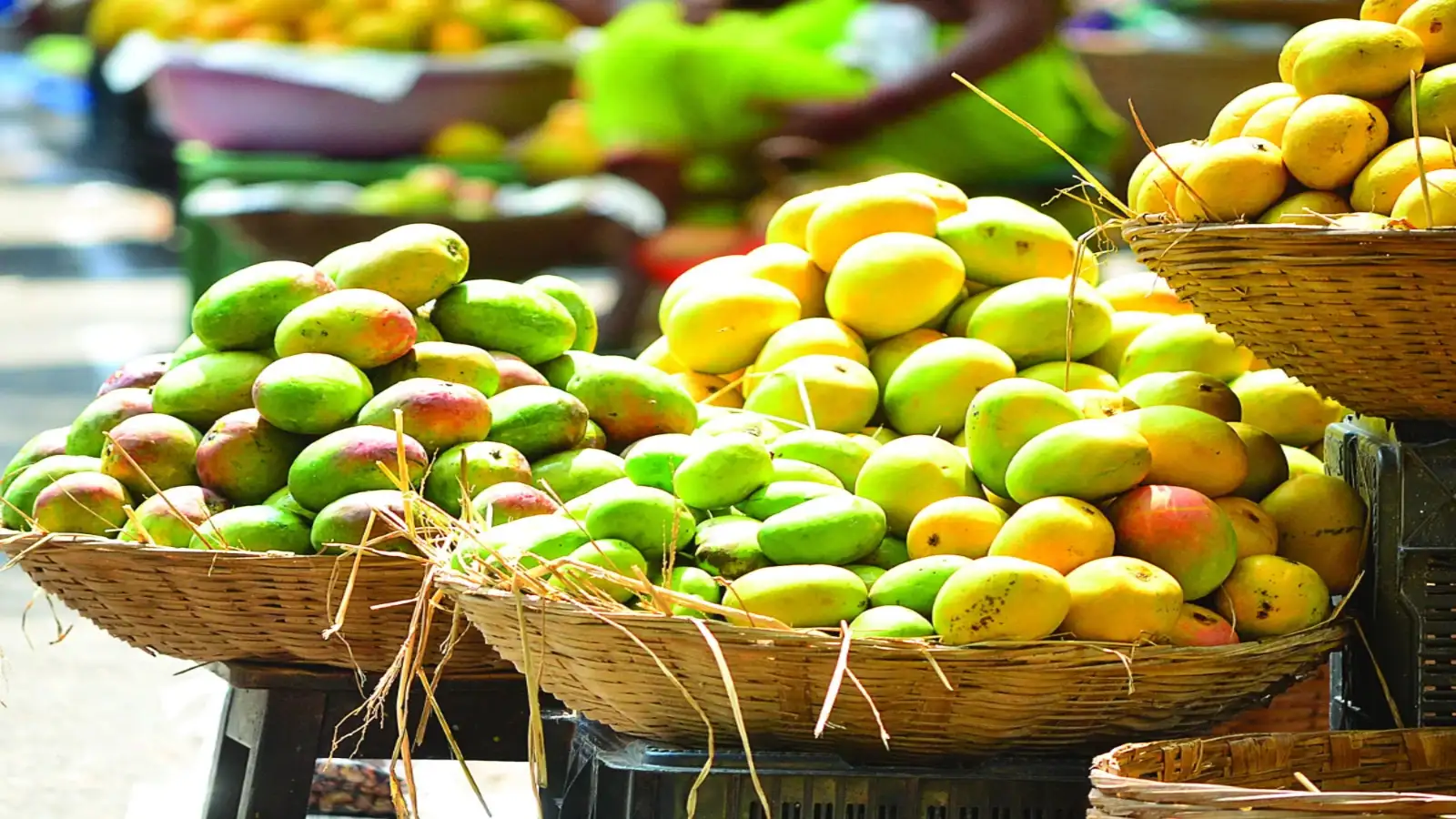
Lucknow/New Delhi: A recent change in Nepal’s import regulations for Indian mangoes has sparked concern among growers and exporters, particularly in Uttar Pradesh, India’s largest mango-producing state. Farmers fear the move could disrupt exports during the peak harvest season, resulting in lower prices in domestic markets and significant financial losses.

The revised rules require imported mangoes from India to undergo Hot Water Treatment (HWT) before entry into Nepal. According to Nepalese authorities, the measure has been introduced due to concerns over pesticide residues in mangoes and the limited quarantine infrastructure available at border entry points.
The development comes shortly after restrictions imposed by Japan on Indian mango imports, adding to the challenges faced by exporters this season.
Exporters Fear Sharp Decline in Prices
Farmer groups say Nepal has traditionally been one of the key overseas markets for Indian mangoes, and any disruption in exports is likely to increase domestic supplies, putting downward pressure on wholesale prices.
According to data from India’s Ministry of Agriculture, Nepal imports thousands of tonnes of Indian mangoes every year. Between January and June 2026, India exported approximately 2,005 metric tonnes of mangoes to Nepal through 149 consignments.
Popular varieties exported include Dasheri, Chausa, Langra, Kesar, Alphonso, and Banganapalli, many of which are cultivated extensively in Uttar Pradesh.

Farmers Concerned About Rising Costs
Mango growers say cultivation costs have risen significantly this year due to higher input prices and weather-related challenges. They fear that if exports remain disrupted, recovering production costs itself could become difficult.
With Uttar Pradesh contributing the largest share of India’s mango production, growers in districts such as Malihabad, Lucknow, Saharanpur, Unnao, Hardoi, and Amroha could be among the most affected if the export bottleneck persists.
India Raises the Issue
The Government of India has expressed concern over Nepal’s revised import requirements. Officials have indicated that the matter is being taken up through bilateral channels and under the framework of the World Trade Organization (WTO) and the International Plant Protection Convention (IPPC) to seek a mutually acceptable solution.
Industry stakeholders hope that discussions between the two countries will help resolve the issue quickly, allowing exports to resume smoothly and preventing losses for farmers during the ongoing mango season.
Agricultural experts note that while stricter phytosanitary measures are common in international trade, prolonged export restrictions could have a direct impact on farm incomes unless alternative export markets or compliance mechanisms are developed promptly.