New Delhi: As geopolitical tensions intensify across several regions of the world, including Eastern Europe, the Middle East, and the Indo-Pacific, questions are increasingly being asked about India’s preparedness to deal with potential security challenges. While India remains committed to peace and strategic autonomy, it has significantly strengthened its military capabilities over the past decade to ensure readiness for any eventuality.
A Strong and Modernising Armed Force
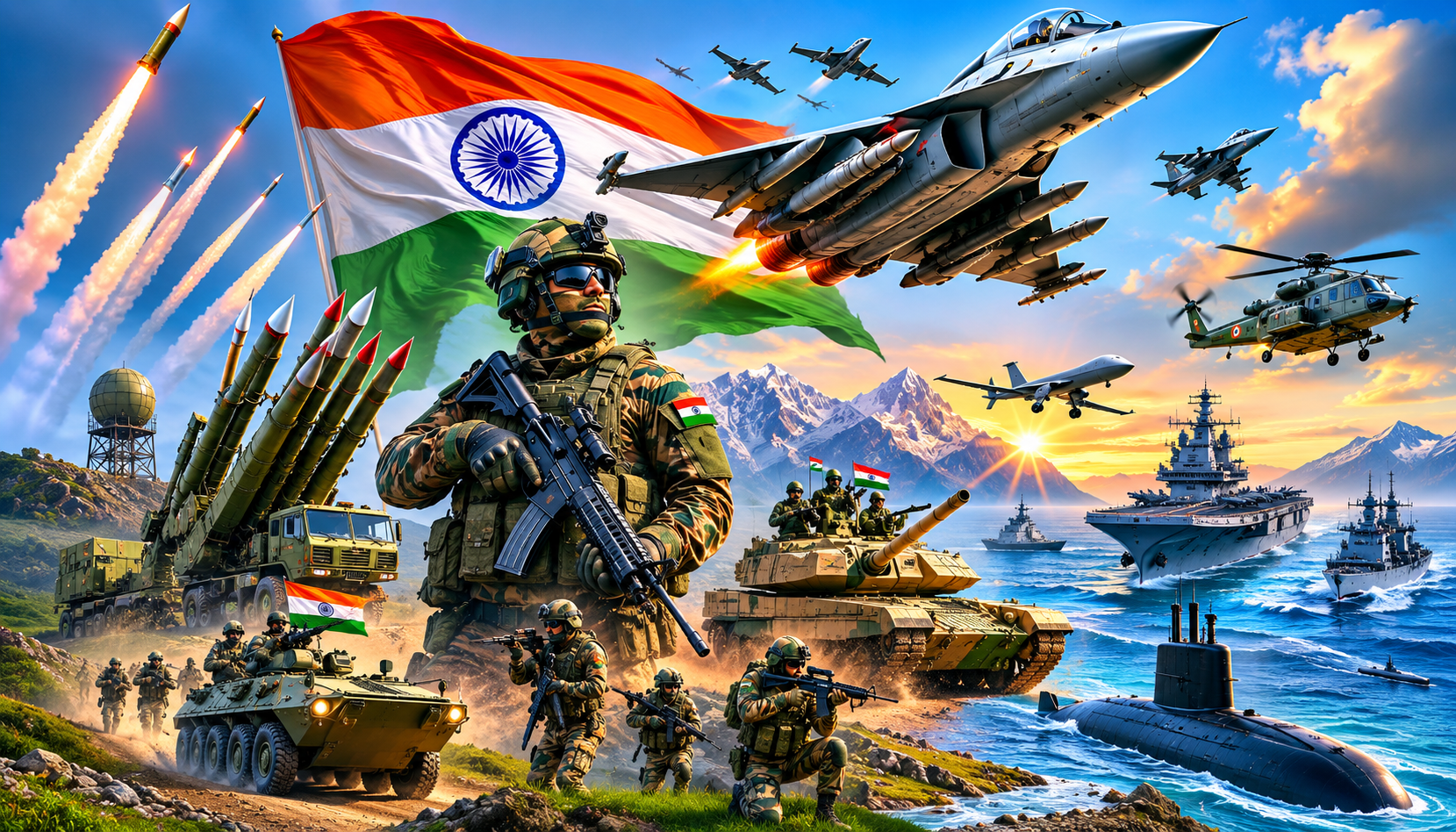
India possesses one of the world’s largest armed forces, with over 1.4 million active military personnel and a substantial reserve force. The country maintains a three-pronged defence structure comprising the Army, Navy, and Air Force, supported by strategic and space-based assets.

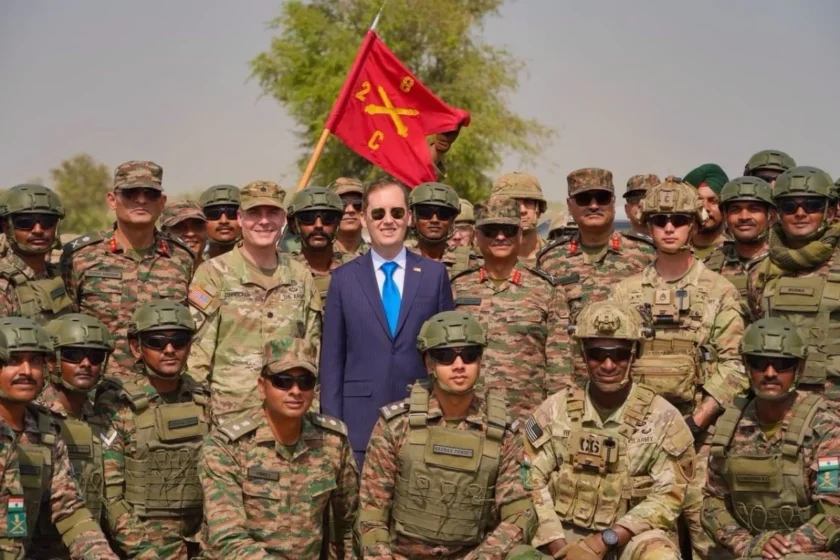
The Indian Army remains among the largest standing armies globally, with extensive experience in high-altitude warfare, counter-insurgency operations, and conventional combat. Continuous modernisation has enhanced mobility, surveillance, and firepower across formations deployed along sensitive borders.
The Indian Air Force (IAF) has significantly upgraded its combat capabilities through the induction of advanced fighter aircraft, including the Dassault Rafale, upgraded Sukhoi Su-30MKI squadrons, and indigenous systems. Force multipliers such as airborne warning aircraft, aerial refuellers, and integrated air defence networks further strengthen operational readiness.
India’s Navy has emerged as a major regional maritime force. The commissioning of the indigenous aircraft carrier INS Vikrant has expanded blue-water capabilities, while a growing fleet of destroyers, frigates, submarines, and maritime surveillance platforms ensures security across the Indian Ocean Region.
Strategic Missile and Nuclear Deterrence
India maintains a credible nuclear deterrent based on its doctrine of “No First Use” and minimum credible deterrence. The country possesses a robust missile arsenal, including the Agni-V, capable of reaching targets at long distances, and the BrahMos, regarded as one of the world’s fastest operational cruise missiles.
The strategic triad—land-based missiles, aircraft-delivered weapons, and submarine-launched capabilities—provides India with a secure second-strike capability. Nuclear-powered ballistic missile submarines further enhance deterrence by ensuring survivability during crises.
Ammunition and Logistics Preparedness
One of the key lessons from recent global conflicts has been the importance of ammunition stockpiles and domestic production capacity. India has undertaken substantial efforts to increase reserves of artillery shells, missiles, rockets, and precision-guided munitions.
The government has accelerated indigenous production under the “Aatmanirbhar Bharat” initiative, reducing dependence on imports. Public-sector units, private manufacturers, and defence start-ups are now producing a wider range of ammunition, drones, armoured systems, and electronic warfare equipment.
India has also expanded strategic fuel reserves, strengthened logistics infrastructure near border regions, and improved transportation networks to ensure rapid deployment of troops and supplies.

Indigenous Defence Manufacturing
A major pillar of India’s preparedness is the growing defence-industrial base. Indigenous systems such as the HAL Tejas fighter jet, Akash air defence system, advanced artillery guns, drones, and electronic warfare platforms are increasingly entering service.
Defence exports have also risen significantly, demonstrating growing confidence in Indian-made military equipment. This industrial ecosystem helps ensure sustained supply during prolonged crises.
Emerging Domains: Cyber, Space and Drones
Modern warfare extends far beyond traditional battlefields. India has invested heavily in cyber defence, satellite surveillance, artificial intelligence, and unmanned systems. Dedicated agencies monitor cyber threats and protect critical infrastructure, while military satellites enhance communication, navigation, and intelligence gathering.
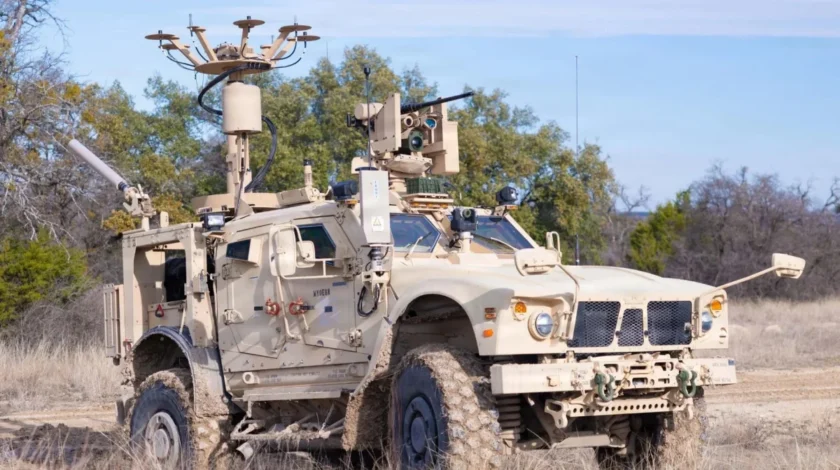
The armed forces are increasingly integrating drones for reconnaissance, surveillance, and precision strike missions, reflecting lessons observed in contemporary conflicts around the world.
Two-Front Preparedness
Strategic planners continue to focus on the possibility of simultaneous challenges along multiple fronts. Infrastructure development in border areas, integrated theatre planning, joint military exercises, and enhanced intelligence-sharing have improved operational flexibility.
Regular exercises involving all three services test rapid mobilisation and interoperability, ensuring that forces can respond effectively to a range of contingencies.
Challenges Remain
Despite substantial progress, challenges remain. Sustaining large ammunition reserves, modernising ageing equipment, strengthening domestic manufacturing capacity, and maintaining technological superiority require continued investment. The rapidly evolving nature of warfare—particularly in cyber, space, and autonomous systems—demands constant adaptation.
India today is significantly better prepared than it was a decade ago. A combination of strong armed forces, growing indigenous defence production, advanced missile capabilities, strategic deterrence, and improving ammunition reserves has enhanced national security. While no nation can predict every future conflict, India’s ongoing military modernisation and emphasis on self-reliance aim to ensure that the country remains capable of defending its interests and responding effectively to any emerging threat.