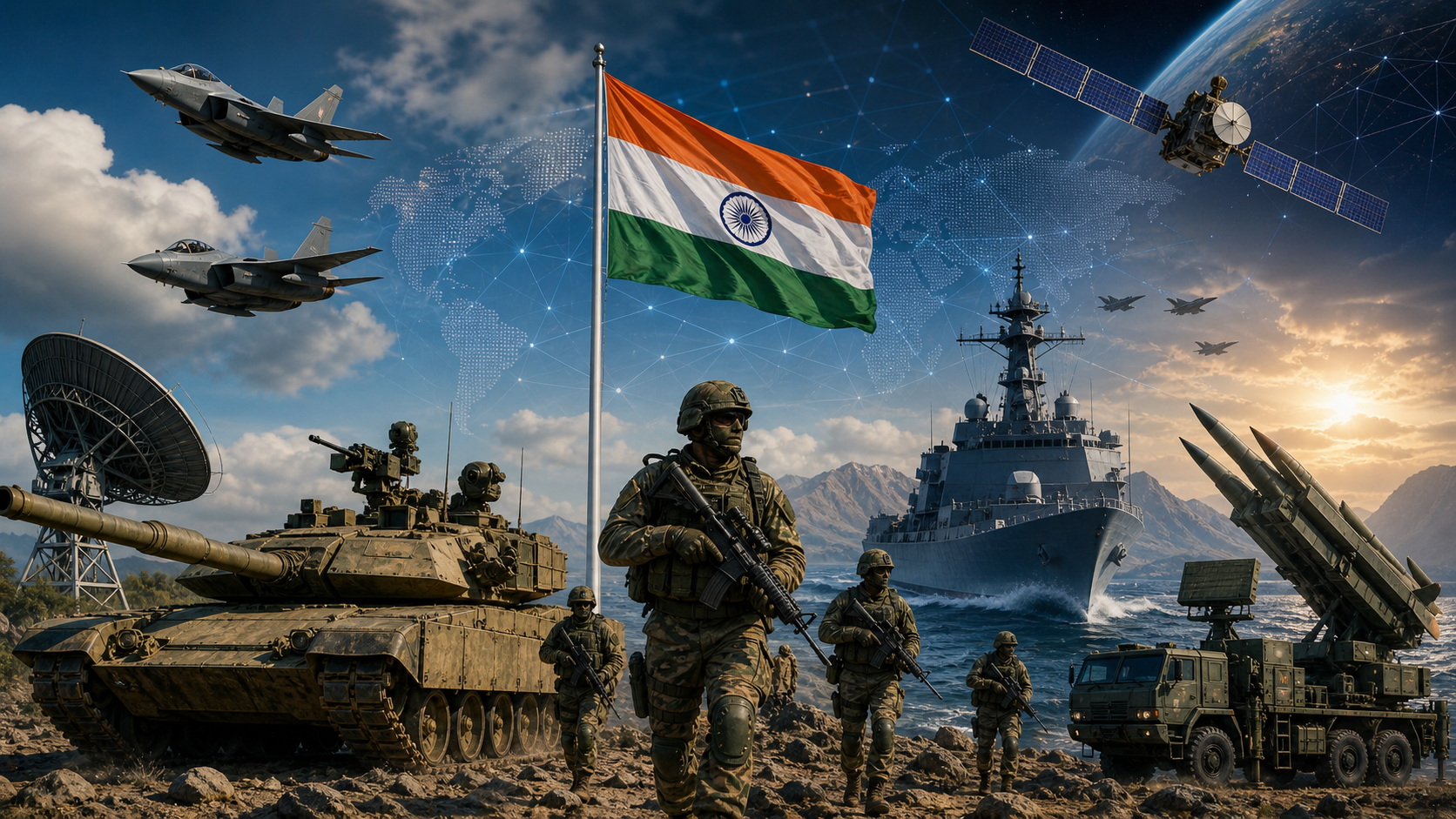
India has emerged as the world’s fifth-largest military spender, with its defence budget increasing by 8.9% to $92.1 billion. The country follows the United States, China, Russia, and Germany in overall defence expenditure. Together, these five nations account for nearly 58% of global military spending, underscoring a concentration of military power among major economies.
The surge in defence budgets is largely attributed to ongoing conflicts such as the Russia-Ukraine War and tensions in regions like the South China Sea and the Middle East. Strategic rivalries, particularly among countries like India, China, and Pakistan, have also intensified the global arms race, prompting nations to continuously upgrade their military capabilities.
Technological advancements are playing a crucial role in shaping modern warfare. Investments in drones, cyber defence systems, missile technology, artificial intelligence, and space-based security have significantly increased. Governments are also allocating more resources to tackle terrorism, border infiltration, and transnational threats such as drug trafficking.
The report highlights that the burden of military spending on the global economy has grown, with defence expenditure accounting for 2.5% of global GDP in 2025, up from 2.4% in 2024. On average, governments worldwide spent 6.9% of their budgets on defence.
Regionally, Europe recorded a 14% increase in military expenditure, while Asia and Oceania saw an 8.1% rise. China, the second-largest spender, increased its defence budget by 7.4% to $336 billion, continuing a three-decade-long trend of annual growth. Meanwhile, NATO countries collectively raised their military spending by 14% to $864 billion.
In South Asia, India’s increased defence outlay is partly linked to heightened tensions with Pakistan, which also raised its military spending by 11% to $11.9 billion, including procurement of advanced weapons systems.
While higher defence spending strengthens national security and fosters technological innovation, experts caution that excessive military expenditure can strain public finances. Increased allocation to defence may limit funding for critical sectors such as education, healthcare, and social development, potentially leading to economic imbalances.
Analysts emphasize the need for a balanced approach, where nations maintain robust security frameworks while ensuring sustained investment in human development. As global uncertainties persist, the challenge for policymakers lies in managing security imperatives without compromising long-term economic and social progress.
















 https://www.youtube.com/watch?si=RtToJsBhYBatUrym&v=mOuYNSdhjHA&feature=youtu.be