Lucknow: Uttar Pradesh is seeking to turn cow dung from gaushalas into a source of clean energy, organic fertiliser and rural employment under a new initiative aimed at linking cow protection with the state’s rural economy and self-reliance goals.
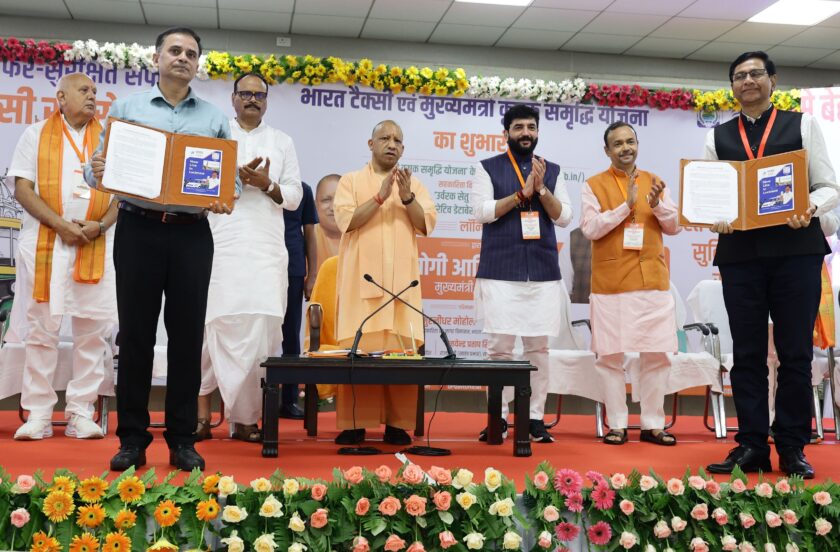
Under a memorandum of understanding (MoU) between the Uttar Pradesh Go-Seva Commission and Partners in Prosperity (PNP), a technical support system will be developed to promote the conversion of cow dung from gaushalas into biogas, organic fertilisers and bio-inputs.

A key component of the initiative will be the creation of a network of around 1,000 technical personnel to support the installation, operation and maintenance of Deenbandhu-model biogas plants across the state.
1,000-member technical network planned
The proposed technical network will provide assistance at the grassroots level, including plant installation, maintenance, technical training and field monitoring. The objective is to ensure that biogas plants continue to function efficiently after installation by making technical expertise available locally.
Partners in Prosperity has already constructed more than 3,900 Deenbandhu biogas units across Uttar Pradesh and Uttarakhand, according to the information provided by the organisation.
The organisation is expected to provide technical support across the project cycle, including project development, technical design, assessment of cow dung and other feedstock, plant construction, operations and maintenance, beneficiary training and field monitoring.
Cow dung to power a circular rural economy
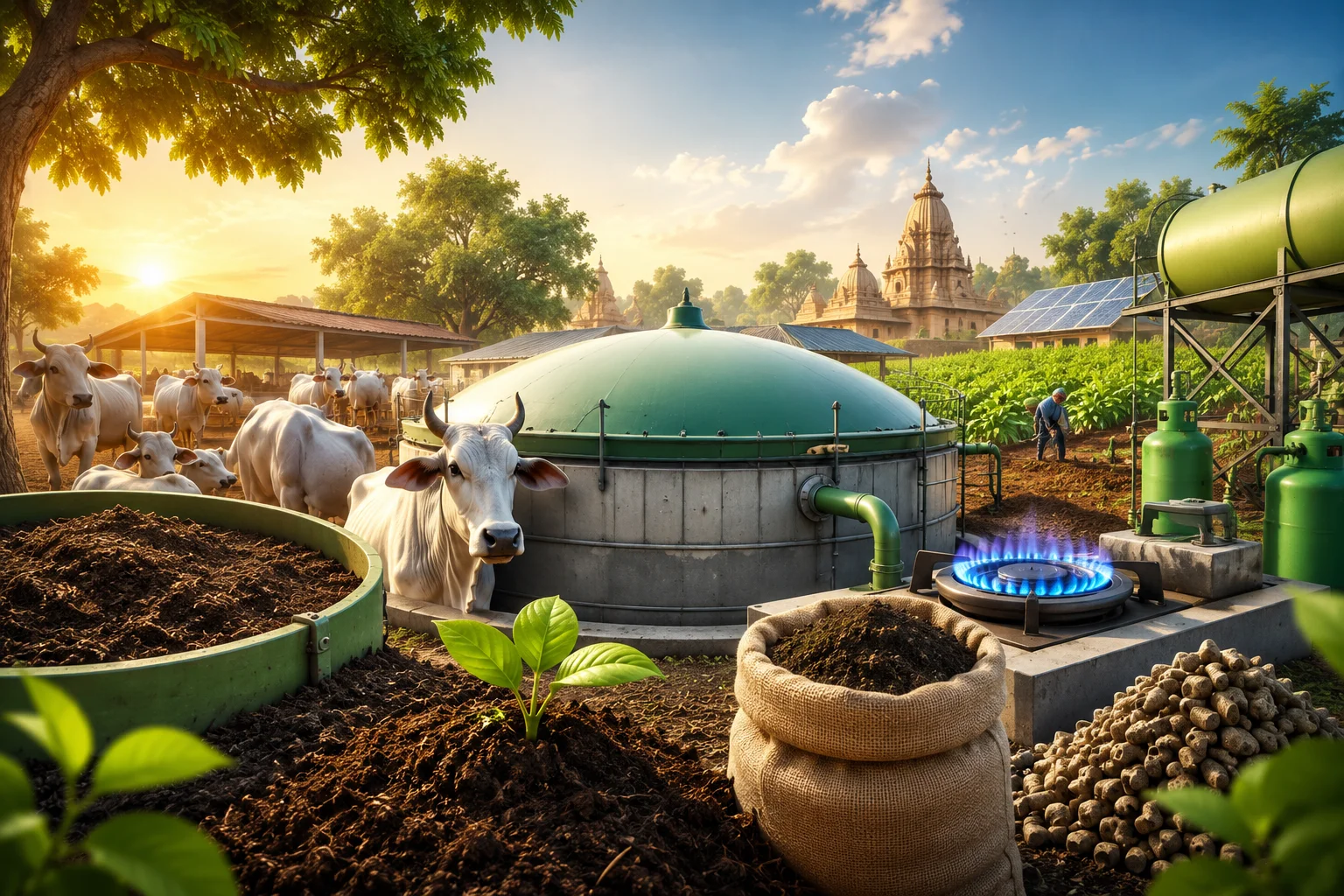
The initiative is not limited to producing biogas. The proposed model aims to create a broader cycle in which cow dung is converted into energy and the by-products are returned to agriculture.
Biogas generated from cow dung can provide a source of clean energy, while the slurry left after the process can be processed into organic manure and other bio-inputs. These products could subsequently be used in natural and regenerative farming.
The government also sees potential for the model to generate environmental benefits and eventually be linked with carbon-related projects.

The approach seeks to establish a circular system in which resources generated at gaushalas are utilised for energy production and agriculture rather than being treated simply as waste.
‘Cow dung is a resource, not waste’
Uttar Pradesh Go-Seva Commission chairman Shyam Bihari Gupta said cow dung should be viewed not merely as waste but as an important resource for clean energy, organic farming and rural income.
He said strengthening the Deenbandhu biogas model technically and expanding it could create multiple benefits for gaushalas, farmers and rural households.
According to Gupta, the initiative aims to connect the state’s cow-dung resources with clean energy, organic fertilisers and sustainable agriculture while developing a circular economy that combines cattle protection with employment generation, energy savings, agricultural productivity and environmental benefits.
Potential opportunities for farmers and rural households
The initiative is also significant because it attempts to connect cattle protection with an economic cycle. If cow dung collected at gaushalas is converted into biogas and organic agricultural inputs, both gaushalas and farming communities could potentially benefit from better utilisation of the resource.
The proposed model could create opportunities in areas such as biogas plant operations and maintenance, technical services, organic input production and related rural activities.
The broader vision is to establish a cycle of cow dung to energy, energy to sustainable agriculture and sustainable agriculture to a stronger rural economy.
The state government and implementing partners are expected to work with farmers and rural communities to strengthen the programme at the grassroots level. The proposed technical network, combined with local expertise and monitoring, is intended to make Deenbandhu biogas plants more sustainable and economically viable across Uttar Pradesh.