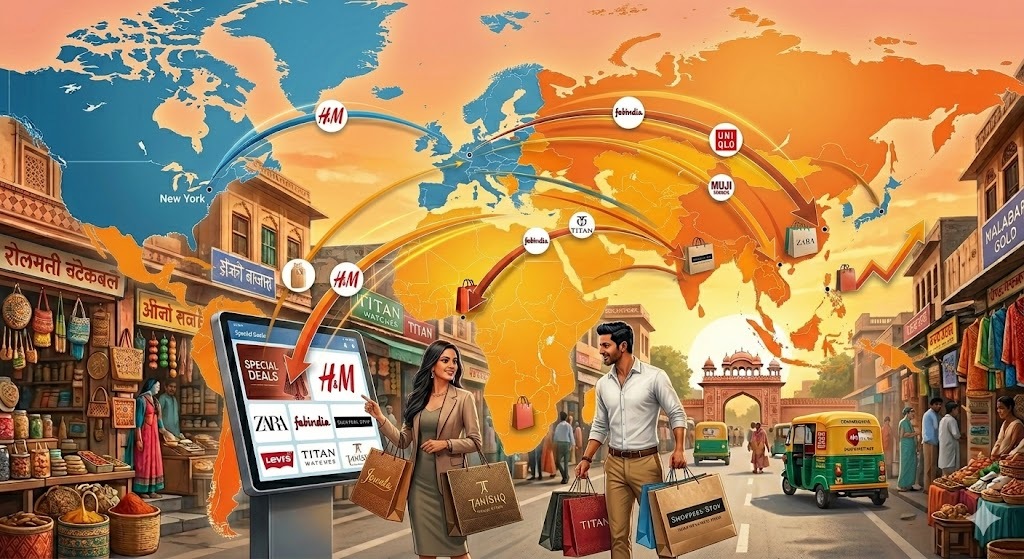

“It is a time of expansion beyond geographic boundaries for retail brands, and retailers are partnering with real estate conglomerates to move beyond metro cities,” writes Usha Kumari.
Metro cities set the trend for the market expansion of premium retail brands for the longest time. An inevitable shift in that trend is happening now, as the market moves to the emerging pockets of India. Tier-2 and Tier-3 cities are leading the expansion strategy for retailers and retail brands. Brands across categories are diving deep to create space for new business streams, and retail has always been the first choice after establishing a strong digital presence and brand positioning.
Today, premium brands are operating beyond megacities and adapting to the infrastructure of cities such as Chandigarh, Mangaluru, Lucknow, and Jaipur. Earlier, brands replicated the store experiences of Tier-1 cities; however, now brands are investing heavily to understand the emerging market across various parameters such as customer sentiments, services, brand experience, and ethos. Value for money is no longer the only parameter for these consumers.
Customers from these cities are now exposed to global culture and travel, and have diverse work portfolios spanning from tech entrepreneurs to pop culture consumers.
Jewellery and beauty have taken the front seat, while apparel has become more strategic in its expansion, considering the overcrowded market and the encouragement towards homegrown brands. Surprisingly, home decor is another emerging category targeting increased footprints.
Goodearth and Nicobar are two brands seen across these cities, whereas Forest Essentials and Nykaa Luxe are leading this route in the beauty segment. The conscious choice of expanding only to metro cities is disappearing, as is conspicuous in how brands are now launching in curated retail destinations in Tier-2 and Tier-3 cities.
Hot spots of affluent consumers are no longer limited to the four megacities but are more agile and dispersed across the country. Business owners, founders, and generationally wealthy people want brands to be convenient. With the presence of mass brands in quick commerce, retailers are urged to innovate their approach to customer acquisition. A structural revolution is imperative. As brands expand, real estate partners become accelerators of symbiotic relationships between retail and real estate. International companies like Jones Lang LaSalle and Cushman & Wakefield are continuously striving to curate the best mix of space and experience for their retail partners.

According to Knight Frank’s India International Brand Penetration Ranking (KF-IBPR) 2026 report, Tier-2 India encapsulates 61% Grade-A retail stock against 45% in Tier-1 cities, depicting emerging cities’ leadership in retail. It also established that the Indian retail landscape is segregated into two markets: a mature metro market with saturated infrastructure and a younger Tier-2 market setting the base for attracting international brands. Tier-1 cities are currently mapped at nearly 98 million sq ft in the organised retail sector, with vacant levels and Grade-C malls presenting the unique challenge of attracting value customers and low-ticket sizes.
India’s Tier-2 retail unit sprawls across 36 million sq ft and has seen rapid development since 2010, with better planning, lower vacancies, and a strategic approach to catchment areas. Since Covid-19, the market has added 5.9 million sq ft of Grade-A retail area, predominantly in Tier-2 cities, which is more than three times the additions seen in Tier-1 cities during the same period.
Defining parameters such as brand intensity, market readiness, brand breadth, and consumption power are the key differentiators driving this demarcation and leading the trend.
While Lucknow records the highest concentration of unique international brands among Tier-2 cities with 112 brands, the report makes a compelling case for not overlooking cities that were once considered outside the periphery of familiar retail expansion. Retail expansion beyond metros in India is recreating the playbook of retail operations. The distribution of wealth is no longer geographical, and it demands a rethought, restructured, and well-planned strategy to move forward. The next decade belongs to modern economies that thrive beyond megacities.
About the author:
Usha is a brand marketing professional and communication expert. She has worked with Aditya Birla Fashion & Retail Limited and CaratLane, and serves as Visiting Faculty at the National Institute of Fashion Technology.













 https://www.youtube.com/watch?si=RtToJsBhYBatUrym&v=mOuYNSdhjHA&feature=youtu.be