New Delhi: India has made a significant advance in indigenous semiconductor technology for defence applications, with the Defence Research and Development Organisation (DRDO) developing and demonstrating Gallium Nitride (GaN)-on-Silicon Carbide (SiC) technology for high-frequency military systems.
The development, highlighted in the Ministry of Defence’s annual report for 2025-26, is expected to strengthen India’s capabilities in electronic warfare, military radar and other advanced defence platforms by reducing dependence on imported semiconductor components.

GaN technology for high-power applications
At the heart of the development is an indigenous GaN semiconductor designed for demanding high-frequency applications. GaN offers important advantages over conventional silicon and gallium arsenide technologies, including the ability to handle higher power densities, voltages and operating temperatures.
According to the report, DRDO has successfully fabricated and demonstrated X-band Monolithic Microwave Integrated Circuits (MMICs), along with S-band GaN High Electron Mobility Transistor (HEMT) power amplifiers, low-noise amplifiers and switch MMICs.
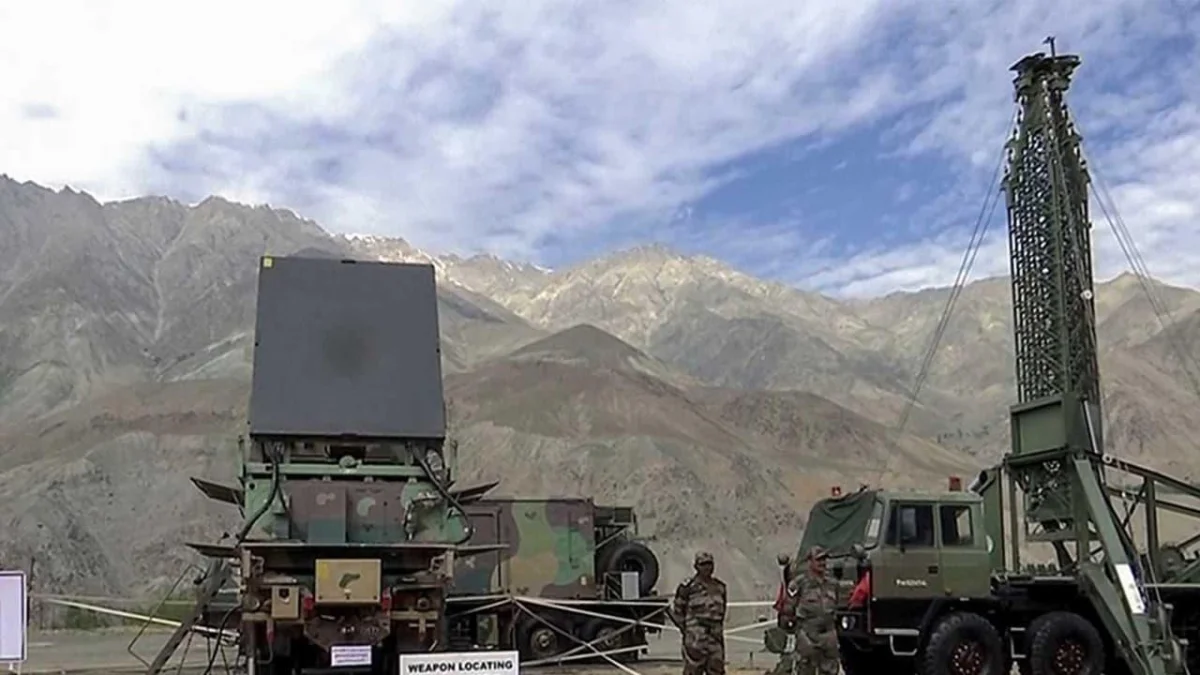
Such components form critical elements of modern radar and electronic warfare equipment, where they are used to generate, amplify, switch and manage high-frequency signals.
The technology has potential applications in Active Electronically Scanned Array (AESA) radar systems and electronic warfare equipment, as well as other platforms requiring compact, high-power radio-frequency electronics.
SSPL and GAETEC drive indigenous development
The Solid State Physics Laboratory (SSPL), a specialised DRDO facility, has played a key role in developing the underlying technology.
Researchers at SSPL have established indigenous processes for producing four-inch Silicon Carbide wafers, providing the material foundation required for advanced GaN-on-SiC devices. The laboratory has also developed GaN HEMTs capable of delivering power levels of up to 150 watts, while its X-band MMIC technology has demonstrated outputs of up to 40 watts.

The technology is now moving beyond laboratory research. Limited production facilities for GaN-on-SiC MMICs have been operationalised at the Gallium Arsenide Enabling Technology Centre (GAETEC) in Hyderabad, marking an important step towards translating indigenous semiconductor research into deployable defence hardware.
Boost to defence self-reliance
The development is strategically important because advanced GaN and SiC semiconductor technologies are considered critical for modern radar, electronic warfare and high-frequency communication systems, and access to such technologies can be restricted by export controls.
Building domestic capabilities in this area can therefore help India strengthen its supply chain for sensitive defence electronics while reducing reliance on overseas sources.
The technology could also find applications beyond conventional military radar and EW systems, including aerospace platforms, secure satellite communications and other high-frequency communication systems.
The government is simultaneously seeking to expand private-sector participation in the defence semiconductor ecosystem. Under the Innovations for Defence Excellence (iDEX) programme, a contract was signed with Agnit Semiconductors Private Limited in December 2023 for the development and manufacture of advanced GaN-based wireless transmitters for defence applications.
The combination of DRDO’s semiconductor research infrastructure and growing private-sector participation is expected to contribute to a more robust domestic ecosystem for high-performance defence electronics and support India’s broader objective of achieving greater self-reliance in critical military technologies.