New Delhi: The Indian Air Force (IAF) faces a growing challenge in maintaining combat strength as it prepares for the possibility of simultaneous threats from China and Pakistan. Collaborative Combat Aircraft (CCAs), also known as loyal wingmen, could offer a cost-effective way to expand operational capability without relying exclusively on additional manned fighter jets.
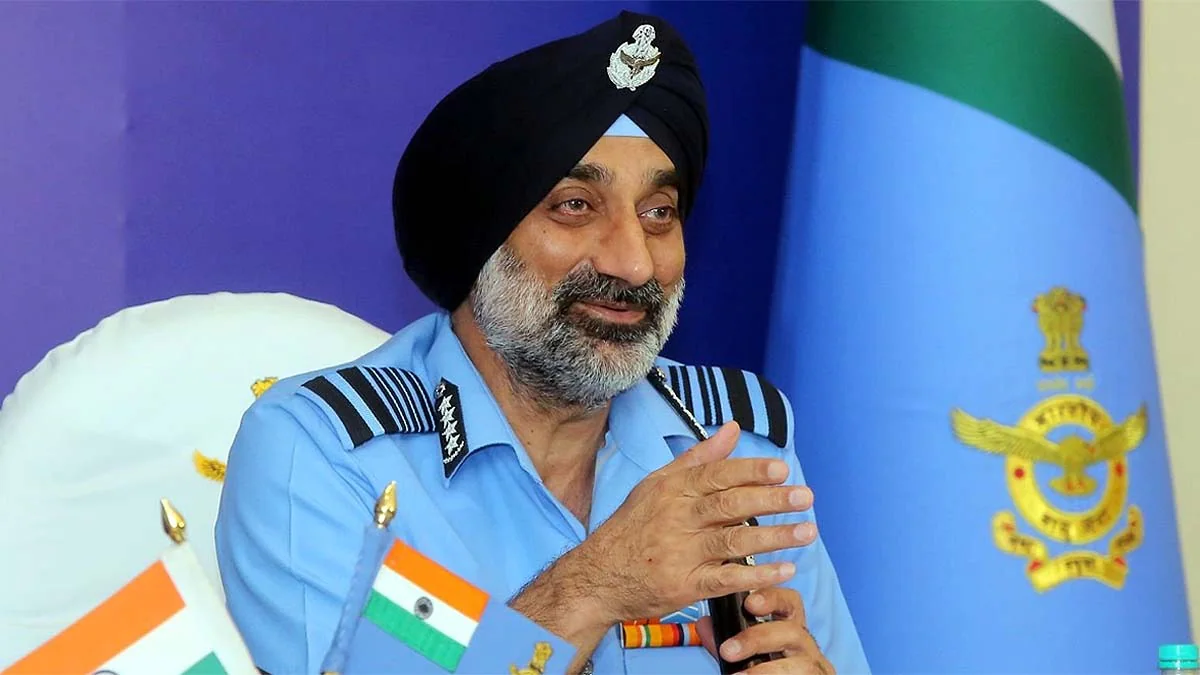
At his recent Air Force Day press conference, Air Chief Marshal AP Singh stressed the need for the IAF to induct at least two fighter squadrons annually to prevent its combat strength from declining further. The force currently operates around 30 fighter squadrons, well below its authorised requirement of 42.

The challenge extends beyond squadron numbers. China’s rapidly modernising air force, including its J-20 stealth fighters and long-range bombers, poses a significant technological and numerical challenge. Pakistan, meanwhile, continues to strengthen its combat aviation capabilities, with access to Chinese defence technology potentially narrowing India’s existing advantages.
Why More Manned Fighters May Not Be Enough
The IAF has placed orders for 180 Tejas Mk1A aircraft and is pursuing plans to acquire 114 additional multi-role fighters. These acquisitions are important, but deliveries and operational integration will take time. Conventional fourth- and fourth-generation-plus aircraft alone may not be sufficient to counter the advantages offered by advanced stealth platforms.
India has also made progress in unmanned systems, including loitering munitions and one-way attack drones. However, these systems are primarily designed for specific strike missions and do not provide the same combination of air-to-air combat capability, persistent sensing and tactical flexibility that an advanced collaborative aircraft could offer.
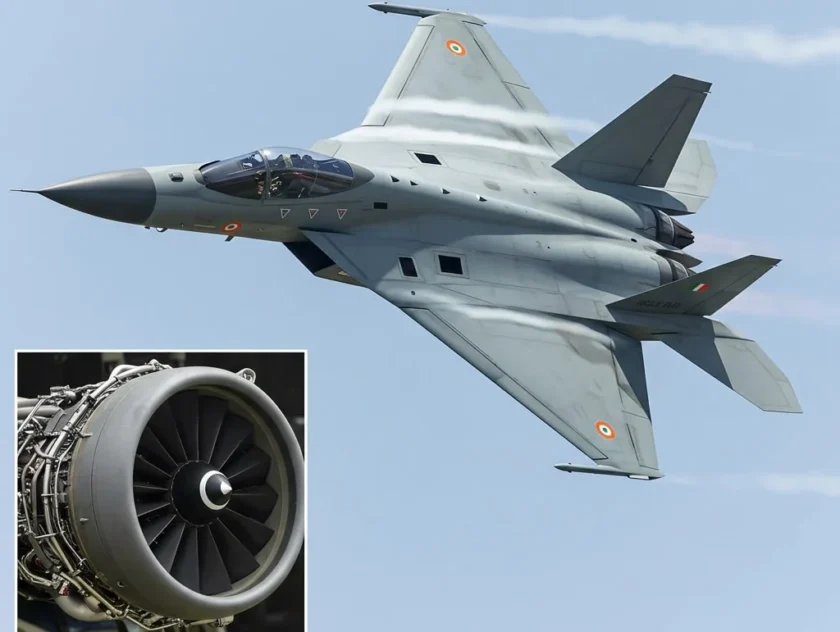
CCAs are designed to operate alongside piloted fighters, extending their reach and allowing them to perform tasks such as reconnaissance, electronic warfare, target identification and weapons delivery. Depending on their design, they could also carry air-to-air weapons and engage hostile aircraft under human supervision and mission-level control.
Operating ahead of a manned fighter, a CCA could help detect threats, gather information and complicate an adversary’s targeting decisions. Such capabilities could improve the survivability of aircraft such as the Su-30MKI and Rafale, although their effectiveness against stealth fighters would depend on sensor performance, networking, electronic protection and the ability to operate in contested airspace.
The Cost and Scale of the CCA Option
The economic case for CCAs rests on the possibility of acquiring additional combat capability at a lower cost than building an equivalent force entirely around manned fighters. Uncrewed aircraft may also be suitable for missions considered too risky for pilots, depending on their design and level of autonomy.
An illustrative procurement model assumes that the IAF could deploy approximately 330 manned fighters on a typical day of operations. Equipping each with one advanced CCA would require a fleet of similar size. At an assumed unit cost of $25 million, the acquisition bill would approach $8.25 billion, or roughly ₹80,000 crore.
Spread across five years, that would mean annual spending of around $1.65 billion. These figures are estimates rather than confirmed programme costs; actual expenditure would depend on development, weapons integration, maintenance, infrastructure and the level of autonomy required.
Manufacturing 66 advanced aircraft annually would also be a substantial industrial undertaking. India would need sustained investment, multiple production lines, a reliable supply chain and greater participation from private aerospace companies. The proposed production rate cannot be achieved simply by placing an order; it would require significant expansion of domestic manufacturing capacity.
Why the Su-30MKI Could Be the Starting Point
A phased introduction could make the programme more manageable. The IAF could initially prioritise the Su-30MKI fleet, which offers substantial payload capacity and a two-seat configuration. A dedicated weapons systems officer could potentially help manage collaborative aircraft, reducing the workload on the pilot.

Under one illustrative model, a fleet of 175 CCAs would cost approximately $4.4 billion at the assumed unit price. Procuring them over five years would require an average production rate of 35 aircraft annually.
Such a programme could provide a practical test bed for operational doctrine, communications, autonomous flight controls and weapons integration. However, the effectiveness of this approach would depend on cockpit workload, software reliability and the ability to control multiple uncrewed aircraft under combat conditions.
In the longer term, the IAF would need to assess whether collaborative aircraft could operate across different fighter platforms. A broader mix would make the capability more flexible, although integrating a common CCA with multiple aircraft types could add technical complexity and cost.
India’s Indigenous Development Opportunity
India has begun exploring domestic solutions in this field. Hindustan Aeronautics Limited’s Combat Air Teaming System includes the CATS Warrior, an uncrewed combat aircraft concept intended to work alongside crewed platforms. Its proposed capabilities include carrying weapons internally and supporting strike missions.
Private-sector participation is another important element. NewSpace Research and Technologies has been associated with the development of autonomous unmanned combat systems, including naval collaborative aircraft concepts. Such initiatives could help India build expertise in artificial intelligence, autonomous navigation, sensor fusion and coordinated mission planning.
However, development concepts should not be confused with operational capability. Testing, certification, secure communications, resistance to electronic warfare and integration with existing aircraft will determine whether these platforms can deliver the expected battlefield advantages.
India could also consider a mixed fleet: a limited number of sophisticated CCAs for demanding missions, supported by less expensive and potentially expendable uncrewed systems for high-risk tasks. This approach would balance capability with affordability while avoiding dependence on a single aircraft category.
A Long-Term Investment in Air Power
CCAs could also offer savings in training and routine operations. Simulators incorporating virtual wingmen would allow pilots to practise complex missions without requiring every exercise to involve a physical uncrewed aircraft. Lower operating costs may be possible, although autonomous combat aircraft would still require maintenance, software upgrades, weapons support and specialised infrastructure.
Ultimately, CCAs should complement rather than replace conventional fighters. India will continue to need capable pilots, modern combat aircraft, airborne surveillance, electronic warfare systems, secure networks and adequate stocks of precision weapons.
The central question is how quickly India can turn promising concepts into reliable, affordable and deployable systems. A prolonged development cycle could reduce the advantage of acting early as China and other regional powers continue to invest in next-generation air combat.
For the IAF, collaborative aircraft offer a potentially important route to increasing combat mass, distributing risk and improving the effectiveness of existing fighters. Their value will depend not only on procurement decisions but also on timely development, industrial capacity and integration into a coherent air-combat strategy.